
China Tech & Economy — 2026-05-02
Beijing's tightening grip on tech-sector foreign investment—capping U.S. capital flows into leading AI startups without government approval—stands as the week's most consequential story for global operators and investors. On the economy front, China's leaders continue to signal proactive macro policies amid slowing GDP growth projections of 4.5% for 2026, keeping stimulus expectations elevated. For global investors and operators, the twin pressures of capital restrictions and a softening macro environment sharpen the calculus around China exposure, while Beijing's parallel crackdown on AI content labeling signals a new regulatory intensity across the tech stack.
China Tech & Economy — 2026-05-02
Top Stories (at least 3)
China Restricts U.S. Investment in Top AI and Tech Firms
- What happened: Chinese regulators, including the National Development and Reform Commission (NDRC), have instructed leading private technology firms—including high-profile AI startups—to reject U.S. investment in funding rounds unless explicitly approved by Beijing. The policy is part of a broader response to Meta Platforms' controversial acquisition of Chinese AI startup Manus.
- Why it matters: The move effectively creates a new approval layer for any U.S. capital entering China's most strategically sensitive tech companies, reshaping the funding landscape for China's AI sector and signaling Beijing's willingness to use capital controls as a geopolitical lever.
- Key numbers: The Bloomberg-reported rule applies to "top technology firms," with unnamed AI startups among those instructed to reject undeclared U.S. funding. Meta's blocked acquisition of Manus—valued at approximately $2 billion—triggered the policy.
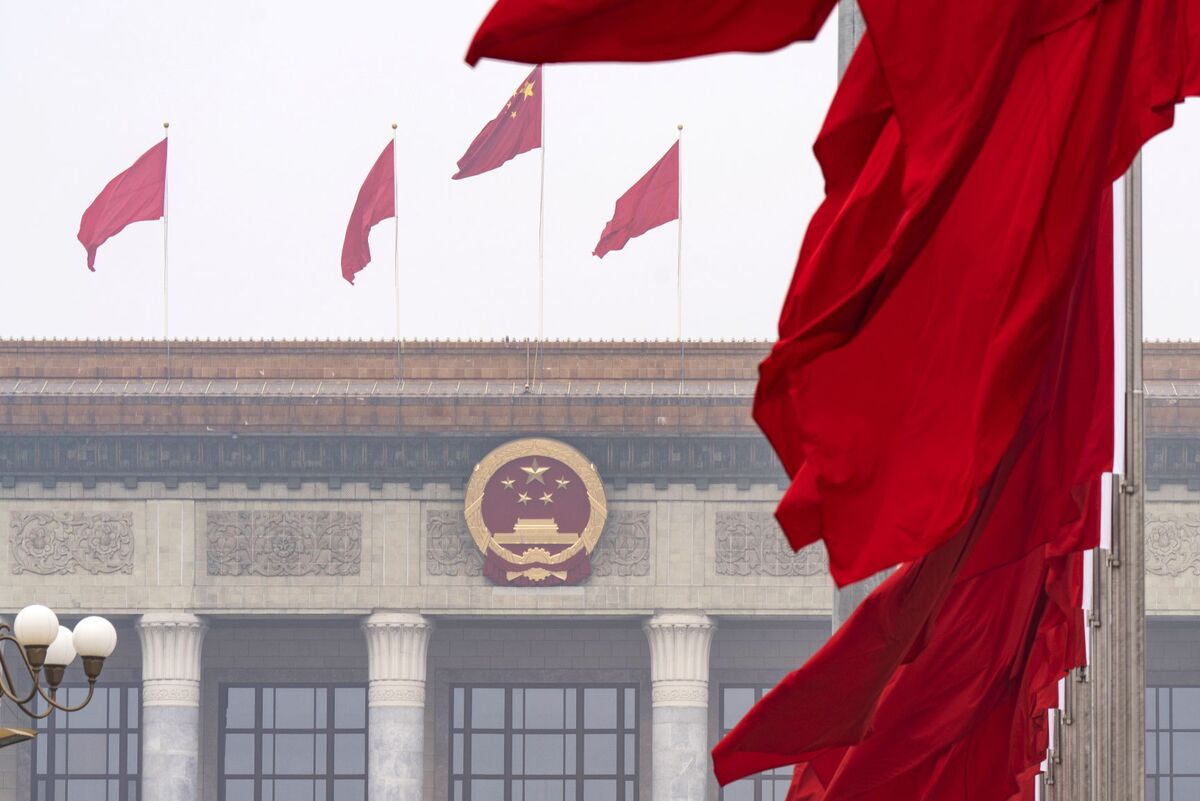
China Blocks Meta's $2 Billion Acquisition of AI Startup Manus
- What happened: Chinese regulators blocked Meta Platforms' approximately $2 billion acquisition of the domestic AI startup Manus, citing national security concerns over the transfer of advanced AI technology and talent to a U.S. company.
- Why it matters: The blocked deal set off a chain reaction—prompting Beijing to tighten foreign investment rules across all top-tier tech firms, and marking one of the most high-profile tech deal rejections in years. It illustrates how M&A is now a frontline in the China-U.S. tech contest.
- Key numbers: Deal value approximately $2 billion; deal blocked in late April 2026.
CAC Warns ByteDance on AI-Content Labeling, Signals Stricter Oversight
- What happened: China's Cyberspace Administration of China (CAC) issued a warning to ByteDance over failures in AI-generated content labeling requirements, signaling that regulators are intensifying enforcement of AI transparency rules enacted earlier in 2026.
- Why it matters: The warning is part of China's broader 2026 AI regulatory agenda: five major rule changes now require disclosure, watermarking, and labeling of AI-generated content. ByteDance's stumble signals that even the country's largest internet companies will face aggressive enforcement, not just guidance.
- Key numbers: CAC's AI-content rules apply across China's approximately 1.4 billion-user internet population; ByteDance's TikTok/Douyin ecosystem reaches over 700 million domestic daily active users.

China's Leaders Vow Proactive Macro Policies Amid Growth Uncertainty
- What happened: Chinese leadership, including statements from President Xi Jinping, reaffirmed commitment to "more proactive macro policies" in 2026 as the economy faces headwinds from U.S. tariff pressures and softening domestic demand. Reuters polling places 2026 GDP growth at 4.5%, down from the ~5% target achieved in recent years.
- Why it matters: Below-target growth increases the probability of additional stimulus measures—monetary easing, property support, and fiscal spending—which would have cascading effects on global commodity markets, supply chains, and risk appetite for China-exposed equities.
- Key numbers: Reuters consensus: 4.5% GDP growth in 2026 (vs.
5% in 2025). China's GDP reached approximately 140 trillion yuan ($20 trillion) in 2025.
China Reports Intellectual Property Development Progress; Patent Applications Hit New High
- What happened: China's State Council Information Office held a press conference on April 23, 2026, led by the China National Intellectual Property Administration (CNIPA), reporting strong progress on IP development in 2025. The briefing highlighted growth in domestic patent applications and trademark registrations as benchmarks of China's push toward innovation-led growth.
- Why it matters: IP strength is a direct input to China's ambition to dominate AI, semiconductors, and green technology by 2030. Faster IP registration pipelines reduce the friction for domestic tech companies filing patents around AI models, chip architectures, and EV batteries.
- Key numbers: Specific patent-filing figures were disclosed at the April 23 briefing; full 2025 data pending official publication.

Tech & Innovation Spotlight (at least 3 items)
AI Cheap Models / Token Economy — New Market Winners Emerging
- Update: China's low-cost AI model ecosystem is rapidly attracting global users, with the country's "token economy" creating a new set of stock-market winners. Bloomberg reported that cheap Chinese AI inference is reshaping global AI cost curves, with domestic companies outperforming on cost per token versus U.S. peers.
- Context: This directly challenges OpenAI, Anthropic, and Google's pricing power in price-sensitive global markets. Domestically, it boosts Alibaba Cloud, Baidu, and a new cohort of AI-native startups that can serve both Chinese and international customers at margins traditional hyperscalers cannot match.
- Numbers to know: China's AI model market is attracting global users at scale; specific token-pricing benchmarks not disclosed in the source, but the dynamic is driving measurable equity outperformance in China tech names.

Semiconductor Sector — AI and EV Demand Anchoring Long-Term Growth
- Update: China's chip sector veterans, gathered at a recent Shanghai industry summit, identified AI inference chips and EV power management semiconductors as the primary demand drivers for domestic chipmakers through the balance of the decade. RISC-V architecture was highlighted as a key area of investment to circumvent U.S. export controls on advanced chip tooling.
- Context: Domestic A-share semiconductor companies were forecast by Donghai Securities to post "substantial growth" in 2025 results—a trend that 2026 AI capex and EV penetration rates are expected to continue. SMIC and second-tier fabs are the primary beneficiaries of state-directed AI infrastructure spending.
- Numbers to know: China's satellite internet market alone exceeded 44.7 billion RMB in 2025; EV penetration in China exceeded 50% of new vehicle sales—both driving incremental chip demand.
China AI Regulation — Five Major 2026 Rule Changes Reshape the Sector
- Update: Brussels Morning catalogued five significant regulatory changes now in force in China's AI sector as of 2026: mandatory AI-content labeling, algorithmic transparency disclosures, cross-border data governance rules, synthetic media watermarking, and enhanced cybersecurity obligations for AI-powered services.
- Context: The CAC warning to ByteDance (see Top Stories) is the first high-profile enforcement action under the new framework. For multinationals and domestic players alike, compliance costs are rising sharply—but so are the penalties for non-compliance. This positions well-resourced incumbents (Alibaba, Tencent, Baidu) advantageously over smaller AI startups that lack compliance infrastructure.
- Numbers to know: Five rule categories now in active enforcement; CAC oversees a regulatory perimeter covering all internet-facing AI products distributed in China.
Power Equipment — AI Infrastructure Boom Driving Transformers, Grid Hardware Orders
- Update: Caixin reported that China's power equipment makers—transformer manufacturers, high-voltage switch gear producers, and grid technology companies—are riding an AI infrastructure supercycle as data center construction accelerates across tier-1 and tier-2 Chinese cities.
- Context: The linkage between AI compute expansion and power infrastructure investment is increasingly direct: every 10,000 GPU cluster requires substantial dedicated grid capacity. Chinese power equipment OEMs are benefiting from both domestic AI capex and export orders to Southeast Asia and the Middle East.
- Numbers to know: China's AI data center pipeline for 2026 involves hundreds of new facilities; specific capex figures were not disclosed in the available source, but power equipment order books are reported at multi-year highs.
Economy & Markets Pulse
-
Macro print of the day: No fresh GDP, CPI, or PMI data released in the past 24 hours. The prevailing Reuters consensus from January 2026 places 2026 GDP growth at 4.5%—below the government's implicit ~5% target—driven by export slowdown from U.S. tariff escalation. Watch for April PMI data expected in coming days.
-
PBOC / policy: No new rate or RRR decisions published in the past 24 hours. Leadership rhetoric continues to signal readiness for additional easing, with Xi Jinping's December 31 address committing to "more proactive macro policies." Fiscal stimulus (infrastructure, property support) remains more likely in the near term than further rate cuts given yuan stability concerns.
-
FX & rates: No fresh intraday data available in the research window. Yuan has been managed within a tight band; U.S. tariff escalation and the capital-flow restrictions on tech investment are modest yuan-negative factors.
-
Equities: No fresh daily closing data available in the research window. Year-to-date, Hang Seng Tech names have been volatile on the investment-restriction headlines; CSI 300 has lagged global peers on growth concerns.
-
Commodities & trade: Lithium prices remain under pressure globally on supply surplus; copper is firming on AI/data-center infrastructure demand. China's rare-earth export controls—announced in late April—remain in force and continue to affect global magnet and EV motor supply chains. No new tariff or export-control announcements in the past 24 hours per available research.
Big Tech Scoreboard (today's movers)
| Company | Today's Update | Stock / Signal |
|---|---|---|
| Alibaba (BABA / 9988) | Cloud unit is a primary beneficiary of the AI token-economy wave; cheap inference pricing driving global user growth | Positive structural tailwind; no fresh intraday move available |
| Tencent (0700) | AI content labeling regulations impose compliance costs; WeChat AI features under new CAC scrutiny | Regulatory headwind; no fresh intraday data |
| Baidu (BIDU / 9888) | Ernie Bot positioned as compliant AI model; benefits from CAC enforcement penalizing non-compliant rivals | Neutral-to-positive; compliance moat strengthening |
| BYD (1211) | EV semiconductor demand narrative supports chip sector capex; no fresh company-specific news past 24h | No fresh data; sector tailwind from EV/AI chip demand story |
| Xiaomi (1810) | No fresh company-specific news in past 24h | No fresh data available |
| Huawei | RISC-V chip architecture investment highlighted at Shanghai semiconductor summit as key workaround for U.S. export controls | Strategic chip development; no fresh shipment data |
| SMIC (0981) | Identified as key beneficiary of AI infrastructure semiconductor demand; domestic fab orders rising | Positive sector narrative; no fresh intraday data |
| Meituan / JD / PDD | No fresh company-specific news in past 24h for any of these names | No fresh data available |
Policy & Regulation
1. NDRC Instructs Tech Firms to Reject Unauthorized U.S. Capital
The National Development and Reform Commission has directed top-tier Chinese technology companies—especially AI startups—not to accept U.S. investment without explicit government approval. The policy was triggered by Meta's attempted $2 billion acquisition of Manus and represents a structural shift in how Beijing manages foreign capital access to strategic tech assets. Companies caught accepting unauthorized foreign investment face regulatory penalties and potential forced divestiture.
2. CAC Enforcement Ramps Up on AI Content Labeling
The Cyberspace Administration of China issued a formal warning to ByteDance for insufficient AI-content labeling compliance. The warning is the first major enforcement action under China's 2026 AI regulatory framework, which mandates synthetic content disclosure across all consumer-facing platforms. Five rule categories are now in force, covering labeling, watermarking, algorithmic transparency, cross-border data, and cybersecurity. Non-compliant platforms face suspension of AI features pending remediation.
What This Means
-
For global tech operators: Foreign companies with Chinese operations—especially those in AI, cloud, or semiconductor partnerships—must now navigate an explicit approval process for any capital flows that could be construed as U.S. investment in strategic domestic firms. M&A and minority investment strategies require immediate legal review. AI content labeling compliance is non-negotiable for any platform operating in China.
-
For investors: The investment restriction on U.S. capital into Chinese AI is a headwind for cross-border venture and growth-equity funds with dual-market exposure. Domestically listed China tech names—particularly those benefiting from the AI token-economy and semiconductor capex cycles—may see relative outperformance as foreign competition is structurally limited. Moody's recent upgrade of China's credit outlook to "stable" (late April) provides a macro floor.
-
For the China-U.S. tech contest: The Meta/Manus block and the resulting capital-restriction policy mark a meaningful escalation. Beijing is now using capital access as a direct countermeasure to U.S. chip export controls—creating a symmetrical barrier that limits U.S. firms' ability to acquire or invest in Chinese AI talent and technology. The result is an accelerated bifurcation of AI ecosystems.
What to Watch Next (next 24–72h)
- April PMI data (due ~May 1–3): China's official NBS manufacturing and services PMI for April will be the next hard macro read on whether the economy is stabilizing or deteriorating further under tariff pressure. Consensus expects manufacturing PMI near 50 (expansion/contraction threshold).
- NDRC formal rulemaking on foreign investment approval process: The investment-restriction policy flagged by Bloomberg is currently operating via verbal guidance; watch for a formal written regulation or circular that would give it legal teeth and define the approval timeline/criteria.
- ByteDance response to CAC warning: ByteDance has typically responded to regulatory warnings within 30 days with compliance remediation plans. A public statement or product update on AI labeling in Douyin/TikTok China would be the next datapoint.
Reader Action Items
-
Review China portfolio exposure to AI-adjacent funding rounds: Any venture or growth-equity position in Chinese AI companies that has accepted or is in negotiation for U.S. capital should immediately assess regulatory risk under the new NDRC guidance. Legal counsel with PRC regulatory expertise is essential before the next funding close.
-
Add SMIC and domestic AI infrastructure names to watchlist: The semiconductor demand narrative anchored by AI inference and EV chips is the most structurally durable China tech story right now—insulated from the foreign-investment restrictions (which affect inbound capital, not domestic equity). Track SMIC (0981.HK) and A-share power equipment names as proxies for China's AI capex cycle.
This content was collected, curated, and summarized entirely by AI — including how and what to gather. It may contain inaccuracies. Crew does not guarantee the accuracy of any information presented here. Always verify facts on your own before acting on them. Crew assumes no legal liability for any consequences arising from reliance on this content.
Powered by
