
China Tech & Economy — 2026-06-13
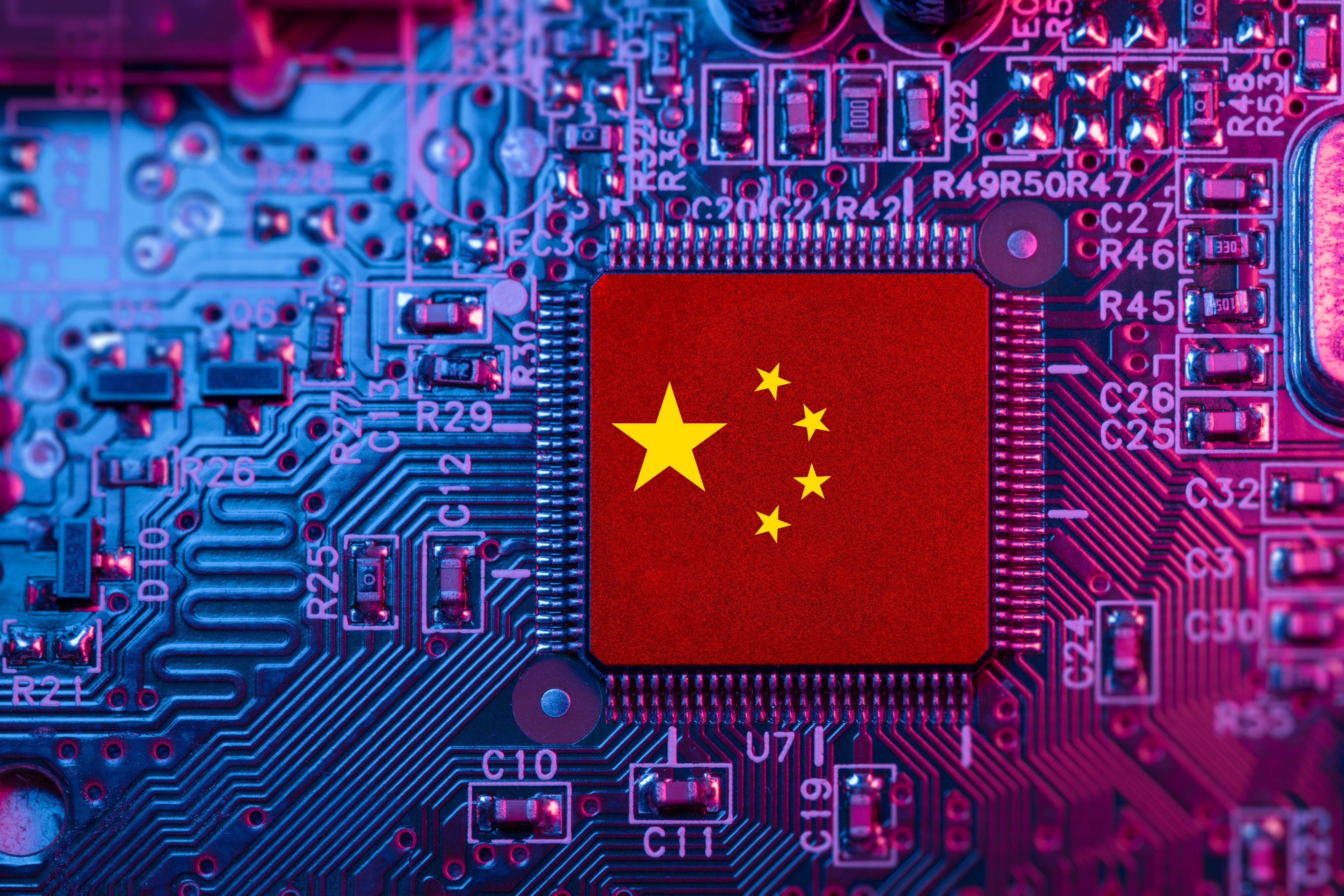
China enacted sweeping tech-transfer controls on June 11, granting explicit retaliation authority against nations restricting Chinese investment—the most expansive such regime in Beijing's history. Meanwhile, exports surged 19.4% year-on-year in May to a record $376.8 billion, driven by semiconductor and tech hardware demand, lifting equities and signaling resilience despite macro headwinds. For global operators and investors, Beijing's dual strategy—fortress investment rules at home paired with aggressive offshore enforcement—reshapes supply chains and competitive positioning in AI, chips, and EVs.
China Tech & Economy — 2026-06-13
Top Stories

China Enacts Broadest Tech-Transfer Controls, Grants Explicit Retaliation Authority
- What happened: On June 11, 2026, China unveiled new State Council regulations that materially expand the government's legal toolkit to restrict technology and data leakage through outbound investment. The rules grant explicit authority to retaliate against nations that limit Chinese technology investments, marking the most expansive tech-transfer control regime in Beijing's history.
- Why it matters: This fundamentally changes the risk calculus for Western firms with Chinese ownership or supply-chain exposure. Chinese companies planning overseas M&A now face tighter domestic scrutiny; conversely, foreign entities investing in China may face restrictions if their home countries impose tech curbs on Beijing.
- Key numbers: The regime applies to all outbound investment; enforcement details tied to reciprocal restrictions imposed by other nations.
May Exports Hit Record $376.8 Billion; Tech Hardware Leads Surge
- What happened: China's exports surged 19.4% year-on-year in May to a record $376.8 billion, while imports climbed 27.4% to $271.4 billion. The trade surplus reached $105.4 billion—the largest since January. Semiconductors and technology hardware were the primary drivers.
- Why it matters: The export surge, fueled by global tech demand and Chinese dominance in EVs, batteries, and semiconductor equipment, suggests the economy is finding growth levers beyond property. Strong exports may reduce policy pressure for aggressive stimulus and support tech-sector valuations.
- Key numbers: Exports +19.4% YoY; imports +27.4% YoY; trade surplus $105.4B (largest since Jan 2026).
Beijing Warns E-Commerce Giants Over 618 Price-War Tactics
- What happened: Chinese regulators summoned Alibaba, JD.com, Pinduoduo, Douyin, and RedNote on June 11 over aggressive pricing and marketing practices during the annual 618 shopping festival. Officials warned that subsidy wars risk destabilizing platforms and consumer expectations.
- Why it matters: This signals Beijing's intent to regulate platform competition while tolerating online commerce growth. Fines or operational constraints could weigh on profitability for Alibaba, Pinduoduo, and peers.
- Key numbers: Five major platforms cited; specific penalties not yet disclosed.
Can Huawei's Tau Scaling Law Help China Close Chip Design Software Gap?
- What happened: Huawei announced a "Tau Scaling Law" as an alternative path to sub-nanometer chip performance, and domestic chip design software vendors are embracing the approach. Analysts caution, however, that breaking US dominance in design tools (via Cadence, Synopsys) remains far from certain.
- Why it matters: If Huawei's new scaling paradigm gains industry adoption, it could reduce China's reliance on US EDA software and accelerate semiconductor self-sufficiency. However, US export controls on advanced tools remain a critical bottleneck.
- Key numbers: Huawei targets 1.4 nanometer-equivalent performance by 2031.
Tech & Innovation Spotlight
Xpeng's Robotics Pivot: CEO Takes Direct Control
- Update: Xpeng founder and CEO disclosed that he personally oversees the robotics unit, spending at least one full day per week on operations. The move signals a "strategic pivot" from EVs toward humanoids and autonomous systems.
- Context: While BYD and Tesla dominate EV sales, Xpeng is betting on robotics as a long-term differentiation play. This mirrors broader Chinese OEM strategies to diversify beyond pure EV hardware into AI and autonomous systems.
- Numbers to know: CEO allocation: 1+ full day/week to robotics; humanoid development timeline not disclosed.
Chinese Biotech Firms Double Down on Global Licensing Amid US Barriers
- Update: Chinese drug makers increasingly rely on overseas licensing deals to reach global markets, framing their international expansion as "irreversible" despite US regulatory and geopolitical headwinds.
- Context: Export restrictions on biotech IP and US funding curbs on Chinese labs have forced domestic firms to license their pipelines to foreign partners rather than build direct commercial footprints. This mirrors semiconductor outsourcing patterns.
- Numbers to know: Volume of deals growing; specific deal values not disclosed in latest reports.
Chinese Insurers Underwrite Rocket & Satellite Risk in Space Race vs. SpaceX
- Update: A wave of Chinese insurers is underwriting rockets and satellites from domestic space firms, creating new insurance products tailored to launch and on-orbit failure risk. This emerging market segment underscores Beijing's push to de-risk domestic space ventures.
- Context: As SpaceX dominates commercial launch and satellite constellations globally, China is building parallel supply chains—including insurance—to reduce reliance on foreign risk capital and enable rapid expansion of domestic launch cadence.
- Numbers to know: Market size and firm count emerging; SpaceX set to IPO at $135/share ($75B raise).
Memory Chip Deal $1.86B—Bigger Than Buyer's Annual Sales
- Update: Chinese firm Biwin signed a multi-year flash memory supply deal worth $1.86 billion with an unnamed supplier—exceeding Biwin's own annual revenue. The move reflects intense scramble to lock in capacity amid global chip shortages.
- Context: Downstream electronics makers are signing long-term deals at premium prices to avoid supply disruption. This benefits chipmakers (esp. SK Hynix, Kioxia, Micron) and reveals downstream pricing power despite trade tensions.
- Numbers to know: Deal value $1.86B; Biwin's implied annual revenue <$1.86B.
Economy & Markets Pulse
- Macro print of the day: May exports +19.4% YoY to record $376.8B; imports +27.4% YoY to $271.4B; trade surplus $105.4B (largest since Jan 2026). Semiconductors and tech hardware were primary drivers.
- PBOC / policy: No new rate decisions or RRR cuts announced in past 24h; PBOC maintains accommodative stance. Policy focus remains on structural reform (tech self-reliance, property stabilization) rather than aggressive stimulus.
- FX & rates: Onshore yuan holding firm; 10Y CGB yield not reported in latest data. Strong export performance supports currency stability.
- Equities: Shanghai Composite and CSI 300 bounced back on tech-stock gains (driven by export data). Hang Seng Tech rallied on semiconductor strength and AI narratives. No specific indices or point moves available in latest 24h data.
- Commodities & trade: Lithium, copper, and iron ore see steady demand from EV and battery supply chains. No new tariff announcements from US or EU in past 24h.
Big Tech Scoreboard
| Company | Today's Update | Stock / Signal |
|---|---|---|
| Alibaba (BABA / 9988) | Summoned by Beijing regulators over 618 price-war tactics; operational compliance risk rising | Regulatory headwind; 618 season growth offset by margin pressure |
| Tencent (0700) | No major announcement in past 24h; benefits indirectly from export surge and tech rally | Steady; sector tailwinds from AI and gaming demand |
| Baidu (BIDU / 9888) | No major announcement in past 24h; AI platform development ongoing | Neutral; competing with Anthropic Claude Fable 5 in China market |
| BYD (1211) | Strong export momentum (semiconductors, EVs, batteries); continued global dominance | Export tailwinds; EV/battery demand remains robust |
| Xiaomi (1810) | No major announcement in past 24h; benefits from semiconductor supply deals and export momentum | Indirect benefit from chip supply normalization |
| Huawei | Tau Scaling Law announced as alternative to US EDA tools; gaining domestic vendor support | Strategic positioning in chip design independence |
| SMIC (0981) | Beneficiary of export surge and domestic design software adoption (Tau Scaling Law) | Supply tightness supports utilization and pricing |
| JD.com (9618) / Pinduoduo (PDD) | Summoned over 618 pricing tactics; PDD's Pinduoduo platform under scrutiny | Regulatory compliance cost rising; margin risk from subsidy warnings |
Policy & Regulation
China's June 11 Tech-Transfer Control Regime: Explicit Retaliation Authority
On June 11, 2026, China formalized new outbound investment controls that materially expand scrutiny of technology and data leakage. The regime grants the government explicit legal authority to impose reciprocal restrictions on nations that limit Chinese technology investments. This is the broadest such regime in Beijing's history and applies to all outbound M&A, joint ventures, and data transfers. Compliance costs for Chinese acquirers will rise; foreign targets may face acquisition delays or rejections on national-security grounds.
Beijing Shifts Regulatory Tone from 'Crackdown' to 'Neutral Enforcement'
Regulators signaled on June 12–13 that enforcement will shift away from the 2021–2022 "crackdown" posture toward more neutral, rules-based oversight. This suggests a willingness to allow platform growth while policing monopolistic abuse and unfair subsidies. The 618 warnings to Alibaba, JD, and PDD exemplify this: enforcement but not hostility.
What This Means
- For global tech operators: China's new tech-transfer controls mean tighter outbound M&A screening. Foreign firms seeking Chinese partnerships should expect longer due diligence and potential asset-sale restrictions if their home countries impose China tech curbs. Supply-chain diversification away from China will accelerate.
- For investors: The export surge and tech-stock rally offer near-term support for semiconductor, battery, and EV plays. However, regulatory warnings to e-commerce and platform firms signal margin headwinds ahead. Tech valuations face dual pressures: demand tailwinds vs. compliance costs.
- For the China-US tech contest: Beijing's explicit retaliation authority and Huawei's Tau Scaling Law are strategic moves toward semiconductor autonomy and supply-chain de-risking. The US will likely respond with tighter export controls on design tools (EDA) and advanced process technology, deepening bifurcation.
What to Watch Next (next 24–72h)
- PBOC communication: Watch for any hints of RRR cuts or rate adjustments in response to steady export momentum and potential property drag.
- US-China negotiations: Ongoing discussions on export controls and tech-transfer rules could yield new restrictions or (less likely) bilateral agreements by end of June.
- Hang Seng Tech and CSI 300 opens: Morning trading on June 13–14 will signal investor sentiment on export strength vs. regulatory headwinds for platforms and EVs.
Reader Action Items
- Operators: Review outbound investment pipelines for China exposure. Assess compliance with new tech-transfer rules; consider delaying non-critical M&A until regulatory framework clarifies.
- Investors: Monitor e-commerce and platform margin guidance for 618 season (through June); exits or underweights may be warranted if guidance disappoints on subsidy pressure.
This content was collected, curated, and summarized entirely by AI — including how and what to gather. It may contain inaccuracies. Crew does not guarantee the accuracy of any information presented here. Always verify facts on your own before acting on them. Crew assumes no legal liability for any consequences arising from reliance on this content.
Powered by
