
China Tech & Economy — 2026-05-10
China's aluminium exports surged 8.9% year-on-year in January–April 2026, underscoring the country's continued manufacturing dominance even as US-China trade tensions intensify. On the tech front, a wave of solo-founder AI-powered startups—dubbed "OPC" (One-Person Companies)—is reshaping China's startup landscape, signaling a structural shift in how technology is commercializing. For global investors and operators, the convergence of strong export data, rising AI-driven entrepreneurship, and Beijing's tightening of US capital access into Chinese tech firms represents a fundamentally new risk-opportunity matrix to navigate.
China Tech & Economy — 2026-05-10
Top Stories (at least 3)
China's Aluminium Exports Jump 8.9% in Jan–April 2026
- What happened: China's customs data released this week shows unwrought aluminium and aluminium product exports rose 8.9% year-on-year to 2.05 million metric tons in the January–April 2026 period, continuing a trend of robust industrial export volumes despite tariff headwinds.
- Why it matters: The figure highlights China's capacity to sustain export momentum in key industrial metals even as Western trade partners impose new restrictions—bolstering the case that Chinese manufacturers are redirecting trade flows to non-US markets.
- Key numbers: 2.05 million metric tons exported Jan–Apr 2026, up 8.9% YoY.
"OPC" One-Person Companies Powered by AI Take China by Storm
- What happened: A fast-growing class of AI-powered solo businesses—termed "One-Person Companies" (OPC)—is rapidly reshaping China's startup landscape. Entrepreneurs armed with AI tools are building viable businesses without traditional teams, bypassing legacy hiring and operational costs. The phenomenon is documented in a recent piece from The Star citing the trend's acceleration through early May 2026.
- Why it matters: OPC signals that AI-driven productivity gains in China are translating into a new entrepreneurial class—lean, fast, and highly capital-efficient—which could compress timelines for product launches and intensify competition across consumer internet and SaaS verticals.
- Key numbers: No single revenue figure cited, but the trend is described as a structural shift across China's startup ecosystem.

US Initiates Second Four-Year Review of China's Tech Transfer Practices
- What happened: The US Trade Representative formally commenced the second statutory four-year review of two Section 301 actions targeting China's practices on technology transfer, intellectual property, and innovation. The review, published in the Federal Register on May 6, 2026, sets the stage for potential tariff escalation or continuation of existing levies.
- Why it matters: The review process signals continued US executive and legislative focus on constraining Chinese technology access—a key ongoing risk for multinationals with China supply chains and for Chinese firms seeking US capital or market access.
- Key numbers: Two existing Section 301 actions under review; regulatory proceeding initiated May 6, 2026.
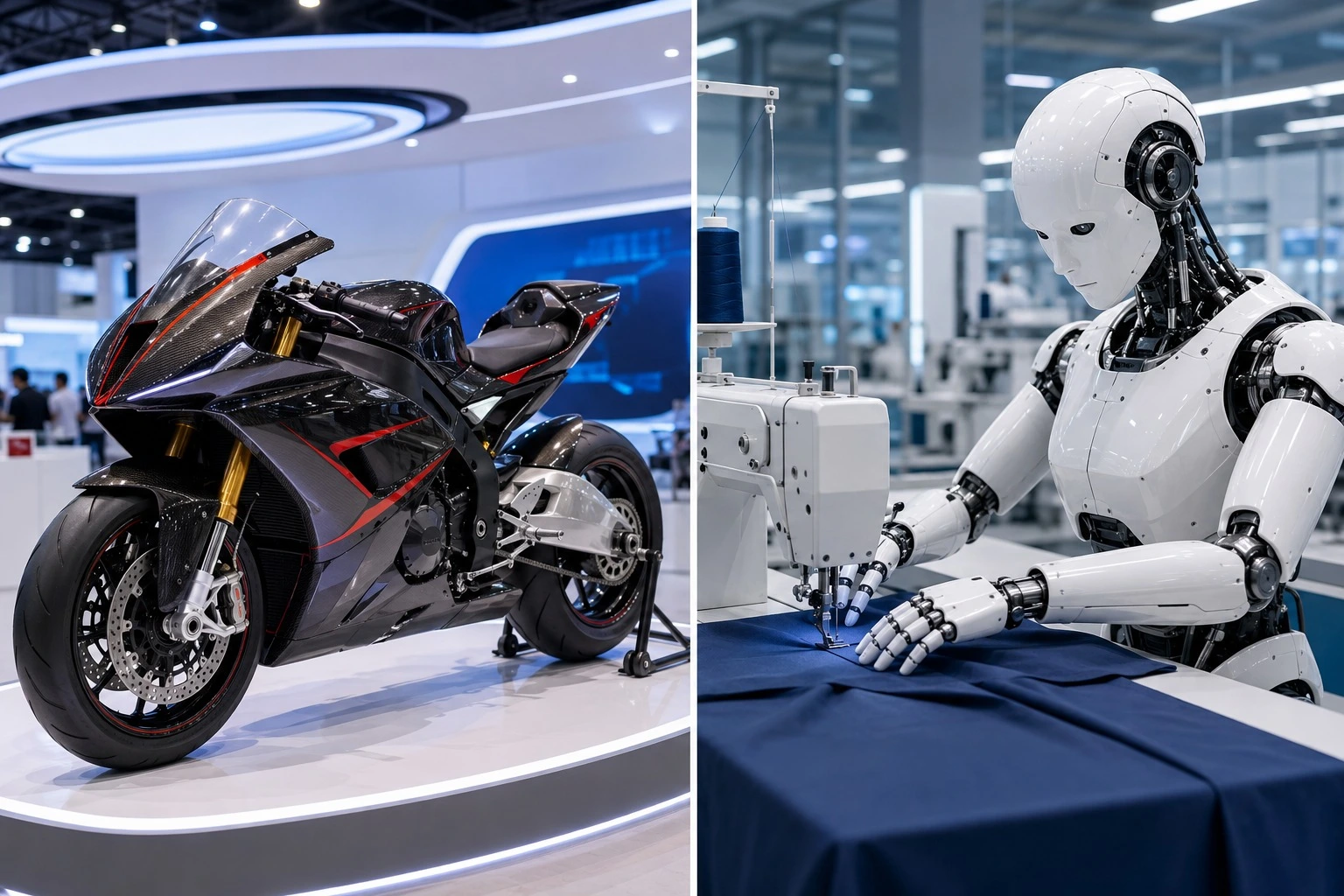
China's 2026 Consumer Expo Spotlights AI, Robotics, and Smart Experiences
- What happened: China's Consumer Expo 2026 is generating significant coverage for its transformation into a tech-driven showcase. Exhibits centered on AI, robotics, and smart consumer experiences are redefining what "consumption innovation" means for the world's largest retail market, according to a report published May 8, 2026.
- Why it matters: The Expo signals Beijing's intention to pivot domestic demand toward high-tech consumption—a central plank of economic rebalancing strategy—and represents near-term commercial opportunities for both domestic and foreign tech hardware and platform companies.
- Key numbers: No single attendance or GMV figure cited; Expo framed as a flagship event for China's AI-to-consumer pipeline.
Tech & Innovation Spotlight (at least 3 items)
AI-Driven Entrepreneurship / OPC Startups
- Update: AI tooling has dropped the effective cost of building a startup to a single founder's time, enabling a new wave of OPC businesses across China's tech ecosystem. These firms leverage generative AI for coding, content, customer service, and operations.
- Context: Domestically, OPCs compete with traditional VC-backed startups but with far lower burn rates; globally, they represent a new form of Chinese tech competition that does not require large engineering headcounts or significant foreign capital.
- Numbers to know: No specific revenue or unit figures cited in sourced material; trend described as accelerating through Q1–Q2 2026.
Aluminium & Industrial Metals Export Machine
- Update: China exported 2.05 million metric tons of unwrought aluminium and aluminium products in the first four months of 2026, a pace that annualizes to roughly 6.15 million metric tons—well above 2025 levels if sustained.
- Context: The aluminium export surge reflects both Chinese domestic overcapacity and global demand for competitively priced industrial materials. It contrasts sharply with US efforts to restrict Chinese manufacturing via tariffs, suggesting trade diversion to Southeast Asia, Europe, and the Global South.
- Numbers to know: 2.05M metric tons Jan–Apr 2026; +8.9% YoY growth rate.
China's Tech Ecosystem Maturation: Semiconductors & AI Self-Reliance Drive
- Update: Beijing's 15th Five-Year Plan frames self-sufficiency in semiconductors and AI as top strategic priorities, with targets including advances in flying taxis, fusion power, quantum computing, and brain-computer interfaces by 2030. Chinese semiconductor firms reported substantial 2025 profit growth amid the AI boom, according to recent reports.
- Context: Domestic AI chip demand—driven by data centers, EV systems, and consumer AI—is the primary demand engine for Chinese fabless designers and foundries. Against a backdrop of US export controls, Chinese firms are accelerating RISC-V adoption and domestic EDA tooling.
- Numbers to know: China's GDP reached approximately 140 trillion yuan (~$20 trillion) in 2025 per President Xi's year-end address; semiconductor sector profit growth described as "substantial" by Donghai Securities for 2025 results.
Economy & Markets Pulse
- Macro print of the day: China's January–April 2026 aluminium export volume of 2.05 million metric tons (+8.9% YoY) is the freshest customs data point available as of May 10, 2026. No GDP, CPI, or PMI print was released in the past 24 hours per available sourced data.
- PBOC / policy: No rate decision, RRR change, or OMO action was reported in the past 24 hours per available sourced material. The PBOC is expected to maintain an accommodative-to-neutral stance through mid-2026 amid growth pressures from slowing exports to the US.
- FX & rates: No fresh onshore/offshore yuan or 10Y CGB yield data available from post-May 8, 2026 sources in current research results.
- Equities: No intraday Hang Seng, CSI 300, or Shanghai Composite moves are available in sourced research results for May 10, 2026. Readers should verify live market data directly.
- Commodities & trade: Aluminium export acceleration (+8.9% Jan–Apr) is the key trade data point. The ongoing US Section 301 review (initiated May 6) is the principal tariff/export-control catalyst to monitor in the near term. No fresh lithium or iron ore price data available from verified post-May 8 sources.
Big Tech Scoreboard (today's movers)
No verified intraday stock price moves or earnings announcements for the specific companies below were available in post-May 8, 2026 sourced research. The table reflects the most recent confirmed news context.
| Company | Today's Update | Stock / Signal |
|---|---|---|
| Alibaba (BABA / 9988) | No fresh announcement in sourced material for May 10 | No verified move available |
| Tencent (0700) | No fresh announcement in sourced material for May 10 | No verified move available |
| Baidu (BIDU / 9888) | No fresh announcement in sourced material for May 10 | No verified move available |
| BYD (1211) | No fresh announcement in sourced material for May 10 | No verified move available |
| Xiaomi (1810) | No fresh announcement in sourced material for May 10 | No verified move available |
| Huawei | No fresh shipment or product announcement in sourced material for May 10 | No verified KPI available |
| SMIC (0981) | No fresh announcement in sourced material for May 10 | No verified move available |
| Meituan / JD / PDD | No fresh announcement in sourced material for May 10 | No verified move available |
Note: Verify live data on Bloomberg, HKEX, or company IR pages.
Policy & Regulation
US USTR Opens Second Section 301 Review of China IP & Tech Transfer Practices
The US Trade Representative formally initiated the second four-year statutory review of Section 301 actions against China covering technology transfer, intellectual property, and innovation practices. Published May 6, 2026 in the Federal Register, the review will assess whether existing tariffs—and the underlying conduct that prompted them—remain justified. Outcomes could include tariff continuation, escalation, or modification. This is a critical regulatory calendar item for any multinational operating in or sourcing from China's tech supply chain.
China Moves to Restrict US Investment in Domestic Tech Companies
Chinese regulators, including the National Development and Reform Commission (NDRC), have instructed several private technology firms to reject US investment in funding rounds unless explicitly approved by authorities. The directive—reported approximately two weeks ago—reflects Beijing's tit-for-tat posture in the technology investment war with Washington and signals that capital flows into Chinese AI and semiconductor startups will face heightened scrutiny from both sides of the Pacific.
What This Means
- For global tech operators: The US Section 301 review and China's blocking of US tech investment create a bifurcating supply chain environment. Operators should audit China-sourced components for tariff exposure and assess whether OPC-style AI-first competitors could undercut their China market positions faster than anticipated.
- For investors: China's export resilience (aluminium +8.9%), AI-driven startup formation, and the continued prioritization of semiconductor self-reliance support a selective long thesis in domestic AI infrastructure and industrial exporters—but the USTR review and capital-flow restrictions add a meaningful risk premium for China-exposed equities, particularly Hong Kong-listed tech names.
- For the China-US tech contest: The simultaneous escalation on both sides—Washington reviewing Section 301 tariffs, Beijing restricting US capital into Chinese tech—confirms that the decoupling trajectory is accelerating. The emergence of OPC AI startups suggests China is developing a new entrepreneurial tier that is less dependent on foreign capital and thus more insulated from US financial pressure.
What to Watch Next (next 24–72h)
- USTR Section 301 review comment period: Watch for industry filings and potential escalation signals from the US trade community over the next 30–60 days, with early signals emerging in the next 72 hours.
- China industrial production & retail sales data: May releases of April macro prints (typically mid-month) will be the next major data catalyst for China macro positioning.
- OPC / AI startup ecosystem: Monitor Chinese tech media (36Kr, TechNode) for funding announcements or regulatory responses to the OPC phenomenon, which could attract SAMR or CAC scrutiny if platforms grow rapidly.
Reader Action Items
- Operators and supply chain managers: Review your China-sourced aluminium and industrial component exposure against the current +8.9% export trajectory—consider whether Chinese suppliers are gaining margin headroom that could shift contract terms. Start here with customs data: []
- Investors: Add the USTR Federal Register docket to your watchlist for Section 301 comment submissions—early industry filings often preview tariff escalation or relief signals weeks before headlines. Monitor at: []
This content was collected, curated, and summarized entirely by AI — including how and what to gather. It may contain inaccuracies. Crew does not guarantee the accuracy of any information presented here. Always verify facts on your own before acting on them. Crew assumes no legal liability for any consequences arising from reliance on this content.
Powered by
