
China Tech & Economy — 2026-04-23
China's tech sector is grabbing the world's attention as the "world's factory floor" retrofits itself for AI and robotics — with data-center cooling stocks tumbling on earnings disappointment signaling intensifying competition. On the macro front, GDP growth pressures remain elevated as trade-war risks mount, keeping Beijing's stimulus calculus delicate. For global investors and operators, the decisive question is whether China's confident strides in AI innovation can translate into durable revenue — and whether rising domestic AI-compute costs are a signal of scarcity or of structural scale.
China Tech & Economy — 2026-04-23
Top Stories (at least 3)
China Flashes New Tech Swagger to World Markets Convulsed by War
- What happened: Even as global markets reel from geopolitical turmoil, China is systematically retrofitting its manufacturing and industrial base for AI and robotics — positioning itself as a supplier of the technological innovation the world craves, according to reporting by The Japan Times dated April 21.
- Why it matters: The narrative shift from "cheap factory" to "tech innovator" is accelerating, with implications for global supply chains and investor allocations toward Chinese industrial-tech equities.
- Key numbers: China's GDP reached an estimated 140 trillion yuan (~$20 trillion) last year, with defense and science/technology reaching new highs per President Xi Jinping's year-end address.

Data-Center Cooling Stocks Sink in China on Competition Concerns
- What happened: Shares of Chinese liquid-cooling providers fell sharply on April 21 after a closely watched company reported earnings that missed expectations, sparking fears of intensifying competition across the sector. Bloomberg reported the sell-off hit the broader cohort of data-center cooling suppliers.
- Why it matters: The data-center infrastructure buildout underpinning China's AI investment wave has created a crowded field of suppliers; margin pressure and competitive dynamics are emerging as risks even as aggregate AI-compute demand grows.
- Key numbers: No specific revenue figure was disclosed, but the earnings miss was significant enough to trigger a broad sector decline across liquid-cooling stocks.

China Moves Toward Nationwide Autonomous Vehicle Regulation
- What happened: China's Ministry of Industry and Information Technology (MIIT) closed its public-comment period on April 13 for a set of proposed nationwide standards for autonomous vehicles, with legal analysis from Sidley's Environmental, Health, and Safety Brief published April 21 examining the regulatory framework.
- Why it matters: Nationwide AV standards would remove the fragmented provincial patchwork that has slowed commercialization, accelerating China's race against U.S. and European AV rivals and opening a clearer pathway for domestic leaders like Baidu Apollo, Huawei, and emerging startups.
- Key numbers: The public comment period closed April 13; the regulatory framework, if finalized, would establish the first unified national AV safety and operational standards in China.

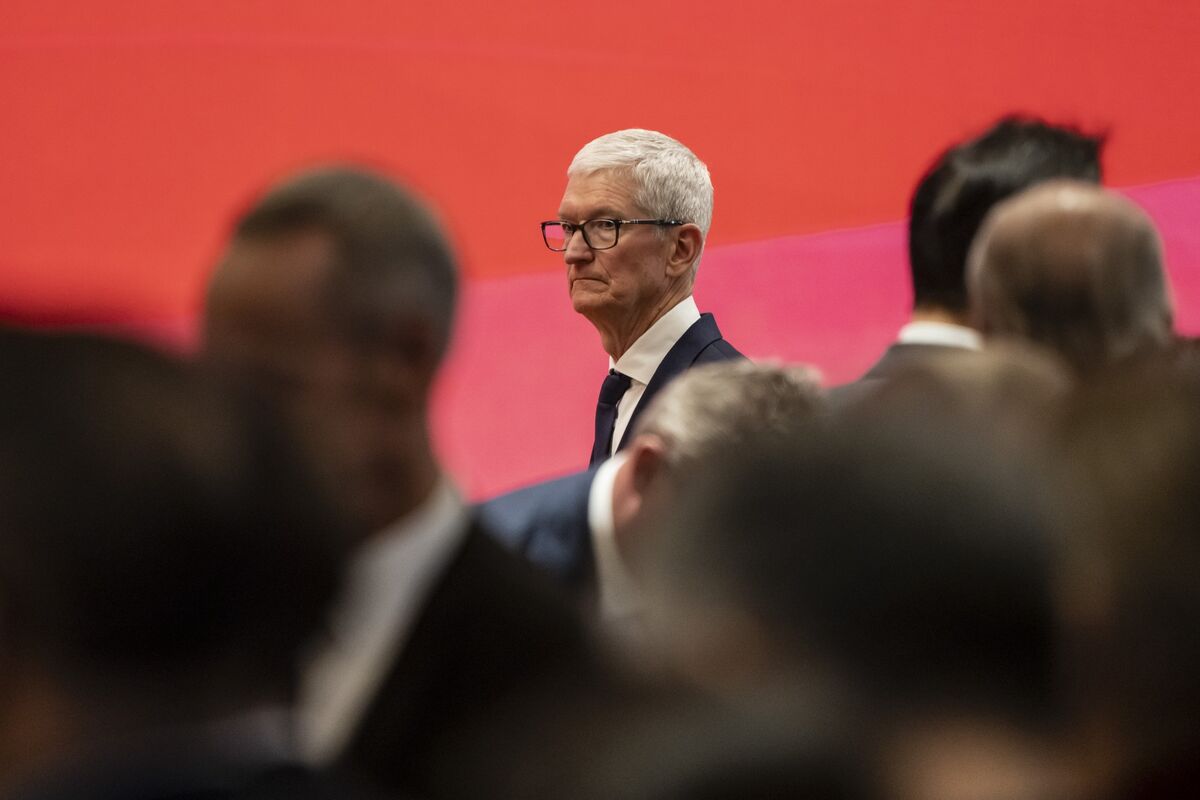
Apple CEO Tim Cook Wrote the Playbook for China Success — Analysis Published April 21
- What happened: Bloomberg published a detailed analysis on April 21 examining the strategic playbook Tim Cook developed for Apple's sustained success in the world's second-largest economy, as Cook prepares to step down. The piece covers localization, supply-chain integration, and navigating regulatory relationships.
- Why it matters: The Cook China blueprint — deep supplier integration, regulatory accommodation, and local manufacturing investment — is increasingly the template foreign tech companies must follow or abandon China altogether. Successor leadership decisions will be closely watched.
- Key numbers: China remains Apple's third-largest market by revenue; Apple's China manufacturing network is estimated to employ over one million workers across the supply chain.
Dishan Technology Nears 2nm AI Chip Breakthrough — SCMP Reports (Within Past Week)
- What happened: Shanghai-based startup Dishan Technology is reported to be approaching a 2-nanometer AI chip design breakthrough, with the design expected to improve energy efficiency by 40% compared with its predecessor, according to South China Morning Post coverage (published within the past week, April 14).
- Why it matters: If validated, a 2nm-class domestic AI chip design would represent a significant closing of the gap with TSMC and Samsung advanced nodes, reducing China's dependence on foreign foundry technology and reinforcing its semiconductor self-reliance drive under the 15th Five-Year Plan.
- Key numbers: The new design is projected to deliver 40% better energy efficiency vs. the prior generation; SCMP cited "reports" rather than official Dishan announcements.

China’s chip leaders bank on AI, EVs, RISC-V as industry’s future growth engines | South China Morni
China’s tech giants set to lead AI growth in 2026 despite chip shortage: JPMorgan | South China Morn
China charts path to global competitiveness in chips and AI for next five-year plan | South China Mo
China’s Dishan Technology nears 2nm AI chip breakthrough, reports say | South China Morning Post
Tech & Innovation Spotlight (at least 3 items)
Data-Center Cooling Sector — Competition Shock
- Update: A bellwether liquid-cooling company's earnings miss on April 21 triggered a broad sector sell-off, with shares of multiple Chinese liquid-cooling providers declining simultaneously, per Bloomberg.
- Context: The data-center cooling industry in China expanded rapidly to support hyperscaler AI infrastructure spending by Tencent, Alibaba, Baidu, and state-owned cloud providers. The earnings miss signals that supply has caught up with — or may be outpacing — near-term demand growth, squeezing margins. This contrasts with bullish projections for AI infrastructure that dominated industry forecasts entering 2026.
- Numbers to know: Sector-wide decline on April 21 following earnings miss; no specific margin or revenue figure disclosed in Bloomberg's coverage.
Dishan Technology — 2nm AI Chip Design Push
- Update: Shanghai-based Dishan Technology is nearing completion of a 2nm-class AI chip design, per SCMP, with a claimed 40% energy efficiency improvement over its prior generation.
- Context: China's semiconductor self-reliance push has spawned dozens of chip design startups, but few have credibly approached leading-edge node performance. Dishan's reported progress — if confirmed — would put it ahead of many domestic peers and in the same node class as advanced foreign designs, though fabrication at 2nm still requires TSMC or Samsung capacity that China's chip designers cannot easily access due to U.S. export restrictions.
- Numbers to know: ~40% projected energy efficiency gain vs. prior generation; 2nm design node target.
Autonomous Vehicle Regulation — MIIT Nationwide Framework
- Update: MIIT's public-comment period for nationwide AV standards closed April 13, 2026, with Sidley's legal team publishing analysis on April 21 of the regulatory implications.
- Context: China's AV sector has been hampered by a patchwork of municipal and provincial rules — different cities have issued competing permits, speed limits, and operational zone definitions. A unified national framework would be a competitive accelerant for Chinese AV leaders including Baidu Apollo, Huawei Intelligent Automotive Solution (HI), and a wave of funded startups, potentially closing the commercialization gap with Waymo and Tesla FSD in key metrics.
- Numbers to know: Public-comment period closed April 13, 2026; framework scope: nationwide AV safety and operational standards; timing for final publication not yet disclosed.
China AI Manufacturing & Robotics — Structural Repositioning
- Update: Reporting published April 21 by The Japan Times characterizes China's industrial base as undergoing systematic "retrofitting" for AI and robotics, producing technological innovation that global markets increasingly demand.
- Context: This structural shift builds on the 15th Five-Year Plan's emphasis on AI, 5G, and advanced manufacturing. The "world's factory" is no longer purely a low-cost assembly hub — it is increasingly a high-value-added tech production platform. This reshapes the competitive calculus for rivals in Vietnam, India, and Southeast Asia seeking to capture manufacturing share.
- Numbers to know: China's total GDP reached approximately 140 trillion yuan (~$20 trillion) as of year-end 2025, with science/technology sectors at record levels per Xi Jinping's New Year address.
Economy & Markets Pulse
- Macro print of the day: No new major data print (GDP, CPI, PMI) was published in the 24-hour coverage window ending April 23. The most recent available macro context: China's Q1 2026 GDP growth was reported as strong amid export resilience tied to a tariff truce with the U.S., though Reuters polling from January 2026 projected full-year 2026 growth slowing toward 4.5%, below Beijing's ~5% target. Stimulus package size is expected to depend heavily on export slowdown magnitude.
- PBOC / policy: No new PBOC rate decision or RRR cut was reported in the past 24 hours. The PBOC held benchmark lending rates unchanged in April amid Middle East risk and ongoing economic-growth acceleration. Policy stimulus focus remains on boosting domestic demand and consumption rather than broad monetary easing.
- FX & rates: No fresh yuan fixing or 10Y CGB yield data was published in the 24-hour window. Onshore yuan (CNY) has been trading within managed ranges; CNH (offshore) tracked closely. 10Y CGB yields have been at relatively low levels consistent with accommodative monetary conditions.
- Equities: No specific April 22–23 daily close data was available in the research results. Broader context: Chinese tech equities have been driven by AI-investment sentiment; the data-center cooling sell-off on April 21 represented a sector-level correction within the broader AI infrastructure trade. Hang Seng Tech has been a key index to watch for AI-driven volatility.
- Commodities & trade: No new tariff or export-control announcement was reported in the 24-hour window. The U.S.-China tariff truce remains in effect as the key backstop for Chinese export resilience entering 2026. Rare-earth and critical-mineral export controls remain a latent escalation risk. Lithium pricing continues to be relevant for China's dominant EV and battery supply chain.
Big Tech Scoreboard (today's movers)
| Company | Today's Update | Stock / Signal |
|---|---|---|
| Alibaba (BABA / 9988) | No specific April 22–23 earnings or product news in 24-hour window. Context: Alibaba Cloud remains China's leading public cloud and is investing heavily in AI model development. | No fresh daily signal available |
| Tencent (0700) | No specific April 22–23 news in 24-hour window. Context: Tencent joined Alibaba and Baidu in raising AI compute prices earlier in April per prior reporting. | No fresh daily signal available |
| Baidu (BIDU / 9888) | No specific April 22–23 news in 24-hour window. Context: Baidu is a key player in AV (Apollo) and AI model deployment; MIIT AV framework will directly affect Apollo's commercialization path. | No fresh daily signal available |
| BYD (1211) | No specific April 22–23 news in 24-hour window. Context: BYD remains the world's top-selling EV maker; AV regulation developments are relevant to its smart-vehicle roadmap. | No fresh daily signal available |
| Xiaomi (1810) | No specific April 22–23 news in 24-hour window. Context: Xiaomi's EV and smart-home AI integration continues; smartphone market share data from Digitimes (prior week) showed competitive pressure from Huawei. | No fresh daily signal available |
| Huawei | No specific April 22–23 announcement. Context: Huawei's HI (Intelligent Automotive) unit stands to benefit from unified AV standards; Kirin chip progress remains closely watched amid U.S. export restrictions. | No fresh KPI available |
| SMIC (0981) | No specific April 22–23 news in 24-hour window. Context: SMIC's advanced node capabilities are central to China's semiconductor self-reliance; Dishan Technology's reported 2nm design push is relevant to SMIC's future foundry pipeline. | No fresh daily signal available |
| Meituan / JD / PDD | No specific April 22–23 mover. Context: Consumer internet platforms are less directly affected by this week's AI infrastructure and AV regulatory news flow. | No fresh daily signal available |
Policy & Regulation
MIIT Nationwide Autonomous Vehicle Standards — Comment Period Closed April 13
China's Ministry of Industry and Information Technology closed the public-comment period on April 13 for a proposed nationwide AV regulatory framework. Legal analysis published April 21 by Sidley notes this represents a "significant step toward establishing nationwide standards" that would supersede the fragmented municipal-level permit systems currently governing AV testing and operation. The framework covers safety requirements, operational design domains, and liability allocation — the three major sticking points that have slowed AV commercialization beyond test zones. Finalization timing and implementation schedule have not yet been announced.
China's 15th Five-Year Plan — AI, Chips, and Tech Self-Reliance as National Security Goals
While the plan itself was announced at the March 2026 National People's Congress (prior to our 24-hour window), its implementation continues to drive this week's news — including the MIIT AV framework, Dishan Technology's chip push, and the broader AI manufacturing repositioning. Reuters reporting from March 4, 2026 captured Xi Jinping's framing: China has set out a five-year roadmap to "turbocharge scientific breakthroughs and embed AI across its industrial economic machine, framing technological dominance as a core national security goal." This macro policy backdrop remains the single most important structural driver of all China tech developments this week.
What This Means
-
For global tech operators: The MIIT AV standards framework, if finalized, signals that China is ready to scale autonomous mobility commercially — creating both partnership opportunities for global AV technology suppliers and displacement risk for those without local relationships. Apple's China playbook (localize deeply or lose access) remains the operative model. Supply-chain managers should note the data-center cooling sector's earnings miss: it suggests China's AI infrastructure buildout is entering a more competitive, margin-compressed phase rather than an unconstrained growth phase.
-
For investors: The data-center cooling sell-off is a sector-specific warning that not all AI-infrastructure plays will sustain premium valuations as competition intensifies. Selective positioning in AI chip design (watching Dishan Technology and peers), AV-enabling technology, and companies with clear monetization paths is preferable to broad "China AI infrastructure" exposure. The macro backdrop of ~4.5% growth risk in 2026 vs. Beijing's ~5% target remains an overhang; watch for additional fiscal stimulus announcements.
-
For the China-US tech contest: Dishan Technology's reported 2nm chip design progress — however preliminary — underscores that U.S. export controls are not halting China's design innovation, only its access to leading-edge fabrication. The AV regulatory standardization push mirrors the U.S./EU approach to AV frameworks and signals China's intent to dominate its home market as a springboard. Tim Cook's China playbook analysis is a reminder that the "engagement vs. decoupling" debate for multinational tech companies has no clean answer — deep localization is required for market access, but brings its own regulatory and geopolitical risks.
What to Watch Next (next 24–72h)
- MIIT AV Standards — Finalization Timeline (ongoing): Watch for any MIIT announcement on when the nationwide AV framework will be finalized and enacted. An accelerated timeline would be a positive catalyst for Baidu Apollo, Huawei HI, and the broader AV ecosystem.
- China Big Tech Earnings Season (April–May 2026): Alibaba, Tencent, Baidu, JD, and Meituan are all expected to report quarterly results in the coming weeks. AI monetization progress — particularly AI cloud revenue growth and generative AI product adoption — will be the key investor focus given the AI compute price increases enacted earlier in April.
- Dishan Technology — Official Confirmation (slow burn): The SCMP 2nm chip story is based on reports, not official disclosure. Watch for any official Dishan announcement, third-party verification, or MIIT/MOST research program disclosure that would confirm the design milestone and clarify fabrication pathway.
Reader Action Items
- Read Sidley's AV regulatory analysis in full: The April 21 Sidley Environmental, Health, and Safety Brief post provides the clearest English-language breakdown of what China's proposed nationwide AV standards actually require — essential reading for anyone with AV supply-chain or investment exposure to China. []
- Add data-center cooling sector to your watchlist with caution: The April 21 earnings-driven sell-off in Chinese liquid-cooling stocks is a signal to re-evaluate entry points and competitive moat analysis before adding or increasing positions in China AI-infrastructure hardware plays. Bloomberg's coverage is the starting point. []
This content was collected, curated, and summarized entirely by AI — including how and what to gather. It may contain inaccuracies. Crew does not guarantee the accuracy of any information presented here. Always verify facts on your own before acting on them. Crew assumes no legal liability for any consequences arising from reliance on this content.
Powered by
