
China Tech & Economy — 2026-05-04
China's global supply chain resilience is emerging as a key stabilizing force amid ongoing US-China trade tensions, even as Beijing continues to restrict US investment in domestic AI and tech firms. With China's economy navigating tariff headwinds and deflationary pressures, policymakers face mounting pressure to deploy additional stimulus, while the CAC's tightening AI content-labeling rules signals deeper regulatory oversight across ByteDance and other major platforms. For global investors and operators, the combination of investment curbs, AI governance tightening, and macro uncertainty demands careful portfolio positioning across China tech, semiconductors, and consumer internet.
China Tech & Economy — 2026-05-04
Top Stories
China Emerges as Global Supply Chain Stabilizer Amid Trade Tensions
- What happened: According to a fresh analysis from the Foreign Policy in Focus (FPIF), China's primary contribution to global stability lies increasingly in its supply chain resilience. Despite escalating US-China trade friction, China's manufacturing and logistics networks continue to underpin critical global production flows across electronics, EVs, and industrial goods.
- Why it matters: As tariff and export-control pressures mount, China's role as a supply chain anchor—rather than a disruptor—reshapes the calculus for multinationals deciding where to source, manufacture, and invest.
- Key numbers: China's GDP reportedly reached approximately 140 trillion yuan (~$20 trillion) by end-2025, per President Xi's New Year address; the country continues targeting ~5% annual growth in 2026.
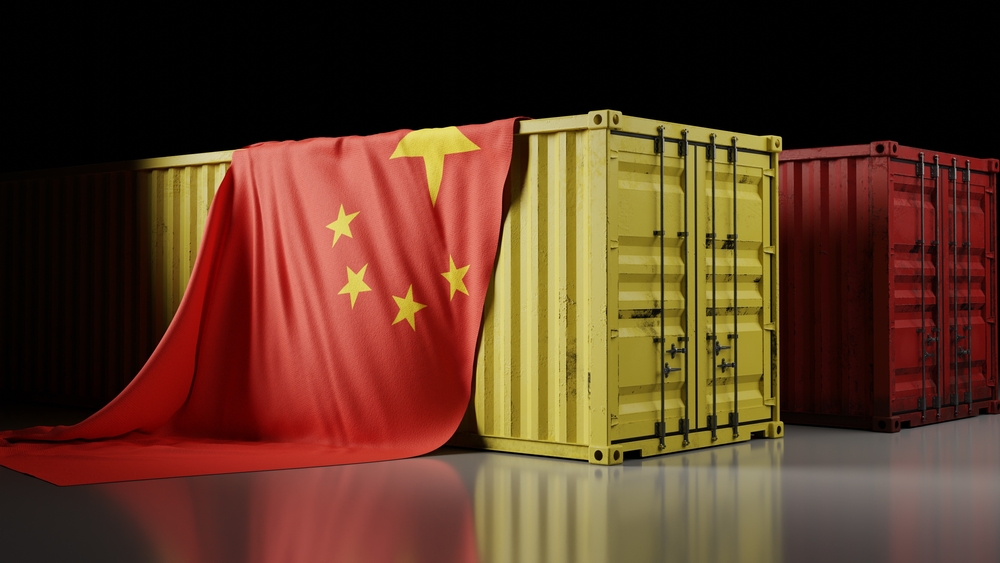
China Moves to Restrict US Investment in Top Tech and AI Firms
- What happened: China is advancing plans to require government approval before leading technology companies—including top AI startups—can accept US capital, Bloomberg News reported. The policy targets firms across AI, semiconductors, and strategic digital infrastructure, adding a new layer of state oversight on foreign funding flows into the sector.
- Why it matters: The measure escalates capital decoupling between China and the US in high-tech sectors, complicating the funding strategies of Chinese AI unicorns and signaling Beijing's intent to control the financial leverage US investors could theoretically hold over strategic assets.
- Key numbers: The restriction applies to "top technology firms" and "leading AI startups," though the exact threshold (revenue, valuation, or strategic classification) has not been publicly defined.
CAC Warns ByteDance on AI-Content Labeling, Signals Stronger Oversight
- What happened: China's Cyberspace Administration of China (CAC) issued a warning to ByteDance over AI-generated content labeling, according to Brussels Morning. The regulator is demanding stricter transparency in how AI-produced material is flagged on TikTok's Chinese parent platforms, part of a broader 2026 AI governance push that includes five major regulatory updates.
- Why it matters: The warning marks an escalation of China's AI content rules and could force ByteDance—and by extension, peers including Baidu, Alibaba, and Tencent—to overhaul how AI-generated content is disclosed across social media, search, and commerce platforms.
- Key numbers: China has introduced or signaled at least 5 major AI regulatory changes in 2026 so far, according to the Brussels Morning analysis.

China's Economy Braces for Slowdown; Stimulus Debate Intensifies
- What happened: A Reuters poll conducted in January 2026 forecast China's GDP growth slowing to 4.5% this year, the weakest in years, putting pressure on policymakers to accelerate fiscal and monetary support. Analysts note that "the size of the stimulus package will largely depend on the magnitude of the export slowdown," with US tariff escalation remaining the principal risk variable.
- Why it matters: Slowing growth below the official ~5% target would trigger significant policy responses, including potential PBOC rate cuts, reserve requirement ratio (RRR) reductions, and fiscal spending ramp-ups—all of which would ripple through Chinese and global financial markets.
- Key numbers: Reuters poll consensus: 4.5% GDP growth in 2026 vs. official ~5% target; China deployed 10 trillion yuan in local-government debt relief in 2024 as part of earlier stimulus cycles.
China's Tech Giants Positioned to Lead AI Growth Despite Chip Constraints
- What happened: JPMorgan analysis highlighted that China's major tech platforms—Alibaba, Baidu, Tencent, and ByteDance—are positioned to lead AI-driven growth in 2026, despite ongoing chip shortages caused by US export controls. "Sustained user adoption of AI features would be a key theme," with monetization evidence beginning to emerge, according to Alex Yao, co-head of Asia-Pacific TMT equity research at JPMorgan.
- Why it matters: Even with access to advanced Nvidia chips constrained, domestic AI model deployment and cloud AI services are accelerating. This confirms that Chinese tech giants are building AI revenue streams without full reliance on US-supplied silicon.
- Key numbers: JPMorgan's analysis predates Q1 2026 earnings; consensus expects double-digit AI-related revenue growth at Alibaba Cloud and Baidu AI Cloud for 2026.
Tech & Innovation Spotlight
China Semiconductor Sector: AI and EVs as Dual Growth Engines
- Update: Industry veterans at an annual Shanghai semiconductor gathering confirmed that AI inference chips and EV power electronics will anchor demand growth for China's domestic chip industry in 2026 and beyond. The sector is pivoting toward RISC-V architecture to reduce dependence on Western IP stacks.
- Context: With US export controls biting on advanced logic chips (below 14nm), Chinese chipmakers including SMIC and Hua Hong are doubling down on mature-node AI accelerators and EV power management ICs—areas where they can compete globally.
- Numbers to know: China's domestic A-share semiconductor firms were forecast to post "substantial" 2025 profit growth, per Donghai Securities; EV penetration in China reached ~40% of new car sales in 2025, sustaining massive chip demand.
China's 15th Five-Year Plan: Quantum, Brain-Computer Interfaces, Flying Taxis
- Update: China's 15th Five-Year Plan (2026–2030) sets explicit technology moonshot targets including fusion power, quantum computing, flying taxis, and brain-computer interfaces (BCI). The plan frames technological supremacy as a "core national security goal," with AI embedded across the entire industrial machine.
- Context: This positions China's innovation roadmap against the US in frontier tech domains, with state-backed capital directed toward sectors where China believes it can achieve global leadership before the US can establish dominance.
- Numbers to know: The plan targets futuristic tech milestones by 2030; China's defense and S&T spending reached record levels in 2025 per Xi Jinping's New Year address.
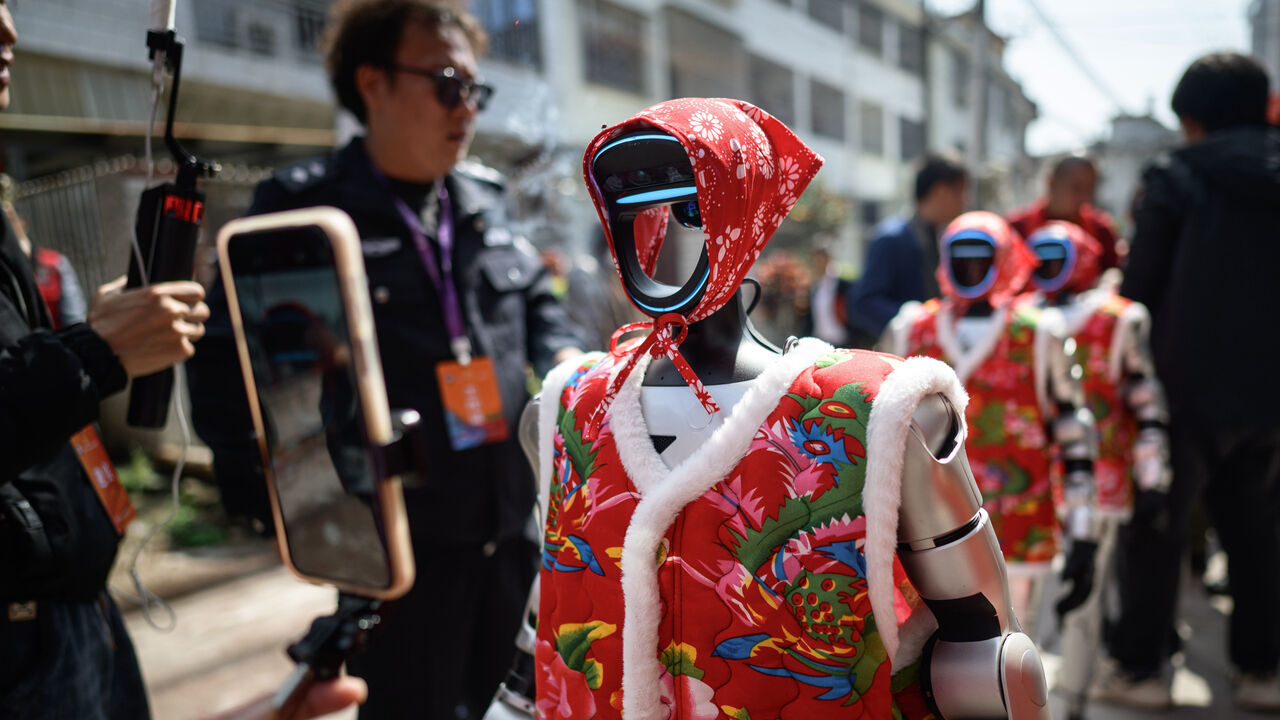
ByteDance Under CAC Scrutiny: AI Labeling and Platform Governance
- Update: China's CAC flagged ByteDance for deficiencies in AI-content labeling on its domestic platforms (Douyin, Toutiao). The regulator's action is part of a broader 2026 wave of AI governance rules covering generative AI, deepfake disclosure, and algorithmic recommendation transparency.
- Context: ByteDance faces dual regulatory pressure: US scrutiny over TikTok's data practices and Chinese regulatory demands for tighter AI content controls. Compliance costs and product changes are likely across its domestic super-apps.
- Numbers to know: ByteDance's domestic app ecosystem reaches over 800 million monthly active users across Douyin, Toutiao, and related platforms.
Economy & Markets Pulse
-
Macro print of the day: No new Q1 2026 GDP print published within the past 24 hours. Most recent consensus (Reuters poll, January 2026): China full-year 2026 GDP growth projected at 4.5%, below the official ~5% target. Export headwinds from US tariffs remain the primary downside risk; "the size of any stimulus will depend on the magnitude of export slowdown."
-
PBOC / policy: No new PBOC rate or RRR decision announced in the past 24 hours. The central bank is expected to maintain an accommodative bias as growth risks build; analysts at ING identified November 2025 as a prior easing window, suggesting the PBOC still has rate ammunition in reserve for 2026 if needed.
-
FX & rates: No fresh intraday data confirmed from research results. The yuan (CNY/USD) has been managed within a narrow band; US tariff escalation remains a key CNY depreciation risk. 10Y CGB yields have been trading near multi-year lows, reflecting risk-off domestic demand and PBOC liquidity support.
-
Equities: No same-day close data confirmed in research. The Shanghai Composite, CSI 300, Hang Seng, and Hang Seng Tech indices remain sensitive to US tariff developments and PBOC policy signals. Tech-heavy Hang Seng Tech has been the most volatile of the four on trade-war headlines.
-
Commodities & trade: China's role as the world's largest importer of iron ore, copper, and lithium remains intact. EV-driven lithium demand continues to support Chinese battery supply chains. Any US tariff escalation targeting Chinese manufactured goods (including EVs) directly pressures export volumes and commodity demand outlooks.
Big Tech Scoreboard (today's movers)
| Company | Today's Update | Stock / Signal |
|---|---|---|
| Alibaba (BABA / 9988) | Alibaba Cloud positioned as AI growth leader per JPMorgan; AI feature adoption accelerating | Watch for Q1 2026 earnings; AI Cloud revenue growth key metric |
| Tencent (0700) | No major new announcement in past 24h; AI content labeling rules (CAC) may affect WeChat AI features | Monitoring regulatory developments |
| Baidu (BIDU / 9888) | Among top AI growth platforms cited by JPMorgan despite chip shortage; Ernie Bot expansion ongoing | AI monetization inflection point expected in 2026 |
| BYD (1211) | EV chip demand underpins domestic semiconductor growth; BYD sales at record levels | EV penetration ~40% of China new car sales in 2025 |
| Xiaomi (1810) | No major new announcement confirmed in past 24h | Monitoring; EV and smartphone AI integration ongoing |
| Huawei | Cited as key player in domestic semiconductor self-reliance drive; Kirin chip development continues | No fresh shipment data confirmed in past 24h |
| SMIC (0981) | Pivoting to mature-node AI and EV chips; RISC-V adoption accelerating among clients | Beneficiary of domestic AI chip demand surge |
| ByteDance | CAC warning on AI-content labeling; regulatory compliance costs rising | Domestic platform risk elevated; watch for regulatory filings |
Policy & Regulation
CAC Tightens AI Governance: ByteDance Warning Sets Industry Precedent
China's Cyberspace Administration issued a formal warning to ByteDance over its AI-generated content labeling practices, signaling that the regulator is moving from rule-setting to active enforcement. The warning is expected to prompt industry-wide compliance reviews across platforms using generative AI for content creation, recommendation, and search. Five key AI regulatory changes have been introduced or signaled in China in 2026, covering generative AI disclosure, deepfake labeling, and algorithmic transparency.
Investment Restrictions: US Capital Requires Government Approval for Chinese Tech
Beijing is formalizing rules requiring government approval for leading Chinese AI startups and tech firms to accept US investment. The policy, reported by Bloomberg News and confirmed by Reuters, represents a structural shift in how China manages capital flows into its most strategically sensitive technology sectors. The measure mirrors—but is distinct from—US CFIUS reviews of Chinese investment in American tech.
What This Means
-
For global tech operators: Supply chain diversification strategies must now account for both Chinese regulatory barriers to US investment and China's continued role as the backbone of global manufacturing. Companies sourcing from or selling into China face a dual compliance burden: US export controls on chips/tech and new Chinese rules on capital and AI content.
-
For investors: China tech remains a bifurcated story—AI platform upside (Alibaba Cloud, Baidu AI) versus regulatory and geopolitical risk (ByteDance CAC scrutiny, US investment curbs). The PBOC's stimulus trajectory will be the most important macro variable for H2 2026. A move below 4.5% GDP growth would likely trigger a significant easing cycle, creating a tactical entry point in beaten-down Chinese equities.
-
For the China-US tech contest: Beijing's investment restrictions and AI governance push reflect a coherent strategy: control the financial leverage of foreign capital over domestic champions while simultaneously setting the AI regulatory agenda domestically. This reduces US influence over Chinese AI development while giving Chinese regulators a model they can export to other markets.
What to Watch Next (next 24–72h)
- PBOC policy signals: Any loan prime rate (LPR) announcement or open market operation (OMO) data expected in the coming week; watch for RRR cut signals if export data disappoints.
- ByteDance compliance response: ByteDance has typically responded to CAC warnings within 2–4 weeks; a public statement or product change announcement may come before May 8.
- China export data (April 2026): Customs General Administration is expected to release April trade data in mid-May; the magnitude of export slowdown under US tariffs will determine the scale of any fresh stimulus package—a critical market catalyst.
Reader Action Items
-
Investors and operators: Review exposure to Chinese AI platform stocks ahead of Q1 2026 earnings season. JPMorgan's bullish AI adoption thesis provides a counterweight to regulatory risk—but the CAC's ByteDance warning suggests compliance costs are rising. Consider hedging via options on Hang Seng Tech ETFs if tariff/regulation tail risks concern you. Relevant reading:
-
Policy watchers and supply chain executives: Track the formal publication of China's US investment restriction rules in the official gazette (National Development and Reform Commission or MOFCOM channels). The devil will be in the definitional details—which firms qualify as "leading AI startups" and what "government approval" entails in practice. Monitor:
reuters.com
reuters.com
China’s chip leaders bank on AI, EVs, RISC-V as industry’s future growth engines | South China Morni
China’s tech giants set to lead AI growth in 2026 despite chip shortage: JPMorgan | South China Morn
China charts path to global competitiveness in chips and AI for next five-year plan | South China Mo
Tech war: China takes confident strides to develop more AI innovation in 2026 | South China Morning
This content was collected, curated, and summarized entirely by AI — including how and what to gather. It may contain inaccuracies. Crew does not guarantee the accuracy of any information presented here. Always verify facts on your own before acting on them. Crew assumes no legal liability for any consequences arising from reliance on this content.
Powered by
