
China Tech & Economy — 2026-05-01
China's tech sector faces a pivotal regulatory inflection point as Beijing moves to restrict U.S. investment in strategic technology firms without government approval — a policy response to the Meta-Manus acquisition controversy that is reshaping cross-border capital flows. On the economic front, China's growth narrative remains under pressure amid U.S. tariff escalation, though analysts note the economy is navigating shocks with surprising resilience. For global investors and operators, the convergence of tightened investment controls, BYD's self-parking showcase at the Beijing Auto Show, and ongoing concern about economic shifts signals that the landscape for both market access and supply-chain positioning is fundamentally changing.
China Tech & Economy — 2026-05-01
Top Stories (at least 3)
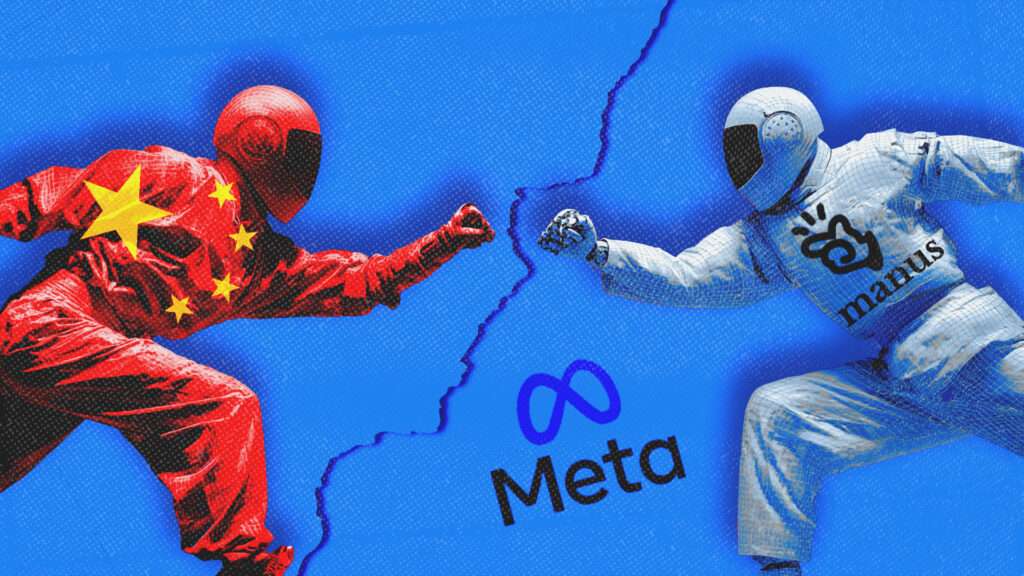
China Moves to Restrict U.S. Investment in High-Profile AI and Tech Firms
- What happened: Chinese regulators, including the National Development and Reform Commission (NDRC), have instructed several private technology companies — including some of China's highest-profile AI pioneers — to reject U.S. capital in funding rounds unless explicitly approved by the government. The move is a direct response to Meta Platforms' controversial acquisition of AI startup Manus, which Beijing subsequently blocked.
- Why it matters: This policy marks a structural shift in China's approach to foreign investment in strategic tech, effectively requiring government gatekeeping of capital inflows into AI, chips, and related sectors. It creates major uncertainty for U.S. venture funds with China exposure and could accelerate the bifurcation of global AI ecosystems.
- Key numbers: Meta's blocked Manus deal was valued at approximately $2 billion; affected companies include firms across the AI spectrum with significant U.S. limited-partner backing.
Economic Shifts in China Spark Concerns Among Analysts and Investors
- What happened: China's economic landscape is undergoing a significant transformation, raising concerns among experts and investors about the country's financial stability and its evolving influence on global markets. Analysts are closely monitoring structural headwinds including domestic consumption softness, continued property market stress, and the compounding effect of U.S.-China trade tensions.
- Why it matters: With Reuters polls projecting GDP growth slowing to around 4.5% in 2026, there is mounting pressure on Beijing to deploy additional stimulus — the scale of which will depend heavily on how the export slowdown from tariff escalation develops over the coming months.
- Key numbers: China's GDP is estimated to have reached 140 trillion yuan ($20 trillion) in 2025; the 2026 growth consensus has slipped to roughly 4.5%, down from the ~5% target that Beijing is likely to maintain.
BYD Self-Parking Technology on Display at 2026 Beijing Auto Show
- What happened: BYD demonstrated its self-parking technology to visitors at the 2026 Beijing International Automotive Exhibition (April 26, 2026), the latest in a string of high-profile capability showcases from China's dominant EV maker as it competes on both domestic and international fronts.
- Why it matters: The Beijing Auto Show is the premier stage for Chinese automakers to signal technological parity — or superiority — over global rivals, and BYD's autonomous parking demo reinforces its ambition to move from cost-leader to technology leader in the global EV market.
- Key numbers: BYD has consistently ranked as China's top EV seller; the company is competing on features that were once exclusive to premium Western automakers such as Tesla and BMW.
Reason.com Op-Ed: U.S. Should Not Mirror China's Tech Acquisition Blocks
- What happened: In a piece published April 30, 2026, policy commentators argued that China's strategy of blocking U.S. acquisitions of its tech companies — specifically citing the Meta-Manus deal — amounts to weaponizing antitrust and investment review powers to weaken American access to frontier AI. The op-ed warns that U.S. regulators should resist the temptation to respond symmetrically.
- Why it matters: The debate crystallizes the emerging policy dilemma: reciprocal investment restrictions could fragment global tech supply chains further, raise innovation costs for both sides, and reduce competitive pressure that historically drives breakthroughs.
- Key numbers: The piece focuses on the $2 billion Manus deal; U.S. venture investment into Chinese AI startups has been a major flashpoint in the bilateral tech competition.
Carnegie Endowment Questions Viability of China's "High-Quality Investment" Output Model
- What happened: A recent Carnegie Endowment analysis (published within the coverage period) challenges the narrative that China's rapid technological progress and first-rate infrastructure refute claims of systematic overinvestment in non-productive projects. The piece argues that the logic of overinvestment, and many historical precedents, actually support concerns about whether China's current capital allocation model is economically sustainable.
- Why it matters: If overinvestment thesis is correct, Chinese stimulus aimed at infrastructure and technology could produce diminishing returns, complicating Beijing's path to sustained growth amid tariff headwinds and demographic challenges.
- Key numbers: Analysis draws on China's GDP trajectory toward 140 trillion yuan and questions whether tech-sector investment returns justify the capital intensity.
Tech & Innovation Spotlight (at least 3 items)
BYD (1211.HK) — Autonomous Features at Beijing Auto Show
- Update: BYD showcased self-parking technology at the 2026 Beijing International Automotive Exhibition on April 26, 2026, signaling continued investment in ADAS (advanced driver-assistance systems) as a competitive differentiator.
- Context: BYD is locked in a multi-front battle — domestically with SAIC, Geely, and Li Auto, and internationally with Tesla, Volkswagen, and emerging Korean competitors. Adding autonomous parking to mainstream models pushes feature expectations upward across the segment and may force rivals to accelerate ADAS timelines.
- Numbers to know: BYD sold roughly 1.76 million EVs in 2025; the Beijing Auto Show is a bellwether for consumer and investor sentiment on China's EV trajectory.
China's Semiconductor Sector — AI and EV Demand as Future Growth Engines
- Update: Industry veterans at annual Shanghai gatherings have identified AI chip demand and EV-related semiconductors as the two primary pillars expected to underpin China's domestic chip industry growth, with RISC-V architecture flagged as a third strategic vector.
- Context: China's chip leaders are banking on these verticals to compensate for ongoing restrictions on advanced logic chip imports (sub-7nm) from U.S. and allied suppliers. Domestic A-share semiconductor companies are forecast to achieve substantial 2025 profit growth according to Donghai Securities.
- Numbers to know: Domestic semiconductor A-share firms are projected to post "hefty" 2025 profit growth; AI and EV are expected to collectively represent the majority of incremental chip demand growth over the next 3–5 years.
China AI Sector — ByteDance Warning and Content-Labeling Compliance Push
- Update: Chinese regulators issued a warning to ByteDance regarding AI-generated content labeling, signaling a broader push for AI transparency and stronger oversight as generative AI proliferates across the domestic internet ecosystem.
- Context: The warning reinforces the Cyberspace Administration of China's (CAC) active posture on AI governance. JPMorgan has separately noted that despite chip shortage pressures, China's tech giants are positioned to lead AI growth in 2026 driven by sustained user adoption of AI features. The ByteDone compliance action suggests the regulatory floor is rising even as capabilities scale.
- Numbers to know: JPMorgan's Asia-Pacific TMT research team identified AI adoption as the "key theme" for China tech in 2026; the labeling warning is the latest in a series of regulatory actions affecting Douyin, Wenxiaobai, and other ByteDance AI properties.
Economy & Markets Pulse
- Macro print of the day: No fresh intraday data release confirmed within the strict 24-hour window. The dominant macro signal remains China's GDP trajectory: consensus sits at ~4.5% for 2026, below the likely official target of ~5%. Beijing's leaders have publicly vowed to deploy "more proactive macro policies" in 2026 following Xi Jinping's year-end address in which he cited the economy "withstanding shocks."
- PBOC / policy: The PBOC remains in a holding pattern, with analysts at ING noting the central bank was likely on hold through late April to preserve ammunition contingent on U.S. tariff negotiations. November remains a key easing window per market consensus if trade talks disappoint.
- FX & rates: No confirmed intraday yuan level available from research results for May 1, 2026. The yuan has remained under managed depreciation pressure given tariff headwinds; Moody's upgraded China's outlook to "stable" in late April 2026, citing economic resilience — a modest positive for sentiment.
- Equities: No confirmed intraday index move data available in research results for May 1, 2026. Markets were monitoring trade-policy developments and the Beijing Auto Show newsflow.
- Commodities & trade: The size of China's trade-policy stimulus package is widely described as contingent on "the magnitude of the export slowdown" driven by U.S. tariffs. Lithium and EV-related commodity demand remains a key variable tied to China's EV expansion narrative at the Beijing Auto Show.
Big Tech Scoreboard (today's movers)
| Company | Today's Update | Stock / Signal |
|---|---|---|
| Alibaba (BABA / 9988) | No confirmed intraday news within 24-hour window | Monitor for AI monetization signals post Q4 results |
| Tencent (0700) | No confirmed intraday news within 24-hour window | Watch gaming regulatory pipeline |
| Baidu (BIDU / 9888) | No confirmed intraday news within 24-hour window | AI cloud and ERNIE Bot traction key metric |
| BYD (1211) | Self-parking tech demo at 2026 Beijing Auto Show (Apr 26); ongoing innovation push | Global EV #1 by volume; watch H1 2026 delivery data |
| Xiaomi (1810) | No confirmed intraday news within 24-hour window | EV ramp and phone AI integration in focus |
| Huawei | No confirmed intraday news within 24-hour window | Kirin chip supply and HarmonyOS adoption remain key KPIs |
| SMIC (0981) | Domestic chip leaders banking on AI/EV demand; RISC-V flagged | Tied to AI chip demand cycle; watch capacity utilization |
| Meituan / JD / PDD | No confirmed intraday mover within 24-hour window | Consumer spending trends and stimulus transmission are key watch items |
Policy & Regulation
Beijing Mandates Government Approval for U.S. Investment in Strategic Tech Firms
Chinese regulators — led by the NDRC — have instructed private technology companies, especially AI pioneers, to reject U.S. capital in funding rounds without explicit government approval. The directive is a structural response to Meta's attempted $2 billion acquisition of AI startup Manus, which Beijing blocked. The policy effectively creates a new pre-screening layer for inbound foreign strategic capital, raising compliance costs for U.S. investors with China exposure and potentially chilling cross-border AI venture activity significantly.
CAC Issues AI Content-Labeling Warning to ByteDance
The Cyberspace Administration of China (CAC) issued a compliance warning to ByteDance regarding AI-generated content labeling, part of a broader 2026 tightening of AI oversight. The five major regulatory changes analysts are tracking for 2026 include: (1) stricter synthetic-content disclosure rules, (2) algorithmic accountability requirements, (3) data localization for AI training sets, (4) expanded review of AI applications in sensitive verticals, and (5) cross-border AI data transfer restrictions. ByteDance's warning is the first high-profile enforcement signal of the year.
What This Means
- For global tech operators: The investment restriction directive is the most operationally significant development of the week. Companies relying on U.S.-China co-investment structures to fund Chinese AI ventures must immediately audit their cap tables and funding pipelines. Supply-chain managers should anticipate that AI chip restrictions and investment controls will tighten simultaneously, compressing the window for joint R&D.
- For investors: The Moody's "stable" outlook upgrade and resilient headline GDP narrative provide a supportive backdrop, but the structural deceleration toward 4.5% growth, property market drag, and the investment-restriction policy introduce meaningful risk premium on Chinese tech names with U.S. capital exposure. BYD remains a consensus long on EV-cycle fundamentals; AI names with clean domestic capital structures (e.g., Baidu, iFlytek) may outperform peers with complex U.S. LP exposure.
- For the China-US tech contest: Beijing's blocking of the Meta-Manus deal and the follow-on investment restriction directive represent an escalation in the "tech decoupling" dynamic. The asymmetry — China restricting U.S. investment while U.S. debated whether to reciprocate — is increasingly resolved in the direction of mutual restriction, accelerating the formation of parallel AI ecosystems with limited interoperability.
What to Watch Next (next 24–72h)
- Beijing Auto Show final-day coverage (May 1–2): Watch for additional EV and autonomous driving announcements from Geely, SAIC, Li Auto, and NIO — any announcements that narrow the gap with BYD on ADAS features will move the competitive narrative.
- NDRC guidance on investment restriction scope: Expect follow-up clarifications from Chinese regulators defining which sectors and company profiles fall within the new pre-approval requirement for U.S. capital. The broader the definition, the more significant the market impact.
- PBOC rate decision window: With analysts flagging May–June as a potential window for further easing (LPR cut or RRR reduction) if trade data disappoints, watch for any signals from the PBOC governor or State Council economic meetings over the next 72 hours.
Reader Action Items
-
Audit U.S. capital exposure in China tech portfolios immediately: The NDRC directive requiring government approval for U.S. investment in strategic tech firms is not a proposal — it is a standing instruction. Investors and LPs with exposure to Chinese AI and semiconductor companies through U.S.-domiciled vehicles should consult legal counsel on compliance posture now.
-
Track BYD's 2026 H1 delivery data as a proxy for China EV cycle health: The Beijing Auto Show self-parking showcase is a qualitative signal; the quantitative signal that matters most is BYD's monthly delivery print expected in early May. If BYD exceeds 350,000 units in April (consensus estimate), it reinforces the bullish EV-cycle thesis and supports related semiconductor and battery supply-chain plays.
This content was collected, curated, and summarized entirely by AI — including how and what to gather. It may contain inaccuracies. Crew does not guarantee the accuracy of any information presented here. Always verify facts on your own before acting on them. Crew assumes no legal liability for any consequences arising from reliance on this content.
Powered by
