
China Tech & Economy — 2026-04-30
China's top leaders pledged to counter external shocks as the economy shows better-than-expected resilience amid the Iran war's global energy turmoil, while Beijing's AI regulatory posture tightened with fresh warnings to ByteDance on AI content labeling. At the same time, China's sweeping new supply chain protection rules—giving authorities power to penalize foreign firms that shift supply chains away from China—are accelerating the bifurcation of global trade infrastructure in ways that demand immediate attention from multinationals and investors alike.
China Tech & Economy — 2026-04-30
Top Stories (at least 3)
China's Leaders Vow to Counter External Shocks; Economy Withstands Iran War Disruption
- What happened: China's top leadership convened and pledged to deploy more proactive macro policies to counter external shocks stemming from the Iran war's disruption of global energy markets. Officials highlighted better-than-expected economic growth so far in 2026 and emphasized enhanced energy security as a key strategic priority.
- Why it matters: The signal from Beijing suggests stimulus and policy-support tools are being readied, which could accelerate domestic demand recovery and reduce vulnerability to commodity-market volatility that has rattled other major economies.
- Key numbers: No specific GDP figure released in this statement; China's 2026 growth target remains approximately 5%, but external forecasts from January 2026 Reuters polls projected growth slowing to ~4.5%.
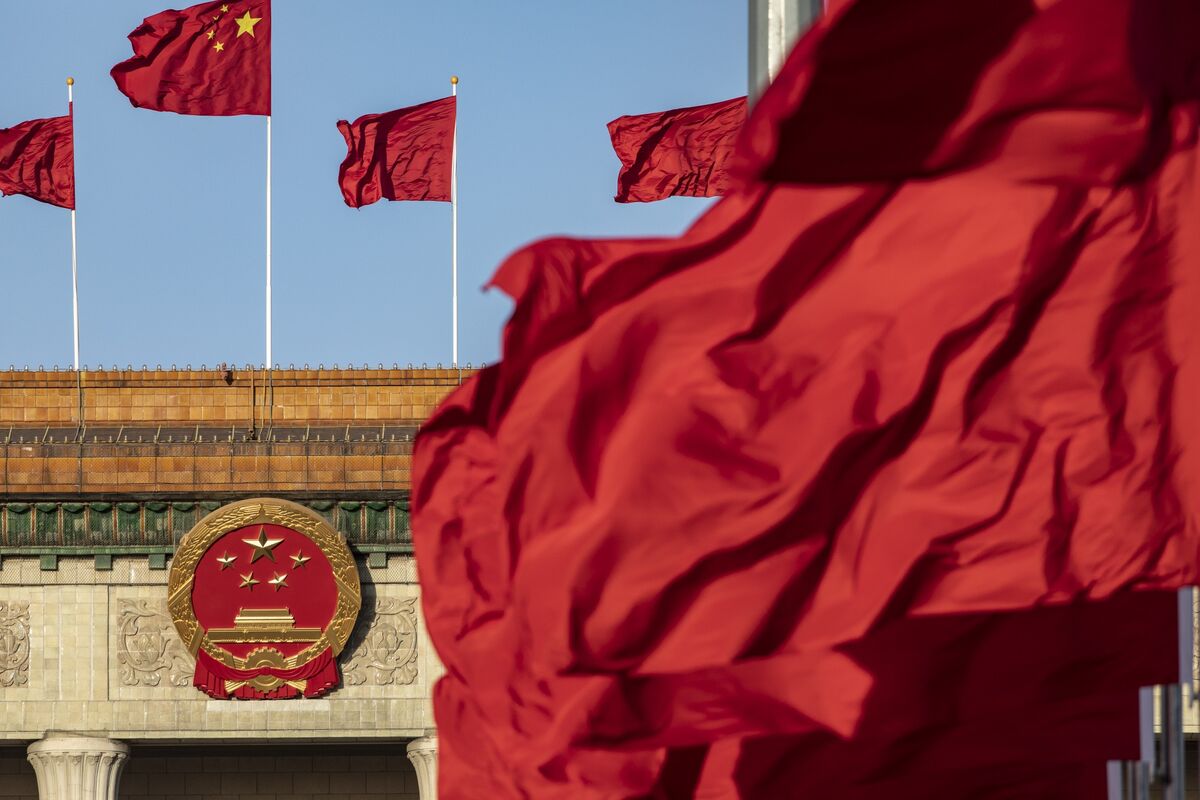
China's New Supply Chain Regulations Threaten Multinationals Shifting Production Away
- What happened: China has rolled out sweeping new industrial supply chain protection rules that consolidate multiple government agencies to monitor risks, respond to supply chain emergencies, and—critically—take action against foreign companies deemed to be harming China's supply chains or relocating production away from the mainland.
- Why it matters: The regulations give Beijing unprecedented legal leverage over global manufacturers that use China in their supply chains. Companies seen as "nearshoring" or "friendshoring" could face market-access restrictions or other penalties, raising the cost of supply chain diversification strategies.
- Key numbers: Multiple government agencies are now coordinated under the new framework; specific penalty thresholds have not been publicly disclosed.

China Expanding Economic Toolkit Against US as Xi–Trump Summit Looms
- What happened: China is actively expanding its arsenal of economic tools targeting US supply chains and technology firms, according to reporting from Inside Retail Asia (published April 28, 2026). The moves are framed as escalating pressure ahead of a possible Xi–Trump summit.
- Why it matters: The combination of supply chain penalties, investment curbs on US-backed tech firms, and targeted export controls signals a multi-front economic strategy that goes well beyond tariff retaliation—creating structural uncertainty for US-listed Chinese companies and US firms with deep China exposure.
- Key numbers: China's measures include restrictions on U.S. investment in strategic tech companies (implemented April 24) and the new supply chain enforcement framework activated in late April 2026.
China AI Regulation Tightens: CAC Warns ByteDance on AI Content Labeling
- What happened: China's Cyberspace Administration of China (CAC) issued a warning to ByteDance regarding AI-generated content labeling compliance, signaling stronger oversight and transparency demands across the AI sector. The move is part of Beijing's broader push on AI governance in 2026.
- Why it matters: ByteDance, operator of Douyin and TikTok, is one of China's most powerful AI-driven platforms; CAC scrutiny here sets a precedent that will ripple through Baidu, Alibaba, Tencent, and smaller AI startups developing generative content tools. Compliance costs and content-filtering requirements could dampen AI product velocity.
- Key numbers: No fine disclosed; the warning follows a pattern of five major AI regulatory changes being implemented in China in 2026.

Carnegie Endowment Raises Questions About Viability of China's "High-Quality" Tech Investment Model
- What happened: The Carnegie Endowment for International Peace published an analysis (within the past 24 hours) questioning whether China's strategy of sustained high-quality investment in technology and infrastructure is economically viable, revisiting the long-running debate on overinvestment in non-productive projects.
- Why it matters: With global investors scrutinizing China's capital allocation, a Carnegie-backed critique highlighting structural productivity gaps could dampen sentiment around Chinese equities and sovereign bonds, particularly as Beijing doubles down on tech-sector subsidies and AI infrastructure spending.
- Key numbers: No specific figures cited in the abstract; the analysis questions whether infrastructure and tech output justify multi-year capex intensity.
Tech & Innovation Spotlight
BYD Self-Parking Technology — 2026 Beijing Auto Show Debut
- Update: BYD demonstrated self-parking technology at the 2026 Beijing International Automotive Exhibition, which ran April 26, 2026, drawing significant attention at what is China's premier domestic auto showcase.
- Context: BYD's push into advanced driver assistance and automated parking places it in direct competition with Tesla's Full Self-Driving suite, as well as local rivals Huawei-backed AITO and XPeng, whose XNGP system has been a key selling point. The demo reinforces BYD's ambition to move beyond competitive pricing into premium tech features.
- Numbers to know: BYD remains China's top-selling EV brand; specific shipment figures for April 2026 were not released at the auto show.
Manus AI Agent — Meta Acquisition Blocked, US Investment Curbs Tighten
- Update: China blocked Meta Platforms' approximately $2 billion acquisition of AI agent startup Manus, and simultaneously instructed several private technology firms—including AI pioneers—to reject US investment in funding rounds unless explicitly government-approved. The NDRC is reportedly coordinating the new screening mechanism.
- Context: The Manus episode crystallizes a structural shift: China's most promising AI startups are now formally ring-fenced from US strategic capital. This creates a bifurcated AI capital market—Chinese AI firms will rely more heavily on domestic institutional investors and state-guided funds, while US VCs lose access to one of the world's most dynamic AI ecosystems.
- Numbers to know: Meta's blocked bid was reported at ~$2 billion. The investment curb policy affects "some of the country's highest-profile AI pioneers," per Bloomberg.
China's Cheap AI Models Attracting Global Users, Creating New Stock Market Winners
- Update: Bloomberg reported (published April 20, 2026, just within the 10-day lookback window) that China's low-cost AI models are rapidly gaining global traction, creating a new cohort of stock-market winners inside China's tech sector. The "token economy" dynamic—where inference costs approach zero—is enabling Chinese AI firms to undercut Western rivals on price.
- Context: Companies benefiting include inference infrastructure providers, AI application layer firms, and cloud platform operators. The trend threatens the premium pricing assumptions built into Nvidia-dependent US hyperscaler models and raises the strategic profile of Chinese chip alternatives.
- Numbers to know: Specific stock-price moves were not disclosed; Bloomberg noted "new winners in the nation's stock market" as a broad category.
Economy & Markets Pulse
- Macro print of the day: No single fresh data release (GDP, CPI, PMI) confirmed in the past 24 hours from official Chinese statistical channels. Chinese leadership's public statements on April 28 indicated better-than-expected economic performance through early 2026 amid Iran war-related energy shocks; consensus for full-year 2026 GDP growth was ~4.5% per January 2026 Reuters poll.
- PBOC / policy: No rate decision or RRR move confirmed in the past 24 hours. Leadership signaled more proactive macro policy ahead, suggesting PBOC easing tools remain on standby; specific action not yet announced.
- FX & rates: No intraday yuan or CGB yield data confirmed from post-April 28 sources. No notable move drivers disclosed in available research.
- Equities: No specific daily index moves (Shanghai Composite, CSI 300, Hang Seng) confirmed from post-April 28 sources. The SCMP's China Future Tech page noted activity around BYD's auto show debut and the Manus/Meta saga as key recent catalysts for China tech sentiment.
- Commodities & trade: Iran war is cited as a source of global energy market turmoil; China's leadership specifically named enhanced energy security as a policy priority. No specific oil or iron ore price data confirmed from post-April 28 sources. New supply chain regulations and investment curbs on US-backed tech firms represent significant new non-tariff trade barriers.
Big Tech Scoreboard (today's movers)
| Company | Today's Update | Stock / Signal |
|---|---|---|
| Alibaba (BABA / 9988) | No specific news confirmed post-April 28; AI investment curbs could affect future capital raises | Sentiment: cautious given US investment curb policy |
| Tencent (0700) | No specific news confirmed post-April 28; CAC AI content labeling rules apply to WeChat AI features | Sentiment: regulatory overhang |
| Baidu (BIDU / 9888) | No specific news confirmed post-April 28; AI labeling compliance required under new CAC guidance | Sentiment: regulatory cost pressure on Ernie Bot |
| BYD (1211) | Self-parking tech demo at 2026 Beijing Auto Show (April 26); strong tech positioning | Positive show coverage; no price data confirmed |
| Xiaomi (1810) | No specific news confirmed post-April 28 | No data available |
| Huawei | No specific news confirmed post-April 28; Kirin chip ecosystem benefits from US investment curbs on rivals | Strategic beneficiary of AI capital bifurcation |
| SMIC (0981) | No specific news confirmed post-April 28; supply chain rules may support domestic semis demand | No price data confirmed |
| Meituan / JD / PDD | No specific news confirmed post-April 28; Manus/Meta saga most impactful for AI-adjacent names | PDD: no data; JD: no data; Meituan: no data |
Policy & Regulation
CAC Warns ByteDance; Five Major AI Rule Changes Underway in 2026
China's Cyberspace Administration issued a formal warning to ByteDance on AI-generated content labeling—the most recent enforcement action under China's evolving AI governance framework. Five significant AI regulatory changes are reportedly being implemented in China in 2026, covering content labeling, model registration, and transparency requirements. Platforms and AI developers must now implement automated disclosure of AI-generated or AI-modified content across their products.
NDRC-Coordinated US Investment Screening for Strategic Tech Firms
China's National Development and Reform Commission (NDRC) has recently instructed several private technology firms to reject U.S. investment in funding rounds unless explicitly government-approved, per Bloomberg and Economic Times reporting. The policy was triggered by the Meta/Manus episode and targets "highest-profile AI pioneers." MOFCOM-adjacent bodies are believed to be coordinating the screening mechanism with the NDRC.
New Supply Chain Enforcement Regulations Activate
China's new industrial supply chain security regulations—bringing together multiple ministries—are now operational. They empower authorities to monitor supply chain risks, respond to disruptions, and penalize foreign companies that "harm" China's supply chains by relocating production. This is China's most aggressive legal framework yet for supply chain retention.
What This Means
- For global tech operators: The new supply chain regulations create direct legal exposure for any multinational with manufacturing in China that is actively diversifying to Vietnam, India, or Mexico. Legal teams should immediately audit "China+1" strategies for regulatory compliance. Simultaneously, the AI investment curbs mean US-China tech JV structures and US VC portfolios with Chinese AI exposure face structural disruption.
- For investors: China tech equities face a two-sided dynamic: domestic AI stocks may benefit from cheap model costs and US capital exclusion (creating a moat), while regulatory overhead on platforms (ByteDance, Baidu, Tencent) compresses margins. Energy-security-focused infrastructure names may benefit most directly from leadership's latest stimulus signaling. Avoid assuming a quick re-rating—supply chain law risk overhangs consumer and industrial names with China exposure.
- For the China-US tech contest: The blocking of Meta/Manus, combined with the NDRC investment screening directive and the supply chain enforcement rules, represents a qualitative escalation: Beijing is now using legal architecture—not just tariffs—to structurally wall off its most strategic technology assets from US capital. This accelerates the formation of two distinct global tech stacks.
What to Watch Next (next 24–72h)
- April 30 – May 1: Watch for official April PMI data (manufacturing and services) from China's National Bureau of Statistics—the first hard macro print since leadership's April 28 optimism signal. Consensus expects manufacturing PMI near 50.
- Ongoing: Monitor whether PBOC announces any reserve requirement ratio (RRR) cut or targeted lending facility in response to the leadership's "more proactive macro policy" directive; any action would likely come within days of the political signal.
- Slow burn: Track which Chinese AI startups formally reject or structure around US VC term sheets in the wake of the NDRC directive—early signals will emerge from pitch activity and investment disclosures in May.
Reader Action Items
- Supply chain compliance audit: If your company has manufacturing or sourcing operations in China alongside an active diversification program, commission an immediate legal review against China's new supply chain protection regulations before any further relocation announcements. Start with BISI's published framework: []
- AI portfolio watchlist: Add Chinese AI infrastructure plays (inference compute, AI cloud, chip design) to your watchlist as potential beneficiaries of the US capital exclusion dynamic—the Manus/Meta precedent will channel more domestic capital into this segment. Track Bloomberg's "token economy" coverage for the emerging winner list: []
This content was collected, curated, and summarized entirely by AI — including how and what to gather. It may contain inaccuracies. Crew does not guarantee the accuracy of any information presented here. Always verify facts on your own before acting on them. Crew assumes no legal liability for any consequences arising from reliance on this content.
Powered by
