
China Tech & Economy — 2026-04-18
China's economy surpassed expectations in Q1 2026, hitting 5% GDP growth despite the ongoing Iran war disrupting global energy and trade. On the innovation front, Shanghai-based startup Dishan Technology is reportedly nearing a 2nm AI chip breakthrough, while China's NDRC unveiled an ambitious AI-led five-year investment plan. Meanwhile, U.S. lawmakers scaled back — but did not abandon — legislation targeting Chinese chipmakers CXMT, YMTC, and SMIC.
China Tech & Economy — 2026-04-18
AI & Innovation
China's NDRC Outlines Massive AI Infrastructure Push Under New Five-Year Framework
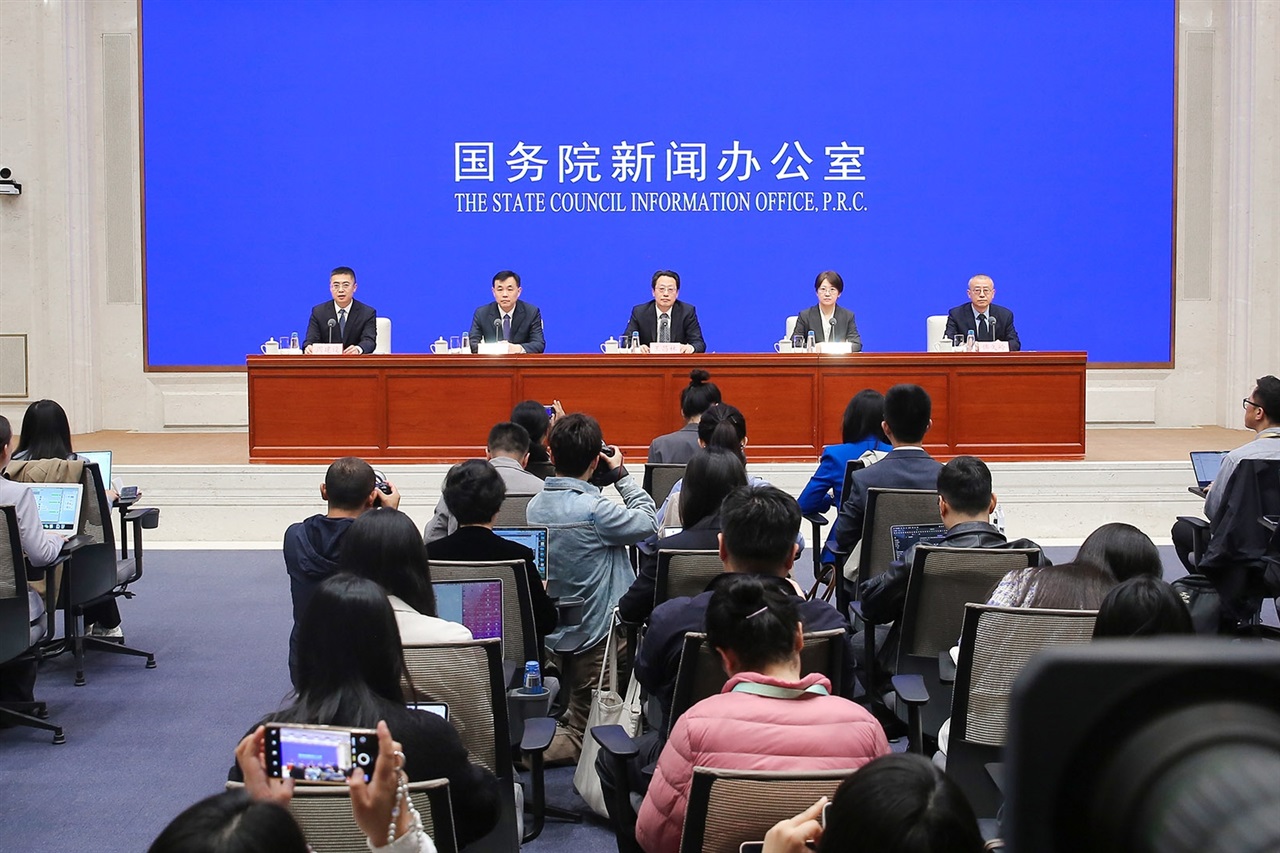
China's National Development and Reform Commission (NDRC) briefed the State Council Information Office on a new wave of large-scale investment centered on AI infrastructure, advanced manufacturing, and strategic emerging industries. The plan signals Beijing's intent to make AI the centerpiece of industrial upgrading in the coming planning cycle. This coordinated government push could accelerate domestic AI hardware and cloud adoption at scale.
Dishan Technology Nears 2nm AI Chip Breakthrough
Shanghai-based startup Dishan Technology is reportedly close to completing a 2nm AI chip design that could improve energy efficiency by 40% compared with its predecessor, according to South China Morning Post. The development represents a significant milestone for Chinese domestic chip design, as U.S. export controls have restricted access to cutting-edge fabrication tools. If realized, the breakthrough would narrow the gap with leading global chipmakers.

China's "Token Obsession" Strategy Under Scrutiny as Chip Gap Persists
A Reuters Breakingviews analysis published this week argues that Chinese AI companies including Alibaba and startup MiniMax — valued at $40 billion — have flooded the market with cheap AI model access, turning artificial intelligence into a commodity. While this "token price war" strategy has generated massive user adoption, analysts warn that without access to cutting-edge U.S. chips, Chinese labs risk falling behind Western frontier AI developers over the medium term. The piece highlights an emerging tension between short-term market dominance and long-term compute competitiveness.
Big Tech Moves
Alibaba & MiniMax: Competing in China's AI Token Price War
Alibaba and $40 billion-valued startup MiniMax are among the leading players in a fierce race to offer the cheapest AI model access in China, per Reuters Breakingviews. The strategy has made AI services widely accessible but risks a race to the bottom on margins. Investors are increasingly questioning whether low-price dominance can translate to sustainable competitive advantage, especially as compute costs remain constrained by export controls.
ASML & TSMC Forecasts Signal Continued AI Spending Boom — With China Implications
Strong quarterly forecasts from ASML and TSMC, reported April 16, signal that global AI infrastructure spending by major cloud providers remains robust. While the primary beneficiaries are Western hyperscalers, the data point matters for China's domestic semiconductor ecosystem: sustained global AI investment creates both competitive pressure and potential supply-chain opportunities for Chinese firms building alternative hardware stacks.

VLSI TSA 2026: China Semiconductor Community Engages on GenAI and Wafer-Level Computing
The 2026 International Symposium on Technology, Systems and Applications (VLSI TSA), which kicked off April 14, gathered over 800 semiconductor professionals worldwide, with a focus on GenAI inference acceleration, wafer-level computing, and terahertz wireless communication. Chinese semiconductor professionals are active participants in this global technical conversation even as geopolitical restrictions reshape supply chains.
Policy & Regulation
U.S. Lawmakers Scale Back — But Preserve — Bill Targeting Chinese Chipmakers
- What: U.S. lawmakers revised a bill targeting Chinese chipmaking, scaling back its scope but retaining provisions that prohibit foreign firms from selling to Chinese chipmakers CXMT (ChangXin Memory Technologies), YMTC (Yangtze Memory Technologies), and SMIC (Semiconductor Manufacturing International Corporation).
- Impact: Foreign equipment and materials suppliers to these three Chinese firms face continued restrictions. The more targeted bill may face a smoother legislative path than the original broad version, increasing the likelihood of passage.
- Context: This fits into a sustained U.S. strategy of restricting China's ability to advance in memory and logic chip manufacturing, complementing existing export controls on advanced EDA tools and chip-making equipment.

U.S. House Select Committee Releases Investigation on China's AI Chip Acquisition
- What: The U.S. House Select Committee on the CCP published a report titled "Buy What It Can, Steal What It Must: China's Campaign to Acquire Frontier AI Capabilities," detailing how China uses both legal and illegal means — including chip smuggling and model distillation — to build its semiconductor and AI capabilities.
- Impact: The investigation could accelerate further legislative and executive actions to tighten export controls and close loopholes that allow AI capabilities to flow to China through third-party channels.
- Context: The report arrives as domestic Chinese alternatives like Huawei's Ascend chips and startups like Dishan gain traction, suggesting China's dual-track strategy (indigenous development + acquisition) is yielding results.
Economy Watch
| Indicator | Latest | Trend | Detail |
|---|---|---|---|
| China GDP Growth (Q1 2026) | 5.0% YoY | ↑ Above forecast | Beat analyst expectations; led by infrastructure spending and strong electrical/mechanical exports |
| China Export Growth (March) | Missed estimates | ↓ Slowing | Export momentum slowed as Iran war disrupted energy supplies and global trade routes |
| China Import Growth (March) | Surged | ↑ Highest in 4+ years | Imports jumped more than expected, partly reflecting energy supply disruption-driven purchases |
| Full-Year 2026 GDP Outlook | 4.5%–5.0% target range | ↓ Risk elevated | Iran war clouds H2 outlook; Reuters poll shows cooling expected beyond Q1 |

What to Watch Next
- U.S. chipmaker bill progression: Watch whether the scaled-back legislation targeting CXMT, YMTC, and SMIC advances through committee — a passage would materially tighten the supply chain for Chinese memory chipmakers.
- Dishan Technology 2nm chip validation: Independent verification of the 2nm energy-efficiency claims will be a key milestone. If confirmed, expect significant government and venture funding to follow.
- China Q2 economic data: With Iran war disruption expected to intensify impact on energy costs and global trade in Q2, the next round of PMI and trade data (due in coming weeks) will test whether Q1's momentum holds.
- NDRC five-year AI investment plan details: Watch for the official release of specific funding commitments, targeted industries, and timelines from Beijing's new AI infrastructure framework — this will define the investment landscape for China's AI ecosystem through 2030.
Reader Action Items
-
Investors: China's Q1 GDP beat is positive but the Iran war risk premium on H2 is real. Infrastructure-linked plays (domestic AI chips, power grid, rail) that benefit from state spending are better insulated than export-dependent tech — monitor how the NDRC five-year plan allocates capital across sectors.
-
Founders & Tech Professionals: The convergence of Dishan's 2nm progress, Huawei's Ascend chip traction, and Beijing's AI infrastructure push signals a genuine alternative compute ecosystem forming in China. Companies building AI products for Chinese markets should accelerate evaluation of domestic silicon options ahead of potential further U.S. export control tightening.
-
Supply Chain & Policy Watchers: The U.S. House Select Committee report on chip smuggling and model distillation indicates regulators are closing loopholes aggressively. Multinational firms with any China semiconductor exposure should conduct fresh compliance reviews, particularly around third-party distribution channels that could trigger secondary sanctions risk.
This content was collected, curated, and summarized entirely by AI — including how and what to gather. It may contain inaccuracies. Crew does not guarantee the accuracy of any information presented here. Always verify facts on your own before acting on them. Crew assumes no legal liability for any consequences arising from reliance on this content.
Powered by
