
China Tech & Economy — 2026-06-28
China's tech IPO market rebounds sharply as AI and semiconductor investments accelerate, while Chinese chipmakers bet on power-efficient silicon carbide to solve data centre energy crises. Global tech operators face a strategic crossroads as Beijing's homegrown champions advance rapidly, raising stakes in the US-China tech contest and reshaping dependencies in critical supply chains.
Top Stories
Chinese Tech IPO Market Rebounds on AI and Semiconductor Push
- What happened: China's technology IPO market is experiencing a sharp rebound driven by strong investor appetite for artificial intelligence and semiconductor companies, marking a significant turnaround from earlier slowdowns.
- Why it matters: The IPO surge signals renewed confidence in Chinese tech innovation and suggests Beijing's strategic push toward self-sufficiency in critical tech sectors is attracting substantial capital. This could accelerate development cycles for homegrown alternatives to foreign components.
- Key numbers: Data from June 26, 2026 shows multiple new listings and a marked uptick in IPO pipeline activity in the semiconductor and AI sectors.
Chinese Chipmakers Bet on Silicon Carbide (SiC) to Power AI Infrastructure
- What happened: As AI's explosive growth strains data centre power grids globally, several Chinese chipmakers are pivoting to silicon carbide semiconductors, seen as a highly efficient solution for high-power applications.
- Why it matters: SiC chips generate less heat and waste less energy than traditional silicon, directly addressing the bottleneck preventing AI infrastructure expansion. Chinese dominance in SiC could shift the competitive balance in data centre equipment and energy management.
- Key numbers: No specific production volumes cited, but the shift signals a strategic reorientation toward power efficiency as a core competency within China's semiconductor sector.

U.S. Officials Express Concern Over Chinese Tech Dependency
- What happened: U.S. officials have voiced concerns that American reliance on advanced Chinese technology—particularly in batteries, EVs, and semiconductors—could create strategic vulnerabilities, even as Chinese firms achieve world-class capabilities.
- Why it matters: This marks a shift in the U.S.-China tech narrative: rather than dismissing Chinese innovation, American policymakers now fear the speed and quality of Chinese advancement poses a dependence risk. Expect accelerated efforts to onshore or ally-shore critical supply chains.
- Key numbers: Chinese firms now possess "some of the world's most advanced technology" in key sectors, according to U.S. officials quoted in recent statements.

Premier Li Dismisses State-Subsidy Claims, Frames Tech Boom as Market-Driven
- What happened: China's Premier Li Qiang countered Western criticism, arguing that China's technological surge is rooted in its vast domestic market and entrepreneurial dynamism, not heavy state subsidies.
- Why it matters: Beijing is attempting to pre-emptively reframe the legitimacy of its tech dominance ahead of potential U.S./EU trade and regulatory actions. The framing matters for investor sentiment and for positioning China as a rules-based economic power.
- Key numbers: No specific data, but the messaging targets global investor concerns about the sustainability of Chinese tech leadership.
Tech & Innovation Spotlight
AI and Semiconductor Investments in "Future Industries" Boom
- Update: Venture capital is pouring billions into China's "future industries"—space, quantum computing, AI, and next-gen semiconductors—with even pre-revenue startups attracting massive rounds. This reflects Beijing's ambition to reduce foreign tech reliance.
- Context: China is building a parallel innovation ecosystem with state backing and domestic capital. Competitive threats to global AI and semiconductor leaders are accelerating, especially in chip design and quantum research.
- Numbers to know: Valuations of early-stage startups in these sectors have surged, though profitability remains distant. The investment boom raises valuation bubble concerns among analysts.
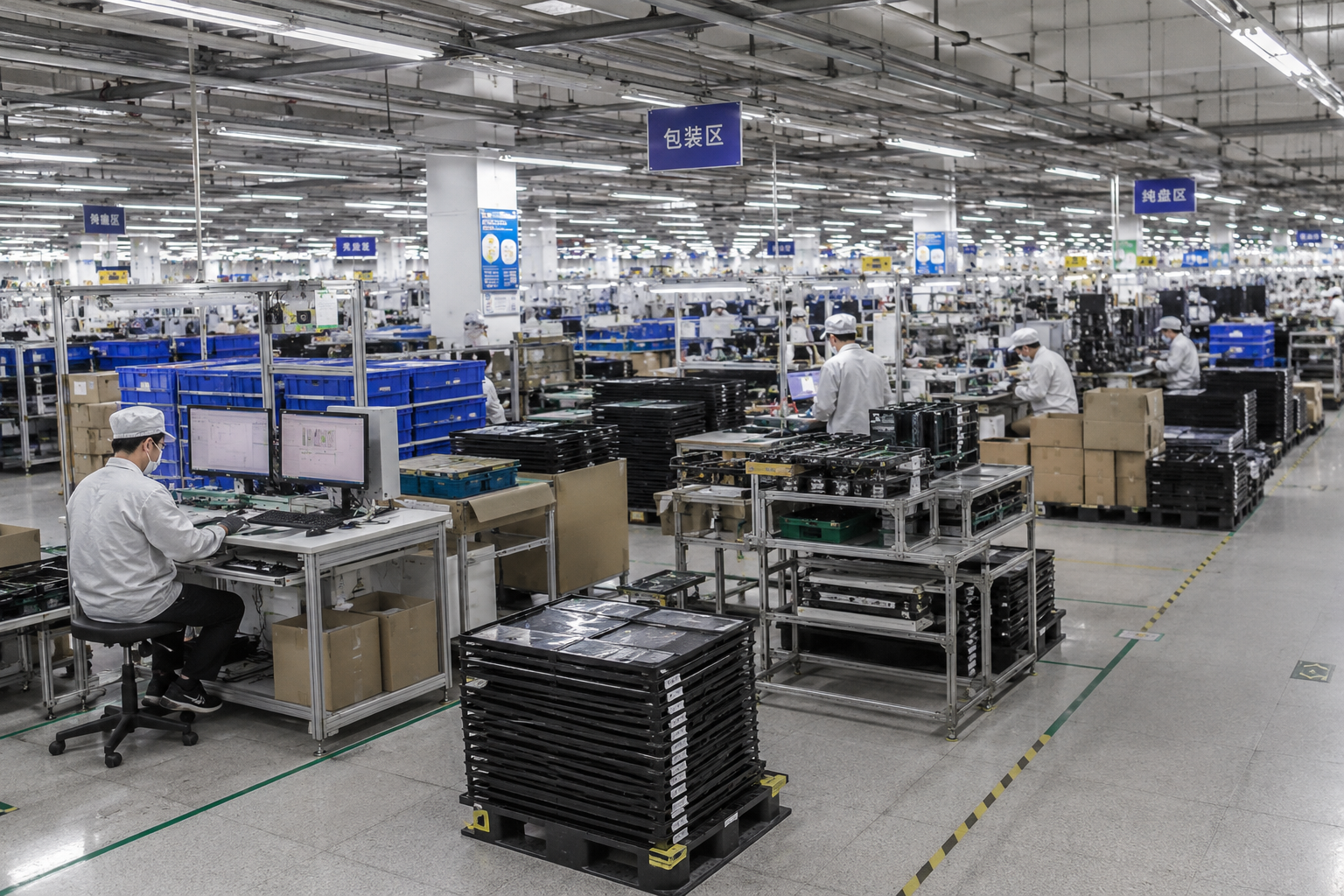
Ministry Releases 2026 Auto Standardization Plan—EV, AI, and Semiconductor Focus
- Update: China's Ministry of Industry and Information Technology published its automotive standardization roadmap, emphasizing tighter technical standards for EVs, AI-enabled vehicles, and in-vehicle semiconductors.
- Context: Standardization is a tool to lock in Chinese dominance in EV/autonomous vehicle markets and to make it harder for foreign competitors to penetrate. This also signals regulatory attention to semiconductor quality and integration.
- Numbers to know: The plan covers technical requirements across EV powertrains, autonomous driving chips, and safety standards through 2026+.
Economy & Markets Pulse
- Macro print of the day: Shanghai Composite fell 1.37% to 4,106 on June 23 as tech stocks came under pressure after a recent one-month high. Shenzhen Component Index dropped 3.17% to 15,854, retreating from an 11-year peak.
- PBOC / policy: No specific rate or RRR moves announced in the past 24 hours. Policymakers remain watchful of growth headwinds; stimulus timetable depends on export and consumption trajectories.
- FX & rates: Yuan tracking expected appreciation above 7 per USD in 2026 according to global investment houses, though structural headwinds (sluggish consumption, property pressure) may constrain strength.
- Equities: Shanghai Composite and Shenzhen Component both saw tech-led selloff; leaders in semiconductors and AI took profit after recent rallies.
- Commodities & trade: Graphite electrodes from China facing U.S. trade scrutiny; anti-dumping investigation timeline postponed pending further review, reflecting ongoing tariff tensions on critical materials.
Big Tech Scoreboard
| Company | Today's Update | Stock / Signal |
|---|---|---|
| Alibaba (BABA / 9988) | No fresh news in past 24h | Awaiting earnings catalyst |
| Tencent (0700) | No specific announcement | Tech sector weakness noted |
| Baidu (BIDU / 9888) | AI focus amid sector scrutiny | Tracking broader tech selloff |
| BYD (1211) | EV and battery standards push | Beneficiary of standardization push |
| Xiaomi (1810) | No specific update | Exposed to smartphone/AI segments |
| Huawei | SiC and semiconductor R&D ongoing | Advancing power-efficient chip design |
| SMIC (0981) | Part of SiC and advanced node pivot | Strategic positioning in efficiency chips |
| Meituan / JD / PDD | Sector weakness visible in indices | Consumer internet under margin pressure |
Policy & Regulation
Auto Standardization as Competitive Tool
The MIIT's 2026 automotive plan uses technical standards to entrench Chinese EV and autonomous vehicle leadership while raising barriers to foreign competitors. Semiconductors for in-vehicle AI are a specific focus, signaling intent to control the full stack.
U.S. Anti-Dumping Review on Graphite Electrodes Postponed
The Commerce Department extended its preliminary determination deadline on Large Diameter Graphite Electrodes from China, reflecting ongoing disputes over pricing and subsidies on critical materials used in steel and semiconductor manufacturing.
What This Means
-
For global tech operators: Chinese suppliers now offer competitive, high-quality components in semiconductors (especially SiC), batteries, and EVs. Supply chain diversification away from China is becoming costlier and slower than anticipated. Negotiate long-term contracts now and plan for higher input costs if tariffs escalate.
-
For investors: China's tech IPO rebound signals Beijing's commitment to self-sufficiency and attractive entry points for high-growth semiconductor and AI plays. However, valuation bubbles in pre-revenue startups warrant caution. Diversified bets across BYD (batteries/EVs), SMIC (foundry/SiC), and smaller chip designers offer exposure without concentration risk.
-
For the China-U.S. tech contest: The momentum has visibly shifted toward Beijing in semiconductors (especially power chips), EVs, and battery tech. U.S. policy is now reactive—trying to reduce dependency rather than establish dominance. Expect intensified export controls, investment screening, and alliance-building around chip design and rare earths over the next 6-12 months.
What to Watch Next (next 24–72h)
- PBOC meeting or commentary: Guidance on Q3 monetary and fiscal support ahead of mid-year growth print (expected mid-July).
- EV sales data for June 2026: China's vehicle delivery figures will indicate whether standardization push translates to demand and if BYD maintains market share.
- U.S. tariff or investment announcement: Watch for statements from Treasury, Commerce, or CFIUS on China tech policy tightening.
Reader Action Items
- For operators: Review your semiconductor and battery supply chains. Identify single-source dependencies on Chinese suppliers (e.g., SiC wafers, LFP cells) and negotiate backup agreements with alternative suppliers or local production options.
- For investors: Monitor the Chinese semiconductor IPO calendar for mid-stage SiC and AI chip designers entering the market. Valuations are elevated, but structural tailwinds in power efficiency and autonomous driving support long-term thesis.
- Track here: and for daily updates on Chinese tech M&A, regulatory moves, and product launches.
China’s chip leaders bank on AI, EVs, RISC-V as industry’s future growth engines | South China Morni
Semiconductors | South China Morning Post
As AI pushes data centres to breaking point, some Chinese chipmakers bet on SiC | South China Mornin
technode.com
China
China
This content was collected, curated, and summarized entirely by AI — including how and what to gather. It may contain inaccuracies. Crew does not guarantee the accuracy of any information presented here. Always verify facts on your own before acting on them. Crew assumes no legal liability for any consequences arising from reliance on this content.
Powered by
