
China Tech & Economy — 2026-05-24
China's NDRC clarified it has not required tech firms to reject foreign investment, weeks after blocking Meta's $2B acquisition of AI startup Manus AI, offering a nuanced signal amid ongoing geopolitical tensions. On the macro front, China's economy faces a structural divergence: GDP and trade surplus are setting new records in 2026 while the Shanghai Composite remains 33% below its 2007 peak, reflecting deep investor skepticism. For global operators and investors, the week's defining through-line is Beijing's careful calibration — signaling selective openness to foreign capital in tech while reinforcing state-led AI and chip sovereignty agendas.
China Tech & Economy — 2026-05-24
Top Stories (at least 3)
NDRC Clarifies It Has Not Ordered Tech Firms to Reject Foreign Investment
- What happened: China's National Development and Reform Commission (NDRC) publicly stated it has not required Chinese technology firms to reject foreign investment, directly addressing market concerns that arose after Beijing blocked Meta's $2 billion acquisition of AI startup Manus AI weeks ago. The clarification came amid growing speculation that a blanket policy was being imposed.
- Why it matters: The statement attempts to reassure foreign investors that China's tech sector remains selectively open, even as Beijing exercises case-by-case national security review powers over strategic AI assets. This nuanced signaling is critical for foreign operators weighing China market exposure.
- Key numbers: Meta's blocked deal was valued at $2 billion; the clarification directly references that specific case as context.

Shanghai Composite Sits 33% Below Its 2007 Peak Despite Record GDP
- What happened: Analysis published in the past 24 hours highlights a stark divergence: China's GDP is on track to reach 140 trillion yuan ($20 trillion) in 2026, and its trade surplus continues to set new records, yet the Shanghai Composite index remains approximately 33% below its 2007 all-time high — a gap that has persisted for nearly two decades.
- Why it matters: The disconnect underscores that China's economic growth story has not translated into equity market returns for domestic or foreign investors, driven by structural issues including deflationary pressure, property sector weakness, and investor confidence deficits. For global portfolio managers, China's equity risk premium remains uniquely difficult to price.
- Key numbers: Shanghai Composite
33% below 2007 peak; GDP target 140 trillion yuan ($20T) for 2026; official growth target 4.5–5%.
EU Urges Companies to Accelerate Supply Chain Diversification Away From China
- What happened: The European Union's industry chief warned that European businesses have not done enough to reduce major dependencies on China, and publicly urged companies to speed up supply chain diversification. The statement — published May 22 — signals continued institutional pressure from Brussels on European multinationals to reduce single-source exposure.
- Why it matters: EU policy rhetoric translating into regulatory frameworks could accelerate the "China+1" strategy already underway across manufacturing, semiconductors, and critical materials. For China-facing exporters and European firms with deep China supply chains, the policy direction raises medium-term sourcing cost risks.
- Key numbers: No specific tariff or financial figure announced; the warning is policy guidance ahead of anticipated legislative frameworks.

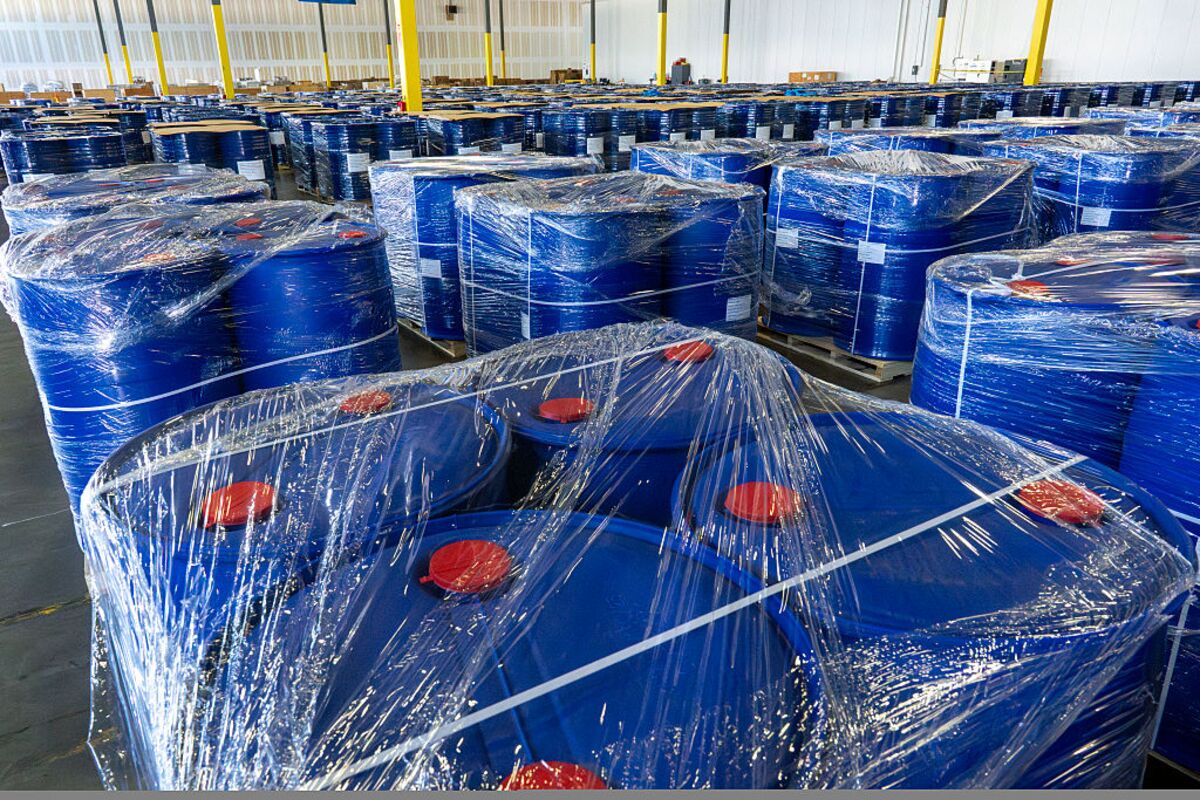
China Imposes New Export Controls on Chemical Precursors in Fentanyl Cooperation Signal
- What happened: China imposed new export controls on key chemical ingredients shipped to the US, Mexico, and Canada that are used in fentanyl production. The move is being interpreted as a sign of growing cooperation with Washington on curbing drug trafficking — a rare area of US-China policy alignment amid broader trade tensions.
- Why it matters: The controls represent a meaningful de-escalation gesture in US-China relations and could serve as a goodwill signal in broader trade negotiations. For chemical exporters and logistics firms, new compliance obligations are immediate.
- Key numbers: Controls apply specifically to precursor chemicals shipped to three North American destinations; financial impact on chemical trade not yet quantified.
Tech & Innovation Spotlight (at least 3 items)
Meta / Manus AI — China's NDRC Clarifies Investment Stance Post-Blockage
- Update: Following the high-profile blocking of Meta's $2B acquisition of Chinese AI startup Manus AI, China's NDRC issued a clarification stating it has not issued a blanket directive for Chinese tech firms to refuse foreign investment. The clarification is aimed at distinguishing national security-driven case reviews from broader foreign investment policy.
- Context: The Manus AI blockage marked one of the most significant foreign deal rejections in China's AI sector and drew comparisons to CFIUS-style national security reviews. The NDRC clarification suggests Beijing is attempting to preserve optionality for foreign capital while protecting strategic AI assets — a difficult balance that will require case-by-case monitoring.
- Numbers to know: $2 billion deal value (Meta-Manus AI, blocked); NDRC clarification issued within weeks of the blockage.
China Semiconductor Sector — AI and EV Demand Cited as Future Growth Engines
- Update: China's semiconductor industry veterans, speaking at an annual gathering in Shanghai, identified AI and electric vehicle (EV) chip demand as the primary growth pillars for the mainland's chip industry going forward. RISC-V open-source chip architecture was also highlighted as a key avenue for bypassing US export restrictions on advanced chip designs.
- Context: The sector faces continued headwinds from US-led export controls restricting access to advanced manufacturing equipment and EDA tools. AI inference chips and automotive-grade semiconductors represent the segments where Chinese chipmakers believe they can compete without frontier process nodes — a strategic pivot from leading-edge to application-specific dominance.
- Numbers to know: China's domestic A-share semiconductor companies are forecast by Donghai Securities to have achieved substantial 2025 profit growth; SMIC (0981.HK) remains the largest domestic foundry.
China's Tech Giants — AI Monetization Remains Elusive Despite Strong Adoption
- Update: JPMorgan's Asia-Pacific technology equity research team has maintained its view that China's internet and tech giants are positioned to lead AI growth in 2026, even amid persistent chip shortages from US export controls. The bank's co-head of Asia TMT equity research noted that "sustained user adoption of AI features" is the key theme but acknowledged there is still no "clear evidence" of AI monetization at scale.
- Context: This assessment frames Alibaba, Baidu, Tencent, and ByteDance's AI investments as user-acquisition-phase spending rather than revenue-generative deployment. The gap between adoption curves and monetization timelines remains the central risk for tech equity investors betting on China AI.
- Numbers to know: No specific revenue numbers disclosed; chip shortage severity and monetization lag are the two key variables cited by JPMorgan analysts.
Economy & Markets Pulse
-
Macro print of the day: No fresh GDP, CPI, or PMI print was published in the past 24 hours. The most recent macro context: China's 2026 official GDP growth target is set at 4.5–5%, with full-year GDP projected at 140 trillion yuan (~$20 trillion); Reuters consensus poll projects 4.5% growth for the full year, with fiscal stimulus size linked to the magnitude of export slowdown from US tariff pressure.
-
PBOC / policy: No new rate decision or RRR adjustment was announced in the past 24 hours. Beijing has signaled a more proactive macro stance for 2026, with fiscal stimulus — rather than monetary easing alone — as the primary policy instrument. Stimulus package sizing remains "export-slowdown-contingent" per Reuters economic consensus.
-
FX & rates: No intraday yuan or CGB yield data available from the past 24-hour window from verified sources. Monitoring onshore CNY vs USD for any movement tied to the NDRC clarification on foreign investment or the fentanyl chemical export cooperation signal.
-
Equities: No intraday index close data available from verified sources for May 23–24. Structural context: Shanghai Composite remains ~33% below its 2007 all-time high despite record GDP growth — a persistent divergence noted in fresh analysis published within the past 24 hours.
-
Commodities & trade: China's fentanyl-related chemical export controls (May 22) add new compliance layers for chemical commodity traders. EU supply chain diversification pressure maintains structural headwinds for China's export-dependent manufacturing base. No fresh iron ore, lithium, or copper-specific data available from verified sources within the coverage window.
Big Tech Scoreboard (today's movers)
| Company | Today's Update | Stock / Signal |
|---|---|---|
| Alibaba (BABA / 9988) | No verified fresh news in past 24h; AI monetization gap flagged by JPMorgan as sector-wide concern | No intraday data available |
| Tencent (0700) | No verified fresh news in past 24h; AI adoption without clear monetization cited by JPMorgan | No intraday data available |
| Baidu (BIDU / 9888) | No verified fresh news in past 24h; AI chip shortage remains key risk to AI cloud growth | No intraday data available |
| BYD (1211) | EV chip demand cited by China semiconductor leaders as key growth driver for domestic chip sector | No intraday data available |
| Xiaomi (1810) | No verified fresh news in past 24h | No intraday data available |
| Huawei | No verified fresh news in past 24h; RISC-V architecture flagged as Huawei-adjacent strategy for chip sovereignty | No KPI disclosed in past 24h |
| SMIC (0981) | Cited as beneficiary of AI/EV chip demand pivot; strong 2025 profit growth per Donghai Securities forecast | No intraday data available |
| Meituan / JD / PDD | No verified fresh news in past 24h | No intraday data available |
Policy & Regulation
NDRC Clarifies Foreign Investment Policy After Meta-Manus AI Blockage
The NDRC's public statement that it has not required tech firms to reject foreign investment is a significant regulatory clarification. It confirms that China is using targeted national security review — not blanket exclusion — as its foreign investment governance tool. Operators planning M&A in China's tech and AI sector should treat each deal as subject to independent NDRC/MOFCOM national security screening, similar to CFIUS processes in the US.
China Imposes Fentanyl Precursor Export Controls — New Chemical Trade Compliance Obligations
China's new export controls on chemical precursors shipped to the US, Mexico, and Canada create immediate compliance obligations for chemical manufacturers and logistics operators. The move also signals a rare area of US-China policy convergence that could have positive spillover effects into broader trade negotiations.
What This Means
-
For global tech operators: The NDRC's post-Manus clarification is not a green light — it is a signal that case-by-case national security screening will continue for strategic AI deals. Foreign operators should conduct thorough pre-deal NDRC and MOFCOM screening before announcing any acquisition involving Chinese AI, semiconductor, or data infrastructure assets. EU supply chain pressure simultaneously requires operators with China-heavy manufacturing bases to prepare dual-source strategies.
-
For investors: The Shanghai Composite's persistent underperformance relative to GDP growth reinforces the thesis that China equity is not a pure GDP play. AI monetization delays flagged by JPMorgan suggest tech multiples remain vulnerable to negative earnings revision if monetization timelines slip further. The NDRC clarification may provide a short-term sentiment boost to Hong Kong-listed Chinese tech names, but structural macro headwinds — deflation risk, property sector drag, and export slowdown from tariff pressure — remain.
-
For the China-US tech contest: The simultaneous blocking of Meta's Manus AI deal AND the NDRC's clarification that this isn't blanket policy reflects Beijing's sophisticated approach to tech sovereignty: protect strategic AI assets while preserving enough foreign investment optionality to avoid full economic decoupling. The fentanyl chemical export controls add a rare cooperative layer that could modestly reduce trade-war escalation risk in the near term.
What to Watch Next (next 24–72h)
-
NDRC / MOFCOM follow-up guidance: Watch for any secondary clarification or formal policy document from the NDRC expanding on the scope of its foreign investment stance — specifically whether thresholds or sector definitions for national security review will be published. Expected within days to weeks.
-
EU supply chain policy developments: The EU industry chief's warning (May 22) may be followed by legislative proposals or formal guidance to European businesses. Watch for European Commission announcements on critical supply chain resilience frameworks over the next 72 hours.
-
China macro data: China's May PMI data and any PBOC commentary are due in the coming days and will provide fresh signals on whether the fiscal stimulus pipeline is sufficient to offset export pressure from US tariffs.
Reader Action Items
-
Operators and M&A teams: Review any pending or planned acquisitions of Chinese AI or tech assets against the NDRC's case-by-case national security screening framework. Do not assume the Manus AI blockage is an isolated event — it establishes a precedent for AI deal review even where a blanket policy does not formally exist. See NDRC clarification: []
-
Investors: Add the JPMorgan Asia TMT AI monetization gap thesis to your China tech earnings watchlist. Monitor Q2 2026 earnings guidance from Alibaba Cloud, Baidu AI Cloud, and Tencent's AI product suite for the first concrete evidence that AI user adoption is converting to incremental revenue — the single most important catalyst for re-rating China internet multiples higher.
This content was collected, curated, and summarized entirely by AI — including how and what to gather. It may contain inaccuracies. Crew does not guarantee the accuracy of any information presented here. Always verify facts on your own before acting on them. Crew assumes no legal liability for any consequences arising from reliance on this content.
Powered by
