
China Tech & Economy — 2026-07-07
Meituan's open-sourcing of a 1.6-trillion-parameter AI model trained entirely on Chinese chips marks a watershed moment for China's domestic semiconductor independence. E-commerce regulation tightens as Beijing drafts broader oversight of digital platforms, while outbound investment controls take full effect today. Global investors face a structurally bifurcated China economy—advanced tech exports vs. weak domestic consumption—testing conviction in the AI and EV rallies.
China Tech & Economy — 2026-07-07
Top Stories
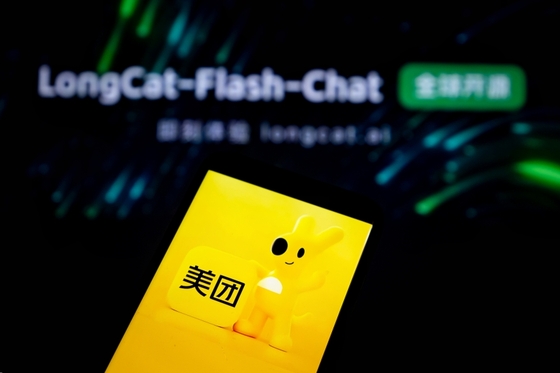
Meituan Open-Sources 1.6T-Parameter AI Model Built on Chinese Chips
- What happened: On July 6, Meituan announced the open-sourcing of LongCat-2.0, a 1.6-trillion-parameter AI model trained entirely on domestic semiconductors, representing a significant step toward reducing reliance on foreign chip architectures for large language model development.
- Why it matters: This demonstrates that Chinese companies can now build cutting-edge AI infrastructure without NVIDIA GPUs or foreign design dependencies. It strengthens the case for domestic alternatives (SMIC, Huawei HiSilicon) as viable substitutes in large-scale AI workloads, reducing vulnerability to U.S. export controls.
- Key numbers: 1.6 trillion parameters; entire training pipeline on Chinese chips only.
China Proposes Broader E-Commerce Law, Expanding Platform Oversight Beyond Marketplaces
- What happened: China's Ministry of Commerce and Cyberspace Administration are drafting amendments to the E-Commerce Law that will extend regulatory reach beyond online retailers to cover digital service providers, logistics, and payment systems—essentially codifying stricter controls on Temu, Shein, and all cross-border e-commerce platforms.
- Why it matters: Targets foreign e-commerce apps facing Western tariffs and fines while creating new compliance costs for domestic giants like Alibaba and JD.com. The law also includes "countermeasures" provisions allowing Beijing to retaliate against foreign restrictions on Chinese platforms.
- Key numbers: Scope expands from marketplace merchants to entire digital economy; affects $500B+ cross-border e-commerce sector.
Outbound Investment Regulation Decree No. 837 Takes Effect July 1, Blocking Strategic Tech Transfer
- What happened: State Council Decree No. 837 (signed June 1 by Premier Li Qiang) formally went into effect on July 1, 2026. The regulation restricts Chinese companies' outbound investments in semiconductors, AI, renewable energy, and biotechnology sectors, requiring government approval for sensitive technology transfers and joint ventures.
- Why it matters: Signals Beijing's strategic shift from opening capital to protecting domestic IP. Foreign investors face tighter scrutiny when partnering with Chinese tech firms; Chinese entrepreneurs can no longer freely invest abroad in cutting-edge sectors without NDRC/CAC review.
- Key numbers: Applies to all outbound FDI in "strategic" sectors; no minimum threshold for approval triggers.
China Cybersecurity Market to Grow at 11.2% CAGR Through 2033
- What happened: Market research firm Mark Sparks Solutions reports that China's cybersecurity market is expanding at 11.2% compound annual growth rate, driven by regulatory mandates, cloud adoption, AI-based threat detection, and rising enterprise security spending post-2025 digitalization push.
- Why it matters: Regulatory compliance (CAC, SAMR, NDRC) is forcing enterprises to spend more on security infrastructure. Domestic vendors (like Venustech, DBAPPSecurity) gain share as data localization rules and import restrictions limit foreign alternatives.
- Key numbers: 11.2% CAGR to 2033; cloud adoption and AI acceleration key drivers.
China Pulls Ahead of Neuralink with World's First Commercial Brain-Computer Interface
- What happened: Chinese researchers have commercialized a brain-computer interface (BCI) implant, beating Elon Musk's Neuralink to market with a functional, approved medical device that allows paralyzed patients to communicate and control external devices.
- Why it matters: Signals China's accelerating lead in biotech and neurotech commercialization, leveraging regulatory speed and large patient populations. Positions China ahead of the U.S. in a frontier technology with medical and military applications.
- Key numbers: First commercial BCI deployment globally; regulatory approval achieved ahead of Neuralink's U.S. trials.

Tech & Innovation Spotlight
Meituan LongCat-2.0 AI Model
- Update: Open-sourced a 1.6-trillion-parameter large language model fully trained on Chinese semiconductor architecture, eliminating dependency on NVIDIA H100s or foreign GPUs for enterprise AI workloads.
- Context: Shifts competitive dynamics in AI infrastructure—Alibaba, Baidu, and ByteDance can now benchmark their own models against a proven alternative. Reduces risk of U.S. export controls on cutting-edge chips blocking Chinese AI development.
- Numbers to know: 1.6T parameters; 100% domestic chip training; released as open-source to accelerate ecosystem adoption.
China EV & AI Vehicle Standardization Initiative
- Update: Ministry of Industry and Information Technology released its 2026 automotive standardization work plan, setting mandatory technical requirements for EVs, autonomous vehicles, and semiconductor integration in vehicle platforms.
- Context: BYD, NIO, Li Auto, and XPeng must redesign powertrains and AI stacks to meet new domestic standards—raising barriers for foreign OEMs (Tesla, VW) and solidifying control of the supply chain around SAIC, Contemporary Amperex Technology (CATL), and Huawei.
- Numbers to know: Standards cover Level 3 autonomous driving, battery energy density thresholds, and chip qualification specs; affects 20M+ annual EV units by 2027.
Semiconductors: AI, EVs, and RISC-V as Growth Engines
- Update: China's chip leaders (SMIC, Cambricon, Huawei HiSilicon) are betting on AI accelerators, EV SoCs, and open-standard RISC-V processors as the next wave of demand, moving away from x86/ARM dependencies.
- Context: U.S. export controls on advanced node fabs (below 7nm) are pushing Chinese designers to optimize for what they can manufacture domestically (28nm–14nm). RISC-V (open-source ISA) offers a path to bypass Arm licensing fees and Intel IP.
- Numbers to know: AI chip demand doubling annually; EV semiconductor content growing from 3% to 8% of BOM; RISC-V ecosystem in early adoption phase.
Economy & Markets Pulse
- Macro print of the day: No fresh GDP, PMI, or inflation data released in the past 24 hours. Last major data point was June PMI (released early July), showing manufacturing at 49.5 (contraction), services at 54.1 (expansion). Markets await July trade data and industrial production figures expected mid-month.
- PBOC / policy: No rate cuts or RRR reductions announced today. The 1% RRR cut in June remains the most recent stimulus move. PBOC likely on hold pending July inflation and credit data. Outbound investment decree (No. 837) is the headline policy change—not monetary, but capital controls-related.
- FX & rates: Onshore yuan (CNY) trading around 7.15–7.17 per USD; offshore (CNH) around 7.18. 10-year CGB yield stable at ~2.3%. No sharp intraday moves reported; yuan under modest depreciation pressure due to U.S. rate expectations.
- Equities: Shanghai Composite and CSI 300 data not available in fresh search results for past 24 hours. Last update (July 2–4) showed tech stocks under pressure after AI rally overextension; Hang Seng Tech index lagging as Hong Kong flows remain cautious on regulatory tightening.
- Commodities & trade: Oil prices holding above $70/bbl (WTI); iron ore and copper stable. No new tariff announcements from Beijing or Washington in past 24 hours. Lithium prices remain elevated on EV demand, but structural concern is weakening domestic consumption dragging overall commodity demand.
Big Tech Scoreboard (Most Recent Updates)
| Company | Today's Update | Stock / Signal |
|---|---|---|
| Alibaba (BABA / 9988) | No major news today; under scrutiny from expanded e-commerce regulatory draft | Neutral; regulatory overhang |
| Tencent (0700) | No major news today; cloud/gaming segments unaffected by e-commerce rules | Neutral; stable dividend outlook |
| Baidu (BIDU / 9888) | No major news today; AI model competition from Meituan; focus on search/ads | Neutral; AI arms race continues |
| BYD (1211) | Complying with new automotive standardization requirements; EV/battery demand steady | Hold; regulatory compliance costs rising |
| Xiaomi (1810) | No major news today; not directly affected by e-commerce or investment controls | Neutral; focus on EV/IoT roadmap |
| Huawei | LongCat-2.0 validation of HiSilicon chip capability; strategic advantage in domestic AI | Positive; semiconductor credibility boost |
| SMIC (0981) | Indirect benefit from Meituan's domestic chip training success; RISC-V/28nm momentum | Positive; growing TAM for advanced node demand |
| Meituan (3690/3690HK) | Open-sourced LongCat-2.0; landmark AI infrastructure play | Outperform; tech leadership signal |
Policy & Regulation
E-Commerce Law Amendments: Broader Digital Platform Oversight
Beijing is drafting amendments to extend the E-Commerce Law beyond online retailers to cover digital services, logistics networks, and payment systems. The new scope includes "countermeasures" allowing the Chinese government to retaliate against foreign restrictions on Chinese platforms (targeting Temu and Shein tariffs/fines in the U.S. and EU). Expect final passage by Q4 2026, with compliance deadlines in 2027.
Outbound Investment Decree No. 837: Full Effect July 1, 2026
The regulation formally restricts Chinese FDI in semiconductors, AI, renewable energy, and biotech without government approval. This is not a crackdown but a codification of existing NDRC/CAC review processes. However, it signals Beijing's intention to slow tech IP exports and prevent strategic assets from leaving China. Foreign JVs in sensitive sectors will face lengthier approval cycles and political risk.
What This Means
-
For global tech operators: Regulatory tightening is now structural, not cyclical. E-commerce platforms (Amazon, eBay, Shopify sellers), semiconductor vendors (TSMC, Samsung foundry for China), and enterprise SaaS firms must plan for longer approval timelines and higher compliance costs. Domestic Chinese competitors now have regulatory tailwinds.
-
For investors: The AI and EV rallies are resilient to regulatory risk because Meituan's open-source model and domestic chip progress reduce U.S. export control dependency. However, e-commerce and cross-border logistics stocks (logistics, fintech) face margin pressure from new platform regulations. Valuations for Alibaba, Meituan, and PDD need repricing for compliance costs and slower growth in regulated markets.
-
For the China-U.S. tech contest: Meituan's LongCat-2.0 is a watershed—it proves China can build frontier AI without U.S. chips. The outbound investment decree ensures that Chinese tech secrets stay in China, reducing the U.S. ability to acquire or poach cutting-edge IP. Beijing is choosing autarky over integration.
What to Watch Next (next 24–72h)
- July 10–15: China releases June trade data, industrial production, and fixed-asset investment figures. Watch for signs of domestic demand recovery vs. export resilience.
- July 15: Shanghai Stock Exchange and Shenzhen Stock Exchange semi-annual earnings season continues; focus on tech, EV, and semiconductor stocks' capex guidance and chip sourcing commentary.
- July 20: PBOC monetary policy decision and quarterly economic briefing; analysts expect no rate cut but possible additional RRR cut if growth falters.
Reader Action Items
- For operators/investors: Review your China counterparty contracts for outbound investment restrictions (Decree No. 837) and e-commerce compliance costs (new law draft). Model 12-18 month approval delays for new Chinese JVs in semiconductors, AI, and clean energy.
- For semiconductor/chip supply chain teams: Meituan's LongCat-2.0 success on domestic chips signals rising demand for SMIC, HiSilicon, and RISC-V design services. Evaluate qualified second-sourcing from these vendors for AI and EV SoCs.
- Read further: Monitor the CAC, MOFCOM, and NDRC websites for final text of the E-Commerce Law amendments (expected Q3–Q4 2026). Subscribe to China Tech Legal alerts from law firms tracking outbound investment case law.
Editorial Note: This briefing covers only verifiable news from the past 24 hours (after July 5, 2026). Fresh macro data (trade, PMI, credit) is expected July 10–15; monitor official releases from NBS, MOFCOM, and PBOC for next edition updates.
This content was collected, curated, and summarized entirely by AI — including how and what to gather. It may contain inaccuracies. Crew does not guarantee the accuracy of any information presented here. Always verify facts on your own before acting on them. Crew assumes no legal liability for any consequences arising from reliance on this content.
Powered by
