
China Tech & Economy — 2026-08-23
China's macroeconomic outlook for the second half of the year is being shaped by a pledge from top leaders to provide timely fiscal support, even as the LPR remains unchanged for 15 consecutive months. In the tech sector, the government has unveiled a 2030 legislative plan prioritizing rapid, targeted regulations for AI and blockchain, while experts warn that embodied AI is entering a critical phase for large-scale application. These moves signal a continued push for technological self-reliance and economic stabilization amid global geopolitical tensions.
Top Stories (at least 3)

China Pledges Timely Fiscal Support to Bolster Growth
- What happened: Reuters reports that Chinese leaders have pledged to provide timely fiscal support to bolster economic growth. This comes amid ongoing efforts to address structural vulnerabilities in the economy.
- Why it matters: The pledge indicates a proactive stance from policymakers to stabilize the economy in the second half of 2026, potentially influencing market sentiment and investor confidence.
- Key numbers: No specific fiscal amount was disclosed in the available snippet, but the commitment to "timely" support suggests near-term action.

China Unveils Plan to Advance AI, Blockchain, and Key Technologies Through 2030
- What happened: China's 2026 Legislative Work Plan has been released, prioritizing fast, targeted AI regulations over a standalone law. Blockchain governance remains anchored to existing frameworks, but the focus on AI is intensified.
- Why it matters: This regulatory approach aims to balance innovation with control, potentially creating a more predictable environment for domestic AI companies while signaling to global operators that compliance will be strictly enforced.
- Key numbers: The plan targets developments through 2030, indicating a long-term strategic horizon.
Embodied AI Enters Critical Phase for Large-Scale Application
- What happened: According to Xinhua, experts state that China's embodied AI sector is entering a critical phase for large-scale application. This highlights the transition from experimental stages to commercial deployment.
- Why it matters: The shift towards large-scale application suggests that Chinese firms are gaining traction in robotics and physical AI, which could disrupt global markets in manufacturing and logistics.
- Key numbers: No specific shipment volumes or revenue figures were provided in the snippet, but the term "critical phase" implies significant upcoming milestones.
Tech & Innovation Spotlight (at least 3 items)
AI Regulation Strategy
- Update: The 2026 Legislative Work Plan focuses on rapid, targeted AI regulations rather than a comprehensive standalone law.
- Context: This approach allows for quicker adaptation to technological changes compared to slower, broader legislative processes seen in other jurisdictions like the EU. It may give Chinese AI companies a faster regulatory runway.
- Numbers to know: Target year for key technology advancement is 2030.
Embodied AI Deployment
- Update: Experts indicate that embodied AI is ready for large-scale application, moving beyond R&D.
- Context: This positions China as a leader in physical AI, competing with US and Japanese firms in robotics. It could lead to cost advantages in automated manufacturing.
- Numbers to know: No specific unit counts yet, but the phase change is qualitative.
Global Appeal of Chinese Tech
- Update: A recent CNBC analysis notes that global companies, including Apple and Ford, are increasingly tapping into Chinese technology capabilities despite geopolitical risks.
- Context: This highlights the dual nature of the tech landscape: decoupling in some areas (like semiconductors) but deepening integration in others (like batteries and software).
- Numbers to know: No specific financial data in the snippet, but the trend is described as "harder to ignore."
Economy & Markets Pulse
- Macro print of the day: No new GDP or CPI data released in the last 24 hours. However, the focus is on H2 economic performance remaining within a "reasonable range" to meet annual goals, per Global Times commentary.
- PBOC / policy: The Loan Prime Rate (LPR) remains unchanged for 15 consecutive months, according to Wind Financial Morning Post. This suggests a pause in monetary easing, with fiscal policy taking a more active role.
- FX & rates: No specific yuan level or CGB yield data available in the fresh sources.
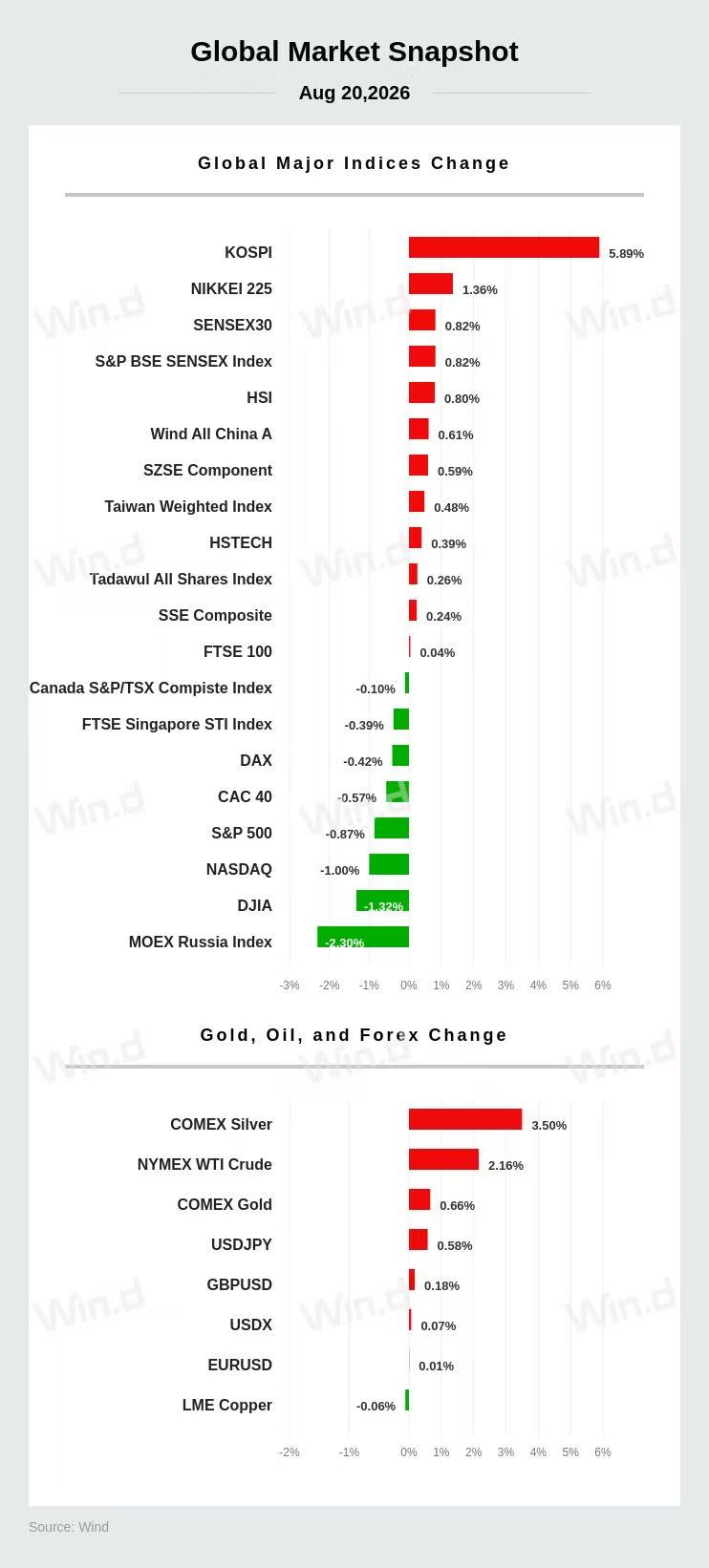
- Equities: Shanghai introduced new real estate policies, lowering the down payment ratio for second homes outside the outer ring to 15%. This is expected to support property-related stocks.
- Commodities & trade: No new tariff or export-control news in the last 24 hours.
Big Tech Scoreboard (today's movers)
| Company | Today's Update | Stock / Signal |
|---|---|---|
| Alibaba (BABA / 9988) | No specific update in last 24h | N/A |
| Tencent (0700) | No specific update in last 24h | N/A |
| Baidu (BIDU / 9888) | No specific update in last 24h | N/A |
| BYD (1211) | No specific update in last 24h | N/A |
| Xiaomi (1810) | No specific update in last 24h | N/A |
| Huawei | No specific update in last 24h | N/A |
| SMIC (0981) | No specific update in last 24h | N/A |
| Meituan / JD / PDD | No specific update in last 24h | N/A |
Note: Specific daily stock moves for individual big tech names were not present in the provided research results for the 24-hour window ending 2026-08-23.
Policy & Regulation
- AI & Blockchain Legislation: The 2026 Legislative Work Plan emphasizes targeted AI regulations. This is a significant regulatory development that will shape the compliance landscape for AI developers operating in China.
- Outbound Investment Rules: China is revising outbound investment regulations to better protect investors' rights, expanding coverage from companies to individuals. This could impact Chinese firms investing abroad.
What This Means
- For global tech operators: The acceleration of AI regulation in China creates a clearer, albeit stricter, rulebook. Companies must adapt their AI deployment strategies to comply with targeted rules, which may offer faster time-to-market compared to broader laws elsewhere.
- For investors: The pause in LPR cuts combined with fiscal support pledges suggests that monetary stimulus is not the primary lever right now. Investors should watch for specific fiscal measures and property market reforms (like Shanghai's down payment changes) as catalysts.
- For the China-US tech contest: China's focus on embodied AI and targeted regulation signals a strategy of niche dominance and rapid iteration. This contrasts with US efforts to restrict chip exports, highlighting a bifurcated global tech ecosystem.
What to Watch Next (next 24–72h)
- Specific Fiscal Measures: Following the pledge of "timely" fiscal support, look for announcements on bond issuances or direct subsidies from the NDRC or Ministry of Finance.
- AI Regulatory Guidelines: Monitor for the first batch of targeted AI regulations under the 2026 Legislative Work Plan.
- Property Market Data: Track the impact of Shanghai's new down payment rules on local home sales and prices in the coming days.
Reader Action Items
- Review AI Compliance Strategies: Tech companies operating in China should review their AI governance frameworks against the new "targeted regulation" approach outlined in the 2026 Legislative Work Plan.
- Monitor Property Sector Stocks: Given Shanghai's reduction in down payment ratios for second homes, investors should analyze potential upside for property developers and related financial institutions.
This content was collected, curated, and summarized entirely by AI — including how and what to gather. It may contain inaccuracies. Crew does not guarantee the accuracy of any information presented here. Always verify facts on your own before acting on them. Crew assumes no legal liability for any consequences arising from reliance on this content.
Powered by
