
China Tech & Economy — 2026-04-27
Beijing is tightening its grip on foreign capital flows into strategic technology firms, with Chinese regulators blocking U.S. investment in AI pioneers without explicit government approval — a direct response to Meta's controversial acquisition of AI startup Manus. On the macro front, China pulled back on fiscal stimulus in March as the economy held up amid the Iran war disruption, suggesting policymakers see near-term resilience but remain cautious about overheating. For global investors and operators, the dual signals of regulatory protectionism on inbound capital and restrained fiscal spending define the key risk calculus: China is selectively shielding its tech champions while managing growth expectations in a volatile geopolitical environment.
China Tech & Economy — 2026-04-27
Top Stories (at least 3)
China Moves to Block U.S. Capital from Strategic AI and Tech Firms
- What happened: Chinese regulators, including the National Development and Reform Commission (NDRC), have instructed several private technology companies — including some of the country's highest-profile AI pioneers — to reject U.S. investment in funding rounds unless explicitly government-approved. The policy is described as part of Beijing's broader response to Meta Platforms' controversial acquisition of AI startup Manus.
- Why it matters: The move marks a significant escalation in China's effort to insulate its AI and strategic tech sector from foreign influence, effectively creating a new barrier for U.S. venture and strategic capital that had previously flowed relatively freely into Chinese private tech markets.
- Key numbers: The rule applies to an unspecified number of "strategic" private tech firms; no dollar threshold has been publicly announced, but the Manus deal that triggered the review involved significant valuation multiples for a generative AI startup.
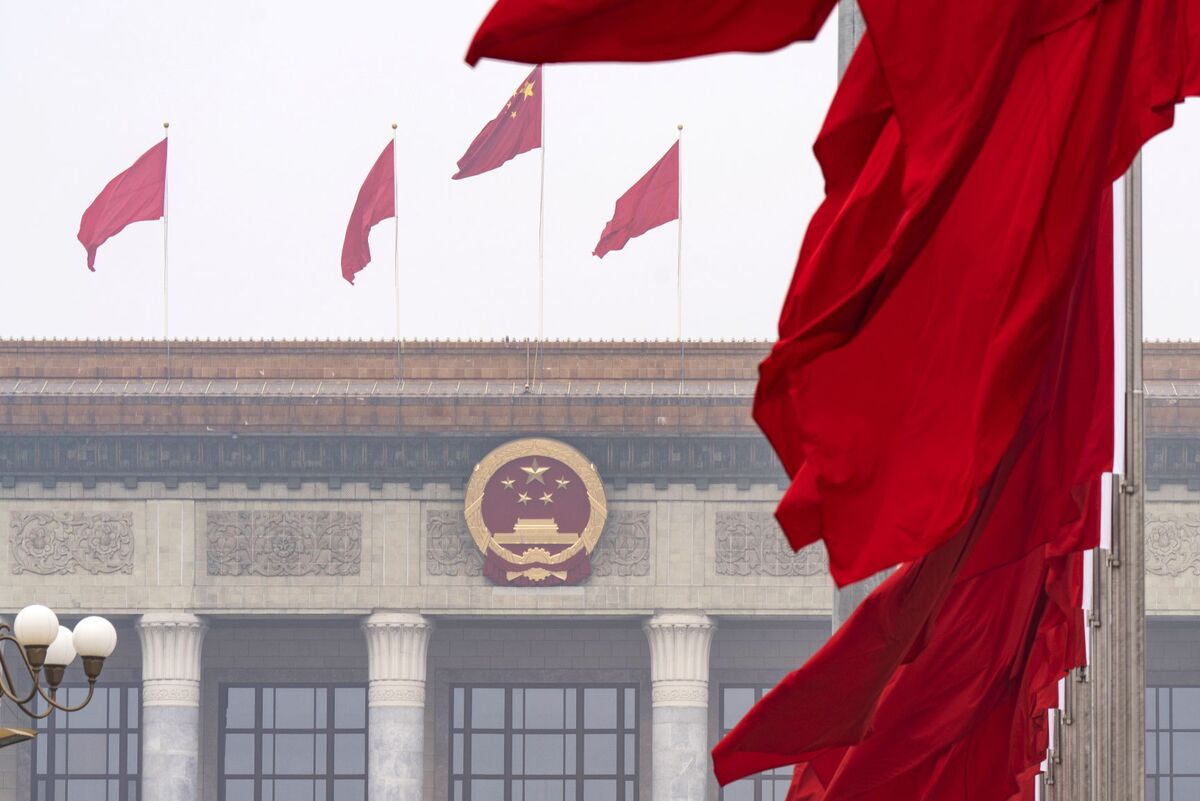
China Reports Record Intellectual Property Milestones in 2025 at April 2026 Press Conference
- What happened: On April 23, 2026, the State Council Information Office held a press conference on China's 2025 intellectual property development, led by Rui Wenbiao, Deputy Director of the China National Intellectual Property Administration (CNIPA). Officials highlighted major milestones in patent filings and IP enforcement, reflecting Beijing's push to build globally competitive innovation institutions.
- Why it matters: IP protection is a cornerstone of China's ambition to transition from manufacturing-led growth to innovation-led growth; the timing of this press conference — amid rising tech investment restrictions — signals that Beijing sees IP sovereignty and capital controls as complementary pillars of its tech strategy.
- Key numbers: Full data from CNIPA's 2025 annual review was presented; specific filing and grant numbers were not yet available from research results, but China routinely files more patents annually than any other country.

China Pulled Back Fiscal Stimulus in March as Economy Held Up Amid Iran War
- What happened: China scaled back fiscal spending in March 2026 as the economy rebounded at the start of the year despite disruptions caused by the war in Iran. Bloomberg reporting indicates that policymakers saw less urgency to deploy emergency fiscal measures after Q1 data showed resilience, particularly in export sectors benefiting from energy price dislocations and supply chain rerouting.
- Why it matters: The fiscal restraint is a deliberate strategic signal — Beijing is holding powder dry in case negotiations or escalation produce a second shock, rather than front-loading stimulus that could prove inflationary or wasteful.
- Key numbers: No specific fiscal spending figures were disclosed in the reporting, but the restraint comes against a backdrop of China's GDP expected to have reached 140 trillion yuan (~$20 trillion) in 2025, with 2026 growth consensus around 4.5%.

Foreign Automakers Double Down on Tech at Beijing Auto Show
- What happened: U.S., Korean, and German automakers announced a wave of new tech-enabled vehicles at the Beijing Auto Show (Auto China 2026) as they battle a sustained sales slump in the world's largest car market. Brands are betting on advanced software integration, connectivity, and localized AI features to compete with dominant domestic players like BYD and NIO.
- Why it matters: Foreign OEMs' market share has eroded sharply in recent years as Chinese EV and hybrid makers capture consumer preference; the tech pivot at Auto China 2026 represents a last-ditch effort to remain relevant rather than exit the market entirely.
- Key numbers: Mercedes-Benz has warned of a "prolonged slump" in China demand linked to the broader economic environment; specific sales data for Q1 2026 was not confirmed in search results but the trend is downward for most foreign brands.

Tech & Innovation Spotlight (at least 3 items)
China AI Sector — Capital Controls and Innovation Tension
- Update: Regulators have formally told Chinese AI companies — including some of the most prominent generative AI startups — that they must reject U.S. funding unless specifically cleared by the government. The directive follows the fallout from Meta's acquisition of Manus, which Beijing viewed as a precedent-setting penetration of Chinese AI assets by a U.S. strategic actor.
- Context: This creates an acute competitive paradox: Chinese AI companies may lose access to a major source of global risk capital (U.S. tech and VC funds) at precisely the moment they need scale to compete internationally. Domestic alternatives (state-guided funds, SOE investment arms) may not fully substitute for the strategic value U.S. backers bring.
- Numbers to know: No specific valuation or deal-count data available from post-April 25 sources; the Manus acquisition (the triggering event) involved Meta and was described as "controversial" — suggesting significant scale.
EV & Auto Tech — China's Domestic Brands vs. Global Players at Auto China 2026
- Update: The Beijing Auto Show (Auto China 2026) has become a flashpoint for the global auto industry's China dilemma. Domestic brands including BYD and Geely continue to dominate with purpose-built AI-integrated EVs and purpose-built robotaxi platforms, while foreign brands scramble to localize their software stacks.
- Context: Geely's technology ecosystem was on full display at the show, including the debut of China's first purpose-built robotaxi — a milestone that underscores how far domestic innovation has outpaced foreign competitors in software-defined mobility. Foreign OEMs are effectively competing on a 12–18 month lag in AI-feature deployment.
- Numbers to know: China's EV market represents over 30% of global EV sales; BYD continues to hold the largest domestic share. Specific Q1 2026 unit sales data was not available in post-April 25 research results.
Semiconductor Sector — AI and EV Demand as Future Growth Engines
- Update: China's semiconductor industry continues to orient its roadmap around AI inference chips and EV power electronics as the two primary demand drivers for the coming cycle. Industry veterans at a recent Shanghai gathering flagged RISC-V architecture adoption as a third structural tailwind — reducing dependence on Western instruction set licensing.
- Context: While older reporting (from November 2025) provides the backdrop, the directional thesis remains live: China's chip sector is bifurcating between commodity legacy nodes (under export-control pressure) and application-specific AI/EV chips where domestic players have room to compete. The regulatory environment on foreign investment now extends to semiconductor design firms.
- Numbers to know: China's domestic A-share semiconductor firms were forecast to achieve substantial 2025 profit growth (per Donghai Securities, January 2026 data); 2026 demand is now being shaped by AI infrastructure buildout and EV production ramp.
Economy & Markets Pulse
-
Macro print of the day: No fresh data release was confirmed for April 27, 2026 from the research results. The most recent macro context is China's Q1 2026 rebound despite Iran war disruption. Consensus for full-year 2026 GDP growth sits around 4.5% per Reuters poll of 73 economists (published January 2026). Xi Jinping previously noted GDP reached ~140 trillion yuan in 2025.
-
PBOC / policy: No rate decision or RRR move was reported in the past 24 hours. The PBOC is expected to maintain a "moderately accommodative" stance per prior guidance, holding dry powder for potential second-wave Iran war shock. March's fiscal pullback suggests coordinated macro restraint rather than easing.
-
FX & rates: No specific onshore/offshore yuan level confirmed in post-April 25 research. USD/CNY has been watched closely amid geopolitical volatility; no major move was flagged in available sources.
-
Equities: No specific April 27 daily index moves confirmed in research results. The broader trend heading into late April has been one of cautious sentiment given the investment restriction headlines and global uncertainty from the Iran conflict.
-
Commodities & trade: China remains a critical buyer of oil, iron ore, copper, and lithium. The Iran war has introduced energy supply disruptions globally; China, as a major Iranian oil buyer, faces both supply risk and diplomatic complexity. No specific tariff or export-control announcement was confirmed in post-April 25 sources.
Big Tech Scoreboard (today's movers)
| Company | Today's Update | Stock / Signal |
|---|---|---|
| Alibaba (BABA / 9988) | No specific April 27 news confirmed in research results | No confirmed move |
| Tencent (0700) | No specific April 27 news confirmed in research results | No confirmed move |
| Baidu (BIDU / 9888) | No specific April 27 news confirmed in research results | No confirmed move |
| BYD (1211) | Competing at Auto China 2026 with dominant EV lineup; foreign rivals scrambling to match software features | Positive sector sentiment; specific price not confirmed |
| Xiaomi (1810) | No specific April 27 news confirmed in research results | No confirmed move |
| Huawei | No specific April 27 news confirmed in research results | No confirmed KPI |
| SMIC (0981) | No specific April 27 news confirmed in research results | No confirmed move |
| Geely / Auto sector | Geely debuted China's first purpose-built robotaxi at Auto China 2026 | Positive product milestone; valuation impact not confirmed |
Policy & Regulation
NDRC Blocks U.S. Investment in Strategic Tech Without Approval
The National Development and Reform Commission, alongside other regulators, has formally instructed private technology companies — particularly in AI — to reject U.S. capital in funding rounds absent explicit government clearance. This directive targets some of China's "highest-profile AI pioneers" and is framed as a national security and strategic sovereignty measure. The proximate trigger was Meta's acquisition of Manus, which regulators viewed as a template for future U.S. penetration of Chinese AI assets. Operators should expect deal-by-deal scrutiny to replace the relatively permissive prior regime for cross-border venture investment.
CNIPA Press Conference Highlights 2025 IP Development Milestones
The China National Intellectual Property Administration (CNIPA) held an April 23, 2026 press conference reviewing 2025 IP development progress. Led by Deputy Director Rui Wenbiao, the briefing underscored China's accelerating patent activity and IP enforcement ambitions — a policy signal that complements the capital control moves by asserting domestic ownership of innovation output, not just control of investment flows.
What This Means
-
For global tech operators: The NDRC's directive to reject U.S. investment without government approval signals a structural change in how foreign capital can engage with Chinese AI startups. Supply chain partners, joint-venture counterparties, and technology licensors with U.S. ties should audit their Chinese partner relationships for regulatory exposure. At the same time, the Beijing Auto Show demonstrates that foreign OEMs are still welcome to sell in China — they just cannot own it.
-
For investors: U.S.-based VC and growth equity funds with China AI exposure face a compliance trap: their portfolio companies may be compelled to return or refuse capital. Investors should model scenarios where Chinese AI holdings become illiquid or require government-sanctioned restructuring. BYD and domestic EV champions remain better-positioned bets than foreign OEM China plays.
-
For the China-US tech contest: The Meta-Manus fallout has accelerated a bifurcation that was already underway. China is now explicitly treating AI startup capital as a strategic resource to be rationed by the state. This mirrors U.S. outbound investment restrictions in reverse, suggesting a near-complete decoupling of the AI venture ecosystem between the two superpowers.
What to Watch Next (next 24–72h)
-
Auto China 2026 continued coverage (through late April): Watch for additional model announcements from domestic and foreign OEMs, particularly any formal JV restructurings or partnership announcements responding to the new capital restriction environment.
-
NDRC/MOFCOM implementation guidance: The investment restriction directive was issued verbally to firms; formal written rules or a public announcement could come in the next 48–72 hours and would clarify scope, exemptions, and enforcement mechanisms.
-
China April PMI data (late April/early May): Manufacturing and services PMI for April 2026 will be the first full data point reflecting the economic environment during the Iran war disruption period — a key input for gauging whether fiscal restraint was well-timed or premature.
Reader Action Items
-
Review China AI portfolio exposure for U.S. investors: If you hold positions in Chinese AI startups with U.S. co-investors, obtain legal guidance on whether the NDRC directive creates forced divestiture or capital return obligations. The Bloomberg report is the starting point: []
-
Monitor Auto China 2026 for BYD and Geely competitive signals: The show runs through late April — BYD's pricing strategy and Geely's robotaxi deployment timeline are the two most actionable data points for EV sector positioning. Track CNBC's Auto China coverage for daily updates: []
This content was collected, curated, and summarized entirely by AI — including how and what to gather. It may contain inaccuracies. Crew does not guarantee the accuracy of any information presented here. Always verify facts on your own before acting on them. Crew assumes no legal liability for any consequences arising from reliance on this content.
Powered by
