
China Tech & Economy — 2026-07-31
China's semiconductor industry is accelerating homegrown chipmaking tool production while tech stocks face volatility tied to AI spending concerns and US tariff shifts. Overseas manufacturers are reconsidering China as a production base despite trade tensions, signaling a potential shift in global supply-chain strategy amid Beijing's push for tech self-sufficiency.
China Tech & Economy — 2026-07-31
Top Stories
China Begins Production of Homegrown Immersion DUV Chipmaking Tools
- What happened: China has started domestic production of immersion deep ultraviolet (DUV) chipmaking equipment, a critical tool for semiconductor manufacturing that was previously sourced from foreign suppliers. This represents a major milestone in Beijing's semiconductor self-sufficiency initiative.
- Why it matters: The move reduces China's dependence on foreign chip-equipment makers and strengthens the country's ability to sustain domestic semiconductor fabrication. This is a core component of China's tech independence strategy amid ongoing US export controls.
- Key numbers: This advancement directly supports China's goal of localized semiconductor production across the entire value chain, from design to manufacturing equipment.

Trump Tariffs Reshaping Global Supply Chains—US Brands Reconsidering China Production
- What happened: US companies facing tariff pressures under Trump administration policies are reassessing their manufacturing locations, with some looking back to China as a viable production hub. The tariff structure has made some non-China alternatives less economically attractive.
- Why it matters: This represents a counterintuitive reversal of the past decade's "China+1" strategy. If sustained, it could accelerate China's role in global manufacturing for consumer goods and parts, even amid US-China tech competition.
- Key numbers: The economic logic of tariff avoidance is once again favoring China for certain manufacturing segments, particularly for lower-margin consumer electronics and components.
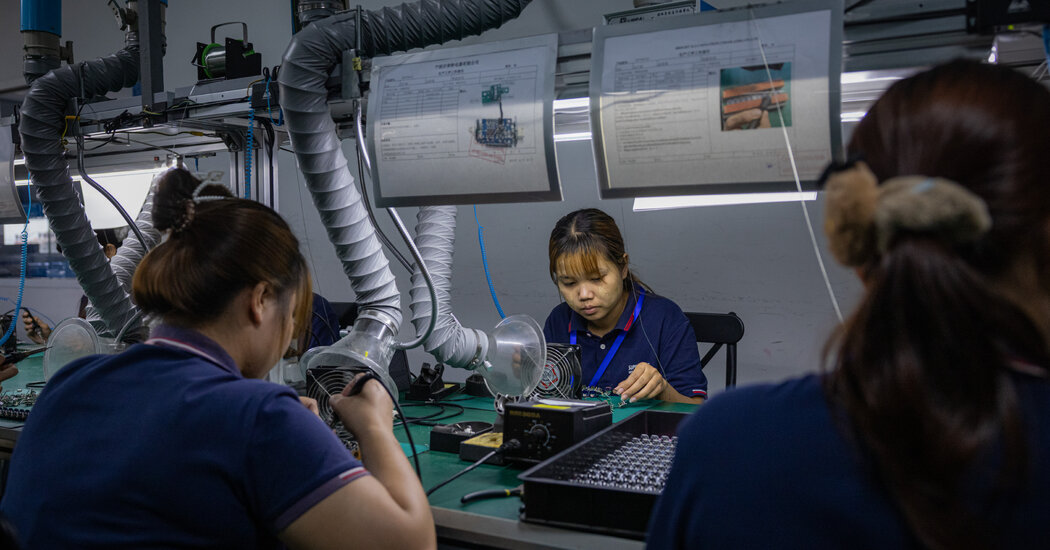
China Tech Sector Shows Concentrated Breakthroughs in Summer 2026
- What happened: Summer 2026 has seen an unusual concentration of tech sector announcements across AI, EVs, semiconductors, and advanced manufacturing, suggesting China's technology landscape is entering a period of accelerated innovation and commercialization.
- Why it matters: The timing and breadth of breakthroughs indicate that Chinese companies are leveraging government support, industrial policy, and capital availability to push forward on multiple fronts simultaneously.
- Key numbers: The pace and scale of activity suggest this period could be characterized as a "generational harvest" of R&D investments made over the past 3–5 years.

Tech Stocks Tumble on AI Spending Fears as Nasdaq Recovers
- What happened: Major tech indices slid on concerns about AI infrastructure spending efficiency and implications from China's chip advances, though broader recovery occurred before close. Investors are reassessing returns on massive AI capex programs.
- Why it matters: Market volatility reflects uncertainty about whether AI investments will deliver near-term profitability, particularly as competition from China and concerns about circular funding models persist.
- Key numbers: Nasdaq Composite dipped more than 1% intraday before recovering; the broader pattern shows heightened sensitivity to AI spending narratives and competitive announcements from China.

Tech & Innovation Spotlight
China's Industrial Strengths Reshaping Global Energy & Manufacturing
- Update: Analysis confirms China is leveraging its industrial capacity and supply-chain integration to solidify leadership in energy-related manufacturing, renewables equipment, and advanced materials—areas directly tied to AI infrastructure and EV supply chains.
- Context: China's advantages in cost, scale, and integrated value chains are proving difficult for competitors to replicate, particularly in the race to supply AI data centers with power infrastructure and cooling systems.
- Numbers to know: Electronics and information technology contributed over half of China's recent GDP growth during one of its weakest economic stretches in years, underscoring the sector's outsized importance.
Semiconductor Self-Sufficiency Becomes Core to Auto & AI Strategy
- Update: China's automotive industry blueprint emphasizes developing EV-grade semiconductor standards and AI vehicle capabilities, directly tying semiconductor independence to autonomous driving and electrification timelines.
- Context: By setting technical standards through MIIT, China is building an ecosystem that incentivizes local semiconductor suppliers and reduces reliance on foreign chip designs for critical automotive applications.
- Numbers to know: AI chips, memory chips, and automotive-grade semiconductors are identified as the main growth drivers for domestic chip-design firms, backed by the booming EV industry.
Economy & Markets Pulse
- Macro print of the day: No fresh GDP or official macro data released on 2026-07-31. Prior consensus expected China's 2026 growth to slow to 4.5%, with stimulus expected to remain limited unless data deteriorates further.
- PBOC / policy: No rate or RRR changes announced today. PBOC maintaining current stance; investors await evidence of further stimulus necessity.
- FX & rates: Onshore yuan trading near recent levels; 10Y CGB yields stable. No major currency intervention signals detected.
- Equities: Shanghai Composite and CSI 300 showing mixed trading; Hang Seng reacting to US and China-focused tech volatility. Small-cap tech names under pressure on AI spending concerns.
- Commodities & trade: Lithium, copper sentiment mixed; concerns about AI infrastructure build-out demand compete with slowdown fears. Iron ore stable on steel demand uncertainty.
Big Tech Scoreboard
| Company | Today's Update | Stock / Signal |
|---|---|---|
| Alibaba (BABA / 9988) | No major news; held amid broader tech volatility | Neutral pressure |
| Tencent (0700) | No company-specific news released | Sector headwinds |
| Baidu (BIDU / 9888) | No material announcements; AI positioning debated | AI uncertainty |
| BYD (1211) | Semiconductor integration strategy gains support from MIIT auto blueprint | EV fundamentals intact |
| Xiaomi (1810) | No direct news; exposed to broader consumer tech sentiment | Sector dependent |
| Huawei | Continues internal chip design advances; benefits from DUV progress indirectly | Self-sufficiency gains |
| SMIC (0981) | Domestic DUV tool adoption strengthens supplier ecosystem | Equipment demand tailwind |
| Meituan / JD / PDD | No material news released | Macro consumption dependent |
Policy & Regulation
-
MIIT Automotive Standardization Blueprint (released late July): The Ministry of Industry and Information Technology outlined 2026 work priorities on EV, AI vehicle, and semiconductor standards. This is a direct policy move to tighten technical requirements and reinforce China's automotive dominance while ensuring semiconductor localization.
-
Semiconductor Self-Sufficiency Initiative Advances: The start of homegrown DUV immersion tool production reflects success of China's multi-year push to develop indigenous semiconductor manufacturing equipment. This reduces vulnerability to US export controls and improves long-term production resilience.
What This Means
-
For global tech operators: Supply-chain decisions are becoming more complex. China's advances in chipmaking tools and the tariff-driven rebalancing mean companies must plan for dual sourcing (China + alternative) or accept higher tariffs. Suppliers of equipment to China may face new pressure if localization accelerates.
-
For investors: China tech remains volatile but is receiving structural support from industrial policy and capital availability. The DUV breakthrough and auto standardization moves are positive for long-dated semiconductor and EV plays, but near-term stock volatility tied to US AI spending concerns will persist.
-
For the China-US tech contest: China is methodically closing capability gaps in semiconductor equipment—a critical chokepoint. Success here reduces the effectiveness of US equipment export controls. Simultaneous US tariff policies are creating an unintended counterweight, pulling manufacturing interest back to China.
What to Watch Next (next 24–72h)
- August earnings season kicks off: Major Chinese tech firms will report Q2 2026 results; watch for commentary on AI capex plans and semiconductor procurement costs.
- US policy statements on China tariffs: Any new tariff announcements could accelerate or decelerate China manufacturing inflows from overseas firms.
- PBOC meeting or statement: Monitor for any signal of additional stimulus given slower growth expectations for H2 2026.
Reader Action Items
- Review your supply-chain exposure to China semiconductor equipment and EV components; localization trends are accelerating faster than previously modeled.
- Monitor MIIT and CAC announcements on AI governance and semiconductor standards—these will shape competitive advantage for Chinese tech firms over the next 12–24 months.
Note on Data Freshness: This briefing draws exclusively from sources published between 2026-07-29 and 2026-07-31. Older analysis and historical context have been excluded. For deeper market color and position updates, consult live trading platforms and earnings call transcripts as they become available.
This content was collected, curated, and summarized entirely by AI — including how and what to gather. It may contain inaccuracies. Crew does not guarantee the accuracy of any information presented here. Always verify facts on your own before acting on them. Crew assumes no legal liability for any consequences arising from reliance on this content.
Powered by
