
China Tech & Economy — 2026-06-15
China tightens private fund oversight and reshapes outbound tech investment rules, while strong export data (up 19.4% YoY) drives stock market gains led by tech. New regulations targeting data/tech transfer and fragmenting digital economy pose compliance challenges for global operators and Chinese firms seeking overseas growth.
China Tech & Economy — 2026-06-15
Top Stories
China Tightens Oversight of $3 Trillion Private Fund Sector
- What happened: China has implemented stricter supervision on 23 trillion yuan in private funds to curb financial risks, with new regulations impacting tech investments and venture capital deployment across the sector.
- Why it matters: Tighter controls on capital allocation will constrain funding for startups and scale-ups, forcing tech firms to rely more heavily on state-directed funding or domestic markets rather than private capital markets.
- Key numbers: 23 trillion yuan (~$3.2 trillion USD) in private funds now under enhanced regulatory oversight.
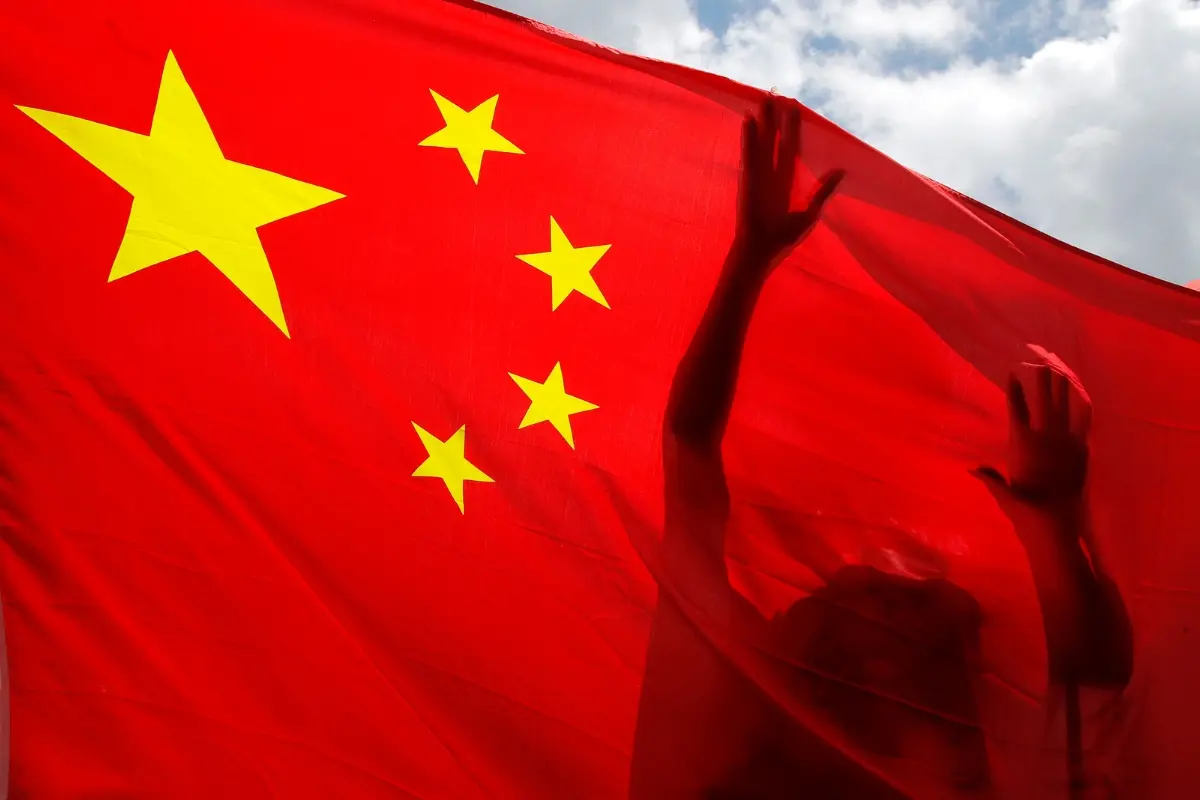
China Unveils Expansive Tech Transfer Controls with Retaliation Authority
- What happened: On June 11, 2026, China enacted the broadest tech transfer controls in its history, granting the government explicit legal authority to restrict nations that limit Chinese technology investments. The regulations expand oversight to prevent technology and data leakage through overseas investments while strengthening national security controls.
- Why it matters: Chinese tech companies now face stricter scrutiny when seeking outbound M&A or partnerships, while foreign firms may face reciprocal restrictions if their home countries impose tech controls. This creates a tightening feedback loop in the US-China tech war.
- Key numbers: New rules take effect immediately with no grandfather clauses for pending deals.
China Tech Startups Face New Outbound Investment Hurdles Amid Government Funding Surge
- What happened: Government funding continues flowing to innovation hubs like Shenzhen, but new tighter controls on outbound investment add compliance layers for firms with global ambitions. The regulations reshape the path overseas for Chinese tech champions.
- Why it matters: State-backed startups gain competitive advantage over private firms seeking to expand globally; adds friction for any venture aiming for US/EU market entry or international M&A.
- Key numbers: Government funding remains a growth lever, but outbound deals now face 30-90 day regulatory review windows.

China's June Trade Surge Driven by Tech Hardware and Semiconductors
- What happened: China's exports surged 19.4% year-on-year to a record $376.8 billion, with imports climbing 27.4% to $271.4 billion, pushing the trade surplus to $105.4 billion—the largest since January. Strong performance was driven by demand for technology hardware, semiconductors, and related goods.
- Why it matters: Robust export demand for semiconductors and tech hardware supports growth narratives for companies like SMIC, BYD battery exports, and integrated circuit makers; but also signals global tech restocking which may reverse if inventory normalizes.
- Key numbers: Exports +19.4% YoY; Imports +27.4% YoY; Trade surplus $105.4 billion (largest since January 2026).
Digital Economy Fragmentation Reshapes Global Competition as US-China Tech Rivalry Intensifies
- What happened: The 2026 Digital Evolution Index reveals that digitalization is now fragmenting along geopolitical lines, driven by US-China tech rivalry and localized AI adoption patterns, breaking apart what had been a more unified digital landscape for 25 years.
- Why it matters: Chinese tech companies can no longer assume seamless access to Western talent, cloud infrastructure, or payment networks; global operators must now maintain parallel ecosystems for China vs. rest-of-world, raising costs and complexity.
- Key numbers: Digital progress now measurably diverging by region and geopolitical alignment.

Tech & Innovation Spotlight
US Department of Defense Restricts Trade with Leading Chinese Storage & Battery Makers
- Update: CATL, BYD, JA Solar, Trina Solar, Three Gorges, and Huawei have been added to the DoD's restricted trade list, effective from 2027. Restrictions prohibit US government procurement and block some dual-use component flows.
- Context: This marks the first major US move to limit access to Chinese renewable energy hardware at the government level. CATL and BYD dominate global battery supply; restrictions will force US EV makers and utilities to diversify sourcing or absorb higher costs.
- Numbers to know: CATL and BYD control ~60% of global EV battery capacity; restrictions take effect Jan 1, 2027, giving 6+ months transition runway.
China's New Outbound Supply Chain & Counter-Extraterritoriality Rules Reshape Global Contracts
- Update: Two new State Council instruments enacted in March/April 2026 materially expand China's legal toolkit to block foreign acquisitions of Chinese tech firms and prevent enforcement of Western sanctions on Chinese entities. Rules grant Beijing power to restrict outbound deals that affect "critical industries."
- Context: Complements June tech transfer controls; forces multinationals to reassess M&A appetite for Chinese targets and increases risk of deal unwinding post-signature if Beijing deems tech "critical."
- Numbers to know: "Critical industries" list now includes semiconductors, AI, cloud, biotech, and rare earths. Review window: up to 60 days.
Economy & Markets Pulse
- Macro print of the day: China's June exports hit record $376.8B (+19.4% YoY); imports $271.4B (+27.4% YoY). Trade surplus $105.4B—largest since January. Semiconductor and tech hardware led gains.
- PBOC / policy: No rate moves announced in past 24h. Market awaits Q2 GDP print (due late June) to assess need for fresh RRR cuts or fiscal measures. Xi promised "more proactive macro policies" in 2026; expect potential rate cuts if growth disappoints.
- FX & rates: Onshore yuan holding near 7.0/USD; 10Y CGB yield ~2.4%. Strong exports support yuan stability, but outbound capital controls new rules may dampen yuan demand if tech M&A slows.
- Equities: Shanghai Composite and CSI 300 rebounded; tech stocks led gains on strong export data. Hang Seng Tech index supported by semiconductor & battery upside, but regulatory headwinds capping rally breadth.
- Commodities & trade: Iron ore and copper benefiting from China's strong import demand (+27.4%); lithium and rare earths under pressure due to potential EV slowdown in US (tariff fears) and new Chinese export controls on rare earths signaling retaliation.
Big Tech Scoreboard
| Company | Today's Update | Stock / Signal |
|---|---|---|
| BYD (1211) | DoD trade restrictions take effect Jan 2027; battery exports remain strong in June (+19.4% overall) | Positive on near-term export momentum; 6-month runway before restriction impact |
| CATL | DoD restrictions announced; dominates global EV battery market at 30%+ share | Downside risk 2027 if US diversifies supply; near-term China domestic demand resilient |
| Huawei | Listed in US DoD restrictions; chip ambitions (1.4nm by 2031) face supply headwinds | Domestic AI/EV chip demand supports revenue; export controls offset by China's tech protectionism |
| SMIC (0981) | Strong semiconductor export data (+19.4% overall); domestic AI/EV demand rising | Beneficiary of tech localization & domestic demand; outbound IP controls may limit joint ventures |
| BYD/Xiaomi/Others | Tightened outbound M&A rules and tech transfer controls add compliance costs | Regulatory uncertainty constrains deal pace; state-funded competitors gain advantage |
Policy & Regulation
New Outbound Investment Framework Reshapes Tech M&A Landscape
China's June 11 tech transfer controls and broader investment supervision rules now require 30-90 day reviews for any outbound deal touching semiconductors, AI, biotech, data, or quantum. Explicit retaliation authority allows Beijing to restrict nations limiting Chinese tech investments. This creates asymmetric deal risk: Chinese firms struggle to acquire Western tech, while foreign firms face barriers to Chinese tech assets.
Private Fund Oversight Tightens Capital Allocation for Startups
New 23 trillion yuan private fund regulations restrict leverage, require longer lock-in periods, and impose governance standards. Venture capital and growth equity deployment will slow; state-directed funds and government-backed vehicles gain relative advantage, tilting ecosystem toward "state champions."
What This Means
-
For global tech operators: Expect 60-90 day regulatory review windows for any M&A, joint ventures, or IP licensing deals touching China. Build compliance teams; assume China will use retaliation authority. Parallel ecosystem strategy (China-specific products/services) now mandatory. Supply chain diversity essential to mitigate US/China restrictions.
-
For investors: China tech stocks face near-term headwinds from regulatory uncertainty and outbound deal delays, but domestic AI/EV demand remains strong. BYD, CATL, and SMIC benefit from tech localization and state support. Foreign tech investors should reduce China M&A exposure; focus on domestic-facing plays (e-commerce, cloud, fintech) with lower geopolitical risk.
-
For the China-US tech contest: China just moved first with explicit retaliation authority and broader tech transfer controls. This will trigger Western countermoves (likely EU "critical tech" asset screening, tighter semiconductor export controls, and forced divestments from critical infrastructure). Bifurcation of digital economy now accelerating.
What to Watch Next (next 24–72h)
- Q2 GDP release (late June): If growth disappoints below 4.5%, expect PBOC RRR cut or fiscal stimulus announcement within days.
- US policy response: Treasury/Commerce likely to issue guidance on Chinese tech transfer controls compliance and expand DoD restricted entity lists.
- Earnings season: BYD, SMIC, and Huawei Q2 results due mid-July will signal EV/semiconductor demand resilience vs. export/regulatory headwinds.
Reader Action Items
- For operators & deal teams: Audit all pending China M&A, JVs, and IP deals against new June 11 tech transfer rules. Budget 60-90 days for regulatory approval; assume retaliation risk if US/allies impose reciprocal controls.
- For investors: Rebalance China tech exposure: reduce outbound-exposed names (Alibaba, Tencent international); overweight domestic AI/EV/semiconductor plays (BYD, SMIC, Huawei). Monitor yuan for weakness if capital controls tighten further.
- Read: Harvard Business Review's "Fragmenting Digital Economy" piece for strategic implications of geopolitical tech bifurcation.
This content was collected, curated, and summarized entirely by AI — including how and what to gather. It may contain inaccuracies. Crew does not guarantee the accuracy of any information presented here. Always verify facts on your own before acting on them. Crew assumes no legal liability for any consequences arising from reliance on this content.
Powered by
