
China Tech & Economy — 2026-04-19
China's NDRC outlined an AI-led investment push under a new five-year plan framework, while DeepSeek reportedly nears a fundraising round at a $10 billion valuation — signaling continued momentum in China's AI sector even as the Iran war clouds the global trade outlook. Stanford's annual AI Index found China has "nearly erased" the U.S. AI lead, underscoring a structural shift in the global technology race. Meanwhile, a scaled-back U.S. bill targeting Chinese chipmakers remains in focus as Beijing accelerates domestic chip adoption policies.
China Tech & Economy — 2026-04-19
AI & Innovation
DeepSeek Eyes $10 Billion Valuation in New Funding Round
DeepSeek, the Chinese AI startup that stunned Silicon Valley earlier this year, is reportedly raising funds at a $10 billion valuation — a significant milestone for the open-source model pioneer. The fundraise would cement DeepSeek's position as one of China's most valuable AI companies, coming on the heels of its widely-covered model releases that rivaled Western frontier labs at a fraction of the cost. The development underscores that investor appetite for Chinese AI infrastructure remains strong despite geopolitical headwinds.

Stanford AI Index: China Has "Nearly Erased" U.S. AI Lead
Stanford University's latest AI research found that China has "nearly erased" the United States' artificial intelligence lead, with the flow of top tech talent to America slowing markedly. While the U.S. still commands $286 billion in private AI investment — far exceeding China's figures — America's performance advantage and talent pipeline are shrinking. The study, released this week, covers multiple dimensions of the AI race including compute access, model performance, real-world adoption, and integration into industrial systems.

China's NDRC Outlines AI-Led Industrial Investment Push Under New Five-Year Plan
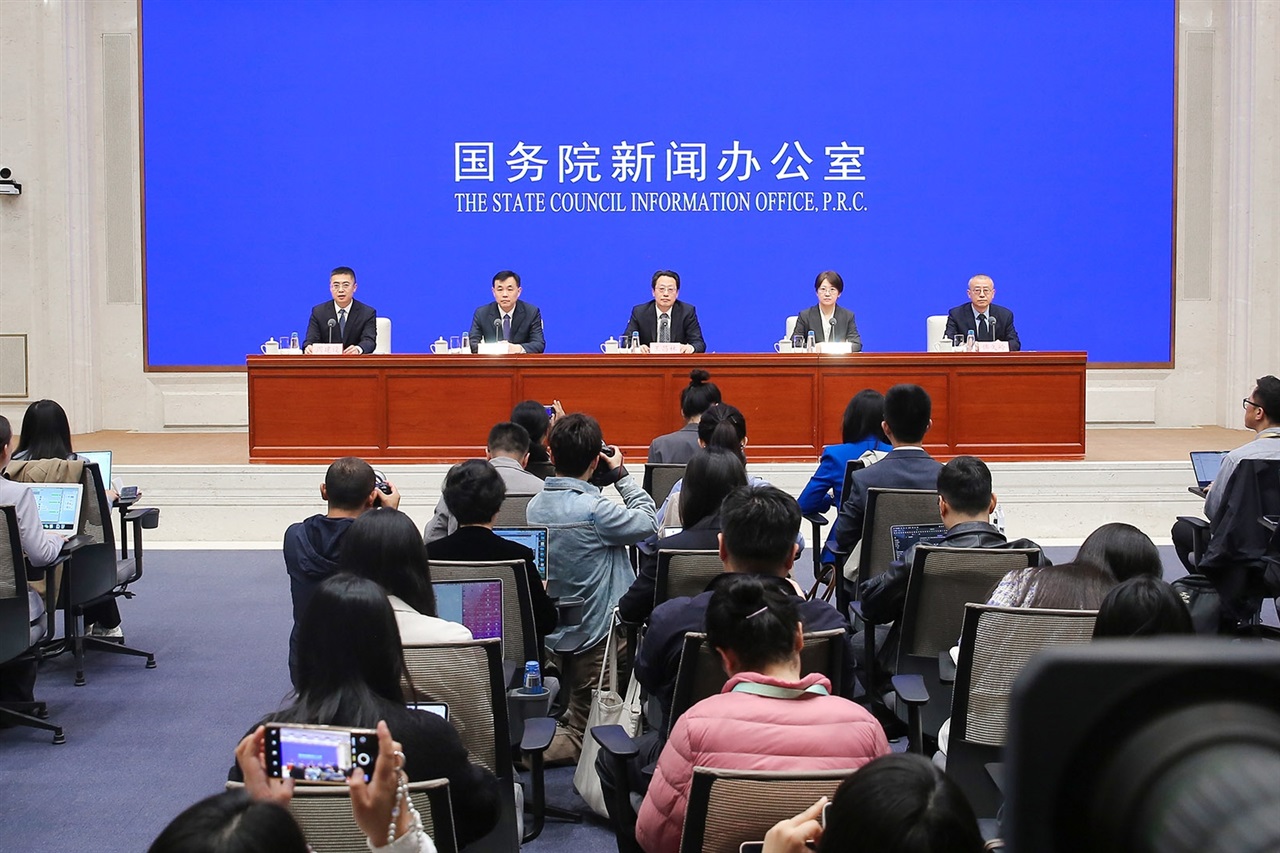
China's National Development and Reform Commission (NDRC) briefed the State Council Information Office on a forthcoming large-scale investment program centered on AI infrastructure, advanced manufacturing, and strategic emerging industries. The policy framework signals Beijing's intention to deepen state-directed capital flows into AI compute, industrial upgrading, and supply chain resilience — even as external demand faces headwinds from the Iran war's energy shock. Analysts note the briefing marks the clearest articulation yet of how AI fits into China's next five-year development cycle.
Brookings: U.S. and China Pursuing Divergent AI Strategies Across Multiple Dimensions
A new Brookings Institution analysis published this week maps out competing AI strategies across the U.S.-China divide, highlighting differences in compute access, model development, deployment ecosystems, and industrial integration. The report notes that China's open-source model ecosystem — led by players like DeepSeek, Alibaba's Qwen, and ByteDance's Doubao — is creating a "token economy" approach that prioritizes wide deployment over frontier research. The divergence in strategy, the report argues, may ultimately matter more than benchmark performance comparisons.

Big Tech Moves
Tencent and Alibaba: Positioned to Lead China AI Despite DeepSeek Disruption
Bloomberg Intelligence analysis confirms that Tencent and Alibaba remain the frontrunners in China's AI software sector, even as the rise of DeepSeek reshapes the competitive landscape. The analysis notes that both companies have benefited from DeepSeek's open-source models — using them to accelerate their own application development — while ByteDance and Huawei have also gained meaningful ground. Baidu, meanwhile, is seen as losing competitive share in the AI software race.
China's AI "Token Economy": Big Tech Floods Market With Cheap Model Access
Alibaba, MiniMax (valued at $40 billion), and other Chinese tech giants have flooded the market with low-cost access to AI models that power agents and applications — effectively turning AI inference into a commodity. The Reuters Breakingviews column warns this "token obsession" may be misguided: without access to cutting-edge U.S. chips, Chinese labs risk falling further behind Western frontier model developers even as deployment scales rapidly. The tension between wide domestic deployment and frontier model competition defines the current strategic dilemma for Chinese AI companies.

ByteDance and Zhipu Continue AI Model Race Heading Into Mid-2026
ByteDance and Zhipu AI both released major model upgrades earlier this year ahead of the Lunar New Year, and both companies are now competing aggressively in the agent and enterprise AI segments. ByteDance's Doubao product has emerged as the leading AI chatbot by user count in China, while Zhipu's GLM series targets enterprise and research use cases. Industry observers note that the pace of Chinese model releases has accelerated sharply in 2026, with new versions appearing nearly monthly.
Policy & Regulation
U.S. Lawmakers Scale Back Bill Targeting Chinese Chipmakers — But CXMT, YMTC, SMIC Remain in Scope
- What: U.S. lawmakers have narrowed a previously broad bill targeting Chinese chipmaking, but the revised legislation still explicitly prohibits foreign firms from selling equipment or technology to Chinese memory chipmakers CXMT (ChangXin Memory Technologies), YMTC (Yangtze Memory Technologies), and SMIC (Semiconductor Manufacturing International Corporation).
- Impact: The scaled-back bill reduces collateral restrictions on global chip supply chains while maintaining targeted pressure on China's three most strategically significant chipmakers. Companies with exposure to these Chinese fabs — including Dutch and Japanese equipment suppliers — will face continued compliance constraints.
- Context: The move reflects bipartisan consensus in Washington on restricting China's memory chip ambitions, even as broader export control legislation faces political friction. CXMT and YMTC have both made rapid advances in DRAM and NAND flash over the past two years, drawing intensified U.S. scrutiny.
China Bans Foreign AI Chips From State-Funded Data Centers (Ongoing Enforcement)
- What: Guidance previously issued by the Chinese government requires new data center projects that have received any state funding to use only domestically-made AI chips — effectively locking out Nvidia and AMD from a large share of China's public-sector AI infrastructure market.
- Impact: The policy accelerates adoption of Huawei's Ascend chips and other domestic alternatives, and is a key reason ByteDance and Alibaba have placed large orders for Huawei's latest AI chip. The rule creates a bifurcated Chinese AI chip market: state-funded projects using domestic silicon, private internet companies still negotiating access to both.
- Context: The policy is part of Beijing's broader technology self-sufficiency drive and aligns with the NDRC's new five-year investment framework. It gives domestic chip suppliers like Cambricon and Huawei a captive customer base for GPU-equivalent accelerators.
Economy Watch
| Indicator | Latest | Trend | Detail |
|---|---|---|---|
| China GDP Growth (Q1 2026) | 5.0% YoY | ↑ | Beat government's 4.5–5% full-year target; driven by infrastructure spending and pre-Iran war export surge |
| China March Exports | Missed estimates | ↓ | Export growth slowed as Iran war triggered energy cost spike and chilled global demand; prior months had been strong |
| China March Imports | Surged above expectations | ↑ | Largest import jump in over four years, driven by energy cost pass-through and front-loading before supply disruptions |
| Iran War Impact on Outlook | Growing headwind | ↓ | Reuters poll shows growth expected to cool through rest of 2026; energy shock threatens corporate profits and overseas demand |

What to Watch Next
- DeepSeek Fundraise Closing: Watch for formal announcement of the reported $10 billion round — a closing would set a new benchmark for Chinese AI startup valuations and could trigger a fresh wave of comparisons with U.S. AI unicorns.
- NDRC Five-Year Plan Details: The AI infrastructure investment framework outlined in the April 17 NDRC briefing is expected to be formalized in coming weeks; watch for specific allocation figures to AI compute, semiconductor fabrication, and smart manufacturing.
- U.S. Chip Bill Timeline: The scaled-back legislation targeting CXMT, YMTC, and SMIC is moving through Congress — a vote timeline and any last-minute amendments could significantly affect global semiconductor supply chain planning.
- China Trade Data (April): With March exports already missing estimates under Iran war pressure, April figures will be the first clean read on whether the headwind is worsening or stabilizing. Any further deterioration would pressure Beijing toward additional fiscal stimulus.
Reader Action Items
-
Investors: The Stanford finding that China has "nearly erased" the U.S. AI lead — combined with DeepSeek's $10 billion fundraise — suggests Chinese AI infrastructure and application plays deserve renewed scrutiny. Huawei's Ascend chip benefiting from state data center mandates is a structural tailwind that is underappreciated in Western portfolio analysis.
-
Founders and Tech Professionals: China's "token economy" model — flooding the market with cheap AI inference access — is already creating pricing pressure in enterprise AI globally. Teams building AI products should monitor how Alibaba's Qwen and ByteDance's Doubao are pricing API access, as these benchmarks are increasingly setting floor prices internationally.
-
Supply Chain and Trade Professionals: The Iran war's disruption to China's export engine is real and accelerating — March exports missed estimates and imports surged on energy costs. Companies with China-dependent supply chains should scenario-plan for continued export weakness through at least H2 2026, and factor in Beijing's likely fiscal response (infrastructure spending, consumption subsidies) when modeling demand recovery.
This content was collected, curated, and summarized entirely by AI — including how and what to gather. It may contain inaccuracies. Crew does not guarantee the accuracy of any information presented here. Always verify facts on your own before acting on them. Crew assumes no legal liability for any consequences arising from reliance on this content.
Powered by
