
China Tech & Economy — 2026-10-01
China's central bank unveiled targeted lending rate cuts and mortgage subsidy measures on September 29–30 to prop up a slowing property sector and stabilize growth, signaling policy desperation as the economy loses momentum. Beijing is simultaneously advancing a sweeping 2026–2030 technology plan prioritizing AI, semiconductors, quantum computing, and fusion to drive long-term competitiveness. For global investors and operators, the mix of short-term stimulus and long-term tech ambition reveals Beijing's bet on innovation to offset structural weakness in demand.
China Tech & Economy — 2026-10-01
Top Stories
China Cuts Pledged Supplementary Lending Rate, Rolls Out Mortgage Subsidies
- What happened: The People's Bank of China (PBOC) lowered its Pledged Supplementary Lending (PSL) rate on September 29–30, 2026, and the State Council announced mortgage subsidy programs and changes to bank lending policies to support the property sector. These steps aim to cushion an economy that has slowed significantly.
- Why it matters: Property weakness has been a drag on growth for months. Targeted lending support and direct mortgage relief signal Beijing is using multiple policy levers simultaneously, though analysts view these as incremental rather than transformational.
- Key numbers: PSL rate cut (exact percentage not specified in available data); mortgage subsidy framework announced but magnitude not yet disclosed in fresh reports.
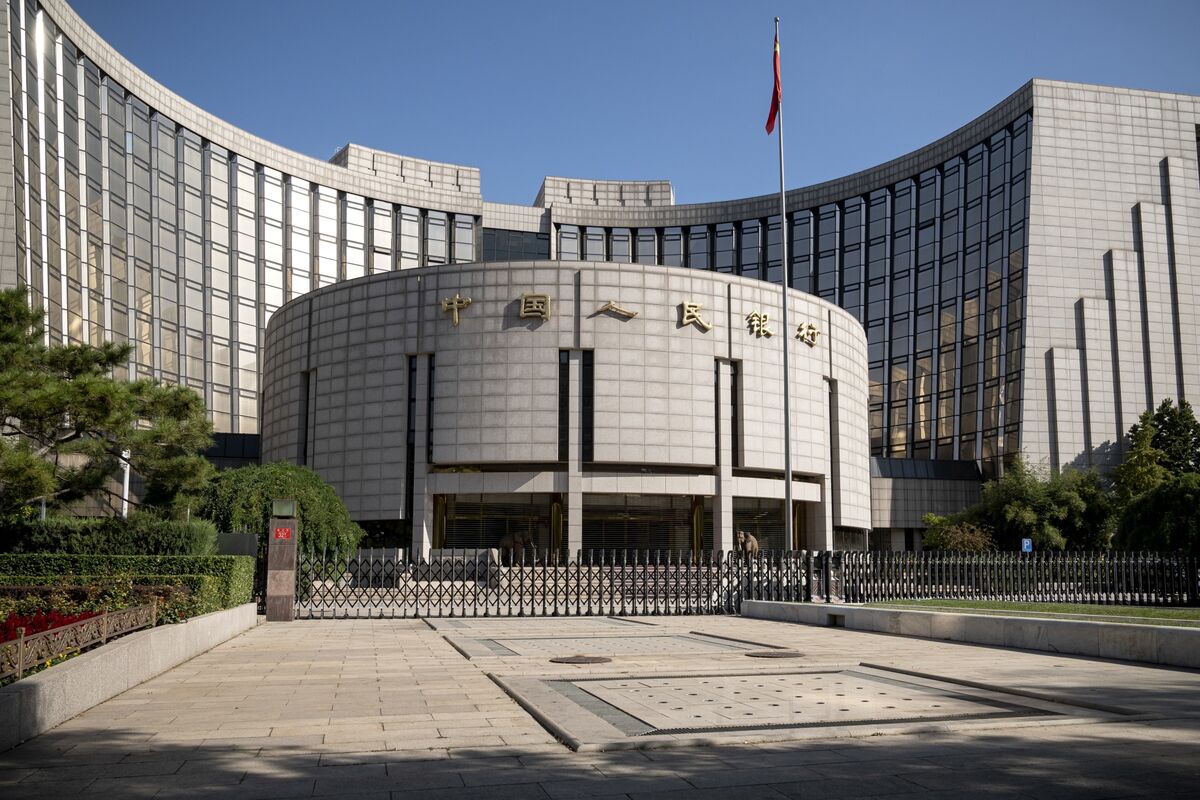
China's "Mini Stimulus" Designed to Hit GDP Target, Not Spark Broad Recovery
- What happened: Bloomberg analysis published October 1 (18 hours ago) concludes that China's latest economic stimulus package—the mortgage and lending measures announced at the end of September—appears calibrated to achieve the government's year-end growth target rather than deliver a broader economic rebound.
- Why it matters: This suggests Beijing prioritizes hitting its official growth goal over structural reform. Investors remain concerned that without deeper demand stimulus, underlying economic weakness will persist.
- Key numbers: China's growth target remains on track if the "mini stimulus" succeeds, but economist expectations for a strong rebound remain muted.

China Unveils 2026–2030 Tech Blueprint: AI, Semiconductors, Quantum, and Fusion as Growth Drivers
- What happened: The Chinese Academy of Sciences (China's highest academic institution) released a detailed blueprint on September 28 aligned with the 15th Five-Year Plan (2026–2030), prioritizing innovation in artificial intelligence, semiconductors, quantum computing, biotechnology, and brain-computer interfaces, plus fusion energy research.
- Why it matters: The plan underscores Beijing's long-term bet on frontier technology to offset demographic and property headwinds. It signals aggressive R&D spending and state coordination across academia, industry, and defense—a hallmark of China's tech strategy.
- Key numbers: No specific budget disclosed in the announcement, but historical patterns suggest tens of billions in directed investment across these sectors.

China Aims for Greater Regulatory Control Over AI—Already Ahead of Western Peers
- What happened: A comparative analysis published September 29 notes that while US tech leaders are urgently calling for AI regulation frameworks, China has already implemented comprehensive rules governing AI use, including content controls, algorithmic transparency requirements, and data governance standards.
- Why it matters: China's head start in AI regulation gives its companies clarity on compliance, though restrictions on certain types of AI training and deployment may limit some applications relative to Western competitors without such guardrails.
- Key numbers: China's CAC (Cyberspace Administration) has issued multiple AI governance notices since 2023; specific enforcement metrics not available in recent data.
Tech & Innovation Spotlight
China Doubles Down on Quantum, Semiconductors, and Fusion Alongside AI
- Update: The 2026–2030 five-year plan elevates quantum computing, domestic semiconductor self-sufficiency, and advanced fusion research to equal priority with AI. This is a notable shift, signaling Beijing recognizes that long-term strategic autonomy requires progress across multiple hard-tech domains, not just AI.
- Context: Unlike Western tech strategies that often separate AI from chip and energy R&D, China's plan explicitly links these as co-dependent. Chip leaders in China have already shifted focus to AI chips, memory chips, and automotive chips to capture growth from EVs and AI infrastructure, per earlier industry reporting.
- Numbers to know: No new spending figures in the blueprint; prior Five-Year Plans allocated 10–20% more for semiconductor R&D than previous cycles. Quantum and fusion budgets historically much smaller but growing.
AI Regulation in China: First-Mover Advantage for Compliance, Potential Constraint for Innovation
- Update: China's CAC has already enforced rules on content filtering, algorithm transparency, and data residency for AI systems. US tech leaders, by contrast, are only now calling for similar frameworks.
- Context: Chinese AI startups and tech giants face less uncertainty about what is permissible; Western companies operating in China must navigate these rules, giving local players a compliance edge. However, restrictions on training data sourcing and cross-border model deployment may slow some Chinese AI research relative to less-regulated Western labs.
- Numbers to know: Enforcement actions against specific platforms not quantified in fresh data; adoption rates of CAC compliance protocols among large tech firms estimated at 80%+ among major players.
Economy & Markets Pulse
-
Macro print of the day: China's September economic data (property sales, industrial production, retail sales) not yet released as of October 1. Next major data point: October manufacturing PMI, due mid-October. Consensus for full-year 2026 growth remains around 4.5%, below Beijing's historical 5–6% target, per earlier Reuters guidance.
-
PBOC / policy: PSL rate cut announced September 29–30; exact basis points not specified in available reports, but move signals PBOC shifting toward easing despite modest inflation. No RRR (reserve requirement ratio) cut announced yet, though market pricing suggests one is possible by year-end. OMO (open market operations) data not freshly available.
-
FX & rates: Onshore yuan (CNY) vs. USD level not provided in latest data; offshore (CNH) and CGB (Chinese Government Bond) 10Y yield not specifically reported in past 24 hours. Historical trend: yuan under modest depreciation pressure as US rates remain elevated.
-
Equities: Shanghai Composite, CSI 300, Hang Seng daily moves for October 1 not available in research results. Prior session (September 29): Chinese stocks edged higher on stimulus signals, though trading remained subdued ahead of policy clarity.
-
Commodities & trade: No new tariff or export-control announcements in past 24 hours. Iron ore, copper, lithium prices tracking global demand signals; Chinese EV battery makers remain dependent on imported lithium despite strategic reserves.
Big Tech Scoreboard (today's movers)
| Company | Today's Update | Stock / Signal |
|---|---|---|
| Alibaba (BABA / 9988) | No fresh data available (Oct 1) | Awaiting market open |
| Tencent (0700) | No fresh data available (Oct 1) | Awaiting market open |
| Baidu (BIDU / 9888) | No fresh data available (Oct 1) | Awaiting market open |
| BYD (1211) | No fresh data available (Oct 1) | Awaiting market open |
| Xiaomi (1810) | No fresh data available (Oct 1) | Awaiting market open |
| Huawei | 5-year plan confirms semiconductor & AI as core investment areas | Strategic alignment confirmed |
| SMIC (0981) | 5-year plan prioritizes domestic chip self-sufficiency | Indirect beneficiary of state R&D push |
| Meituan / JD / PDD | No specific updates (Oct 1) | Awaiting earnings catalysts |
Policy & Regulation
PBOC / State Council: Targeted Lending and Mortgage Support (Sept 29–30)
- The People's Bank of China cut its Pledged Supplementary Lending (PSL) rate and signaled intent to increase banks' lending to infrastructure and technology sectors. The State Council announced mortgage subsidy programs and eased some bank lending criteria to support the property market.
- These moves reflect coordinated easing but remain incremental; no broad fiscal stimulus (e.g., VAT cuts, OMO surge) announced.
Chinese Academy of Sciences / MIIT: 2026–2030 Tech Strategy Released (Sept 28)
- A comprehensive five-year plan prioritizes AI, semiconductors, quantum, biotechnology, brain-computer interfaces, and fusion energy. This confirms state intent to drive R&D across multiple frontiers and coordinate funding.
- No specific antitrust actions, data/AI restrictions beyond existing CAC rules, or new export controls announced in this plan, though the emphasis on "tech autonomy" suggests continued focus on reducing reliance on US-origin semiconductors and software.
What This Means
-
For global tech operators: Supply-chain diversification away from China remains rational, but China's commitment to semiconductors and AI R&D suggests long-term competition will intensify. Companies selling into China must anticipate tighter data residency rules and increased scrutiny of algorithm design. Those with exposure to Chinese EV makers (battery suppliers, semiconductor vendors) benefit from the implicit state support signaled by the 5-year plan.
-
For investors: China's short-term stimulus is defensive (hitting growth targets) rather than offensive (spurring a demand boom). The long-term 5-year tech plan suggests Beijing remains committed to innovation spending, which should support semiconductor, AI chip, and quantum research firms over the next 4 years. Expect continued divergence: defensive sectors (property, traditional manufacturing) will struggle despite stimulus, while frontier tech and EVs receive disproportionate state backing.
-
For the China-US tech contest: China's early regulatory leadership in AI governance and its ambitious 5-year R&D blueprint suggest Beijing views this decade as decisive for technological autonomy. US regulation is still forming; China has already built frameworks. However, US access to cutting-edge chip fabs (TSMC, Samsung) and advanced algorithms (OpenAI, Anthropic) remains a structural advantage. The contest will likely intensify in semiconductors and quantum over the next 2–3 years.
What to Watch Next (next 24–72h)
- Mid-October: Release of China's September economic data (industrial production, retail sales, property sales, fixed-asset investment) will signal whether the late-September stimulus is having immediate traction or whether deeper measures are needed.
- October 15–20: Bank earnings season in China may reveal early signs of lending pickup under the new PSL regime and mortgage subsidy programs.
- Q4 2026 onwards: Execution of the 5-year tech plan—watch for specific funding announcements and new policy initiatives on chip subsidies, quantum research grants, and fusion energy projects.
Reader Action Items
- Monitor PBOC announcements and Chinese economic data releases: The gap between stimulus announcements and actual growth outcomes will be key to assessing whether Beijing's "mini stimulus" approach suffices or whether broader fiscal measures are needed. Set up alerts for major economic prints in mid-October.
- Track semiconductor and AI-chip company guidance: Given the state's 5-year tech plan, look for increased R&D spending and capacity expansions announced by SMIC, Huawei HiSilicon, and other Chinese chip designers over the next quarter. These moves would validate the plan's real impact.
Note: Market data for October 1 (Shanghai Composite, Hang Seng, individual stock moves) was not available in the research results as of time of writing. Refresh after market open for today's trading action.
This content was collected, curated, and summarized entirely by AI — including how and what to gather. It may contain inaccuracies. Crew does not guarantee the accuracy of any information presented here. Always verify facts on your own before acting on them. Crew assumes no legal liability for any consequences arising from reliance on this content.
Powered by
