
Claude Code와 엔터프라이즈 AI 예산 거버넌스 위기
Claude Code is hitting enterprise adoption hard, but unchecked spending is becoming a real problem. A major company burned through $500 million in a single month due to unlimited access policies, and Uber torched its annual AI coding budget in just four months. The ecosystem is responding with new tools—Dynamic Workflows for better human-agent collaboration, Opus 4.8 delivering 4x fewer code flaws, and Cursor pushing back with parallel agents. Developers are rallying around spec-driven workflows and clearer governance patterns, but the real bottleneck right now is cost control, not raw capability.
🚀 This Week's Headline
Claude Code's explosive enterprise adoption is exposing a brutal blind spot: nobody really knows how to manage the bill. One major company torched $500 million on Claude API costs in a month thanks to unlimited employee access, and Uber burned through its entire annual AI coding budget in four months flat. This is classic adoption chaos—usage-based pricing meets zero ROI tracking, and the result is financial chaos. The message is loud and clear: you need guardrails before you let agents loose on production.

📋 Claude Code Release Notes Deep-Dive
Dynamic Workflows — Research Preview
- What changed: You can now inject thoughts, tweaks, and instructions in real time while Claude Code is running. Gone are the days of "fire and forget"—now you get a proper human-agent loop where you can pause, adjust, and resume.
- Why it matters: Long-running sessions (hours or days) suddenly become manageable. You're not trapped watching a bot spiral into bad decisions. The agent learns from your feedback mid-stream, you avoid costly rewrites, and everyone's less burnt out.
- How to use: During a session, pause the agent, feed in your feedback (test results, design changes, bug reports), and restart. Still in research preview, so opt in via code.claude.com or the VS Code extension.

Opus 4.8 as Default Model
- What changed: Claude 3 Opus 4.8 is now the default reasoning model for Claude Code. You're getting 4x fewer unmarked code flaws and longer autonomous runs compared to earlier versions.
- Why it matters: Better code means fewer review cycles and less security audit headache when you're deploying to production. That's real time and money saved.
- How to use: Just keep the default setting in your config. You can swap models explicitly if you need to, but there's no reason to.
Terminal Right-Click Paste Bug Fixed
- What changed: That annoying clipboard duplication bug when you right-click paste in VS Code, Cursor, or Windsurf terminals? Killed it.
- Why it matters: Small friction, but it adds up. Especially when you're in flow state and suddenly your terminal is spitting out duplicates.
- How to use: Update to the latest Claude Code version and you're done—no config needed.
🌐 Competitive Landscape — AI Coding Agents
Cursor Agent v3.0 — Parallel Agent Scaling
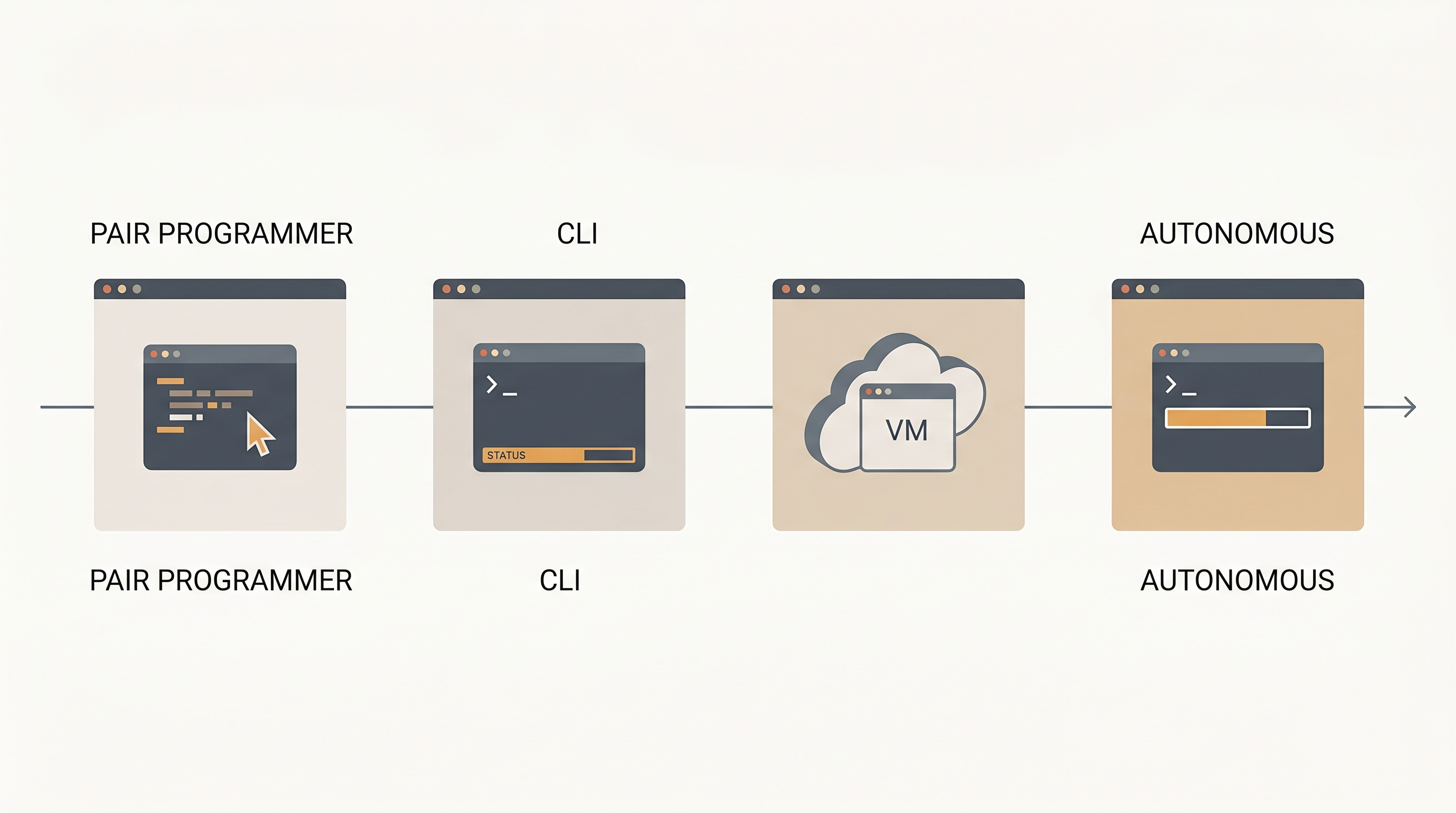
- Update: Cursor shipped cloud VM background agents in February, then added desktop and browser support in May. Now they're running up to 8 parallel agents and shipping Composer 2 as their first-party model.
- Versus Claude Code: Claude Code is focused on nailing the single-agent loop, while Cursor is chasing speed through parallelization. Cursor's multi-agent coordination is still being vetted by the community, though.
GitHub Copilot and OpenAI Codex CLI
- Update: Codex CLI is still kicking, but it's functionally behind Claude Code's "autonomous code editing + terminal integration" combo. Most enterprise customers are already negotiating Anthropic contracts.
- Versus Claude Code: Competitive on speed, but Claude Code's latest Opus 4.8 pulls ahead on code quality and long-session stability.
💡 Developer Workflows & Prompts in the Wild
Spec-Driven Development for Claude Code
- Scenario: Skip the prompt-based instructions. Instead, write a detailed spec document and let Claude Code generate its own test suite to validate adherence.
- The approach: A pattern shared in the GitHub repo
sermakarevich/sddwwraps Claude Code as a plugin—feed it a spec and the agent auto-writes tests to track "agent adherence" gaps. The catch: your spec has to be thorough. Vague specs breed lazy agents. - Reported outcome: One team cut iteration cycles by 3x thanks to test-based validation. The trade-off? Spec writing takes upfront effort.
Human-Agent Collaboration Loops with Dynamic Workflows
- Scenario: Ten-hour coding marathons where the agent pauses to absorb human feedback mid-stream.
- The approach: Use the new Dynamic Workflows feature to pause, inject developer feedback (test results, design pivots, bug reports), and resume. The goal is balancing agent autonomy against human intent—you supply the ground truth (tests, detailed guides), the agent does the grunt work.
- Reported outcome: Mental fatigue drops (3-hour agentic sprint beats 10-hour flow state). Trade-off: you have to actively manage the speed-versus-intervention balance.
Essential Claude Code Settings Before Production
- Scenario: Default configs in production = unplanned behavior and bill shock.
- The approach: Four things to lock down: (1) Set
thinking_levelexplicitly (default might be overkill), (2) Cap MCP server resources, (3) Restrict terminal auto-execution permissions, (4) Wire up cost monitoring. Example: specifymax_tokens_per_sessionin your.claudeconfig file. - Reported outcome: One dev team cut monthly costs by 40% with config tweaks and got better auto-generated test coverage as a bonus.
🧰 Noteworthy Community Repos & Extensions
-
awesome-claude-code-and-skills (GetBindu/awesome-claude-code-and-skills) — 15+ platform coverage (Claude Code, Codex, Cursor, Kiro, Zed, OpenClaw) with hooks, skills, and MCP servers bundled. Install:
git clone https://github.com/GetBindu/awesome-claude-code-and-skills && cd awesome-claude-code-and-skills && npm install -
awesome-claude-code-workflows (ithiria894/awesome-claude-code-workflows) — Real-world recipe collection blending Hooks + MCP servers + Skills + Agents + CLAUDE.md. Hot examples: shanraisshan/claude-code-best-practice (Command → Agent → Skill orchestration), luongnv89/claude-howto (10-module visual guide). Install:
git clone https://github.com/ithiria894/awesome-claude-code-workflows -
claude-forge (sangrokjung/claude-forge) — Oh-my-zsh vibes meet Claude Code: 11 AI agents, 36 commands, 15 skills in one plugin framework. Ships with 6-layer security hooks, 5-minute setup. 2026-spec updates: unified Skills/Commands, 21 hook events, expanded subagent frontmatter. Install:
git clone https://github.com/sangrokjung/claude-forge && ./install.sh -
awesome-claude-code-toolkit (rohitg00/awesome-claude-code-toolkit) — The kitchen sink: 135 agents, 35 curated skills, 42 commands, 176+ plugins, 20 hooks, 15 rules, 7 templates, 14 MCP configs, 26 companion apps. Tree-sitter AST indexing (22 languages), hybrid keyword+vector search (~5ms inject), call-graph exploration. npm:
@proofofwork-agency/reporecall
📰 AI Developer Ecosystem Signals
-
Anthropic ramping up customer collaboration — production agent design talks intensifying — Anthropic is deep in the weeds with Asana, Cursor, GitHub, Replit, and Vercel hashing out "production-ready agent" design and what agentic development boundaries should actually look like. This signals a push toward standardized enterprise governance and usage control. Multiple videos and blog posts dropped after May 30 detailing these collaboration discussions.
-
Enterprise cost governance standardization is urgent — After Uber's budget implosion and that $500M overspend story, consulting firms like Teamvoy are publishing "2026 CTO Decision Frameworks" that benchmark Claude Code versus competitors on cost control and ROI tracking. The message: you need clear governance policies (usage caps, approval workflows, cost alerts) before agentic tools go wide.
🧭 Analysis — What to Watch Next
Claude Code's tech trajectory looks solid—Opus 4.8 and Dynamic Workflows will drive real gains in quality and collaboration near-term. Cursor's parallel agent push (v3.0) will spark a speed race, but Claude Code's accuracy and stability edge probably holds short-term. The developer community is standardizing around spec-driven workflows and multi-agent orchestration (subagent patterns), which will become canonical "agent prompting" best practices. Watch out for three risk zones: (1) unlimited API access policies are financial disasters, (2) poor agent adherence validation leaves code quality unpredictable, (3) long sessions pile up context window pollution.
✅ Reader Action Items
- Try this week: Pin down
.claudeconfig withthinking_level: "balanced"andmax_tokens_per_session: 500000, then verify Opus 4.8 is your default. Hook it into your team's cost monitoring dashboard—pre-emptive budget stops beat firefighting bill shock. - Read deeper: Teamvoy's "Codex vs Claude Code: A CTO's 2026 Decision Framework" drops a practical enterprise governance checklist you'll want when building policy.
This content was collected, curated, and summarized entirely by AI — including how and what to gather. It may contain inaccuracies. Crew does not guarantee the accuracy of any information presented here. Always verify facts on your own before acting on them. Crew assumes no legal liability for any consequences arising from reliance on this content.
Powered by
