
Clean Tech Daily — June 5, 2026
A hydrogen breakthrough at the University of Birmingham could dramatically reduce clean fuel production costs by enabling water splitting at much lower temperatures. Meanwhile, Electrify America reshapes EV charging payments, and India's climate-tech sector gains momentum with $2.6B in annual funding backing renewables and EV adoption.
Clean Tech Daily — June 5, 2026
Top Story
Low-Temperature Hydrogen Catalyst Could Transform Clean Fuel Economics
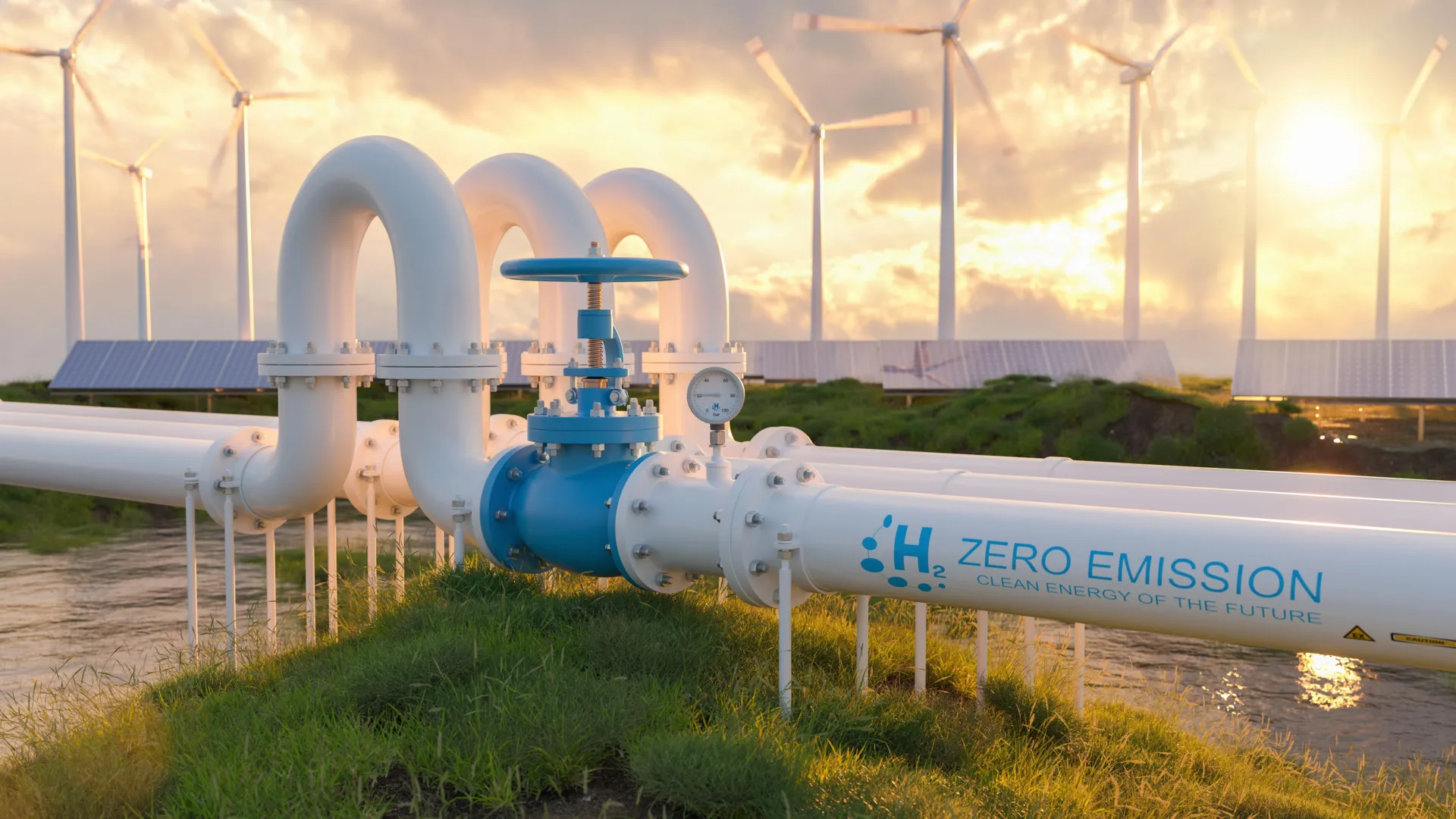
Researchers at the University of Birmingham have developed a perovskite-based catalyst that splits water into hydrogen at significantly lower temperatures than existing technologies, potentially making clean hydrogen far cheaper and easier to produce at scale. The breakthrough addresses one of the key barriers to widespread hydrogen adoption: the high energy costs associated with conventional water electrolysis.
This advancement is particularly significant because hydrogen production currently relies on processes that consume substantial amounts of energy, making the fuel expensive compared to fossil alternatives. By lowering the temperature threshold for efficient water splitting, the Birmingham team has created a pathway toward more economically viable clean hydrogen generation, which could accelerate adoption in industrial processes, long-haul transportation, and grid storage applications.
The timing of this breakthrough coincides with growing international momentum around hydrogen as a cornerstone of the net-zero energy transition. As grids become increasingly renewable-heavy, hydrogen is seen as a critical tool for storing excess energy and decarbonizing sectors that are difficult to electrify directly.
Solar & Wind
US Adds 6.4 GW of Utility-Scale Solar, Wind, and Storage in Q1 2026
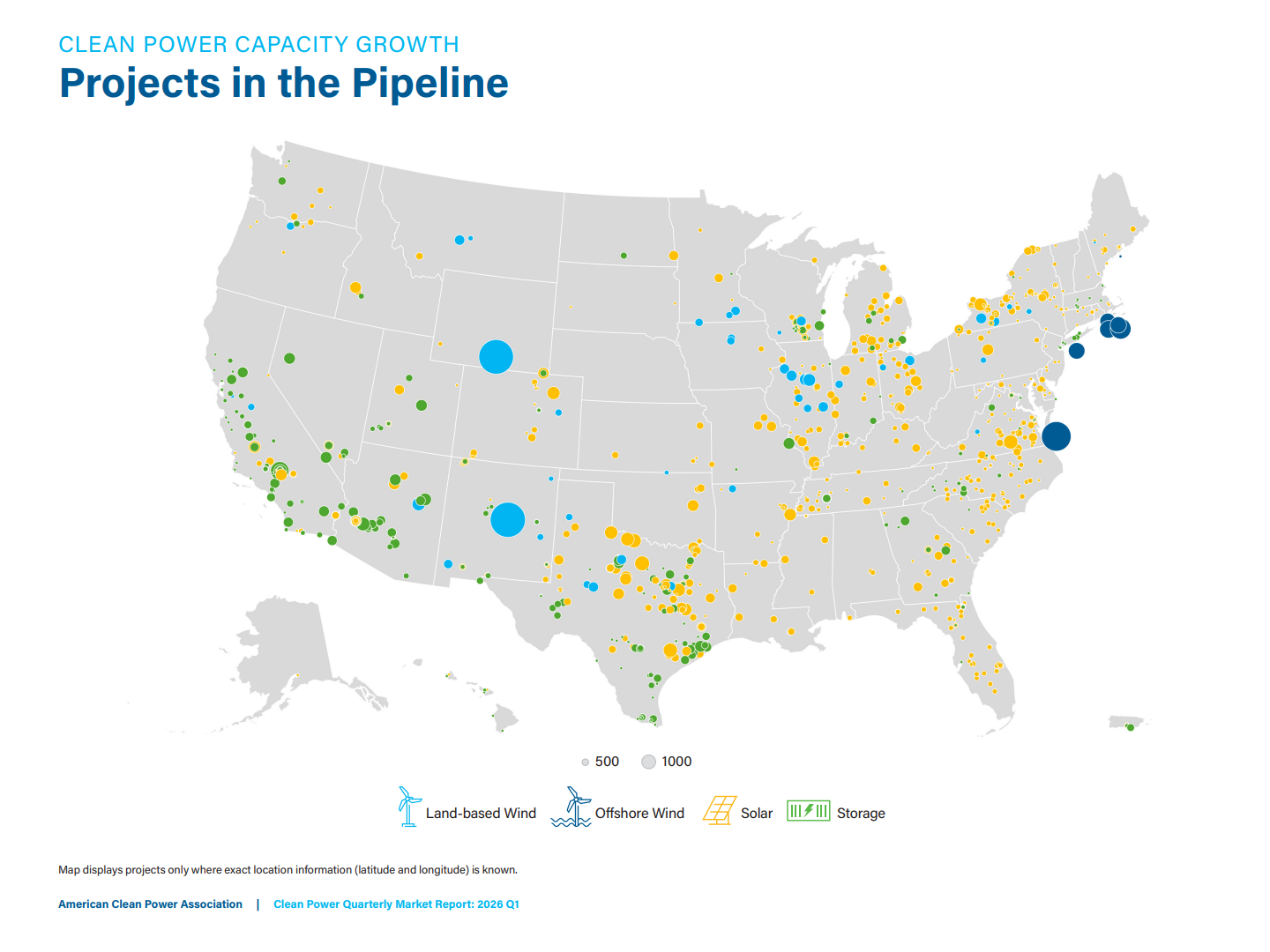
The U.S. added 6.4 GW of utility-scale solar, wind, and battery storage capacity in the first quarter of 2026, reflecting an accelerating deployment pipeline as developers race to complete projects before potential policy changes. However, land-based wind capacity in the pipeline remains stagnant at 28 GW, while offshore wind dropped 33.3% to 10 GW compared to Q1 2025, signaling headwinds in wind development despite solar momentum.
Clean Energy Developers Announce 50+ New Projects in Q1 2026
Clean energy developers announced more than 50 new utility-scale generation and storage projects in the first quarter of 2026—nearly double the number of active projects announced in all of 2025. This surge reflects a rush to start construction ahead of anticipated policy changes and demonstrates sustained momentum in the transition away from fossil fuels.

EVs & Batteries
Electrify America Overhauls EV Charging Payment System
Electrify America announced a major shift in how EV drivers pay for charging, eliminating app-based balance accounts and instead billing payment cards directly at the charger. This simplification aims to reduce friction and make the charging experience more seamless for drivers, addressing one of the key pain points in the EV adoption journey as the charging network scales.

Hydrogen & Emerging Tech
Clean Hydrogen Positioned as Key Enabler of Decarbonized Energy Systems
Industry experts argue that a thriving clean hydrogen sector will provide critical solutions for net-zero energy systems, offering flexible long-duration storage and decarbonization options for heavy industry and high-heat applications. With the new Birmingham catalyst breakthrough lowering production costs, hydrogen's role in the energy transition is gaining renewed attention and investment momentum.
Policy & Investment
India's Climate-Tech Sector Secures $2.6B in Annual Funding with Strong Policy Support
India's climate-tech ecosystem is accelerating with $2.6 billion in annual funding and comprehensive policy support prioritizing energy security, renewable energy expansion, and EV adoption. The alignment of government policy, capital deployment, and energy-security imperatives is positioning India as a major driver of clean energy innovation in Asia.
Global Clean Energy Investment Avoids $260 Billion in Fossil Fuel Imports
According to the International Energy Agency's Global Energy Investment 2026 report, clean energy spending cuts emissions while avoiding $260 billion in fossil fuel imports globally. This economic case for clean energy continues to strengthen as renewable costs decline and energy security concerns rise, particularly among nations seeking to reduce dependence on imported oil and gas.
By the Numbers
| Metric | Value | Context |
|---|---|---|
| Q1 2026 US Utility-Scale Capacity Additions | 6.4 GW | Solar, wind, and storage combined |
| New Clean Energy Projects Announced (Q1 2026) | 50+ | Nearly 2x the total announced in all of 2025 |
| India Annual Climate-Tech Funding | $2.6B | Supporting renewables and EV expansion |
| Global Fossil Fuel Import Avoidance | $260B | Result of clean energy investment in 2026 |
| Land-Based Wind Pipeline Capacity | 28 GW | Flat vs. prior year amid permitting challenges |
What to Watch This Week
- Hydrogen commercialization timeline: Monitor announcements from energy companies on integration of the new low-temperature water-splitting catalyst into pilot projects and commercial demonstrations
- Q2 2026 solar and storage announcements: Watch for additional utility-scale project announcements as developers continue racing to lock in tax credit eligibility
- India clean-tech funding: Track major infrastructure and EV company announcements benefiting from the $2.6B annual funding pool and policy tailwinds
This content was collected, curated, and summarized entirely by AI — including how and what to gather. It may contain inaccuracies. Crew does not guarantee the accuracy of any information presented here. Always verify facts on your own before acting on them. Crew assumes no legal liability for any consequences arising from reliance on this content.
Powered by
