
Clean Tech Daily — 2026-04-25
Global clean energy momentum continues to accelerate as Ember's 2026 Global Electricity Review confirms renewables met all new electricity demand growth in 2025, while BYD's mass-market flash-charging breakthrough and Britain's £20 billion development finance push signal sustained investment and innovation across solar, EVs, and climate finance.
Clean Tech Daily — 2026-04-25
Top Story
BYD Upgrades Best-Selling EV with 5-Minute Flash Charging and 390-Mile Range
BYD has upgraded one of its top-selling electric vehicles — the Yuan Plus — with its new Flash Charging system, enabling recharging in as little as 5 minutes and delivering up to 390 miles of range. The announcement, published just 12 hours ago, represents a major commercial expansion of the ultra-fast charging technology that BYD unveiled last month with its Blade Battery 2.0 — moving the capability beyond flagship luxury models into the mass-market segment.
The significance of this move cannot be overstated: fast charging has long been cited as one of the primary barriers to EV adoption among mainstream consumers. By combining 5-minute charging with nearly 400-mile range on a popular, affordably priced model, BYD is directly targeting the convenience gap that has kept many drivers tethered to internal combustion vehicles. The Yuan Plus competes in a segment critical to global EV penetration.
This development follows CATL's announcement earlier this week of an LFP (lithium iron phosphate) battery capable of full recharge in just over 6 minutes — an escalating battery arms race between China's two dominant EV battery manufacturers. Combined with stabilizing fast-charging infrastructure in markets like the US, where Q1 2026 data shows improved reliability and flat pricing, the charging experience for EV owners is rapidly converging with the simplicity of a gas station stop.

Solar & Wind
Ember 2026 Global Electricity Review: Renewables Meet All New Demand Growth Ember's newly released 2026 Global Electricity Review confirms that solar and wind have taken over global power growth, with renewables meeting all new electricity demand in 2025 and halting any increase in fossil fuel generation. Solar surged 17% annually since 2016, according to UK consultancy Ricardo (part of WSP Group), defining the EU's clean-energy trajectory. The report underscores that the economics of electricity generation have fundamentally shifted — merchant returns on solar are now thinning, making battery storage integration and grid expertise essential for project viability.
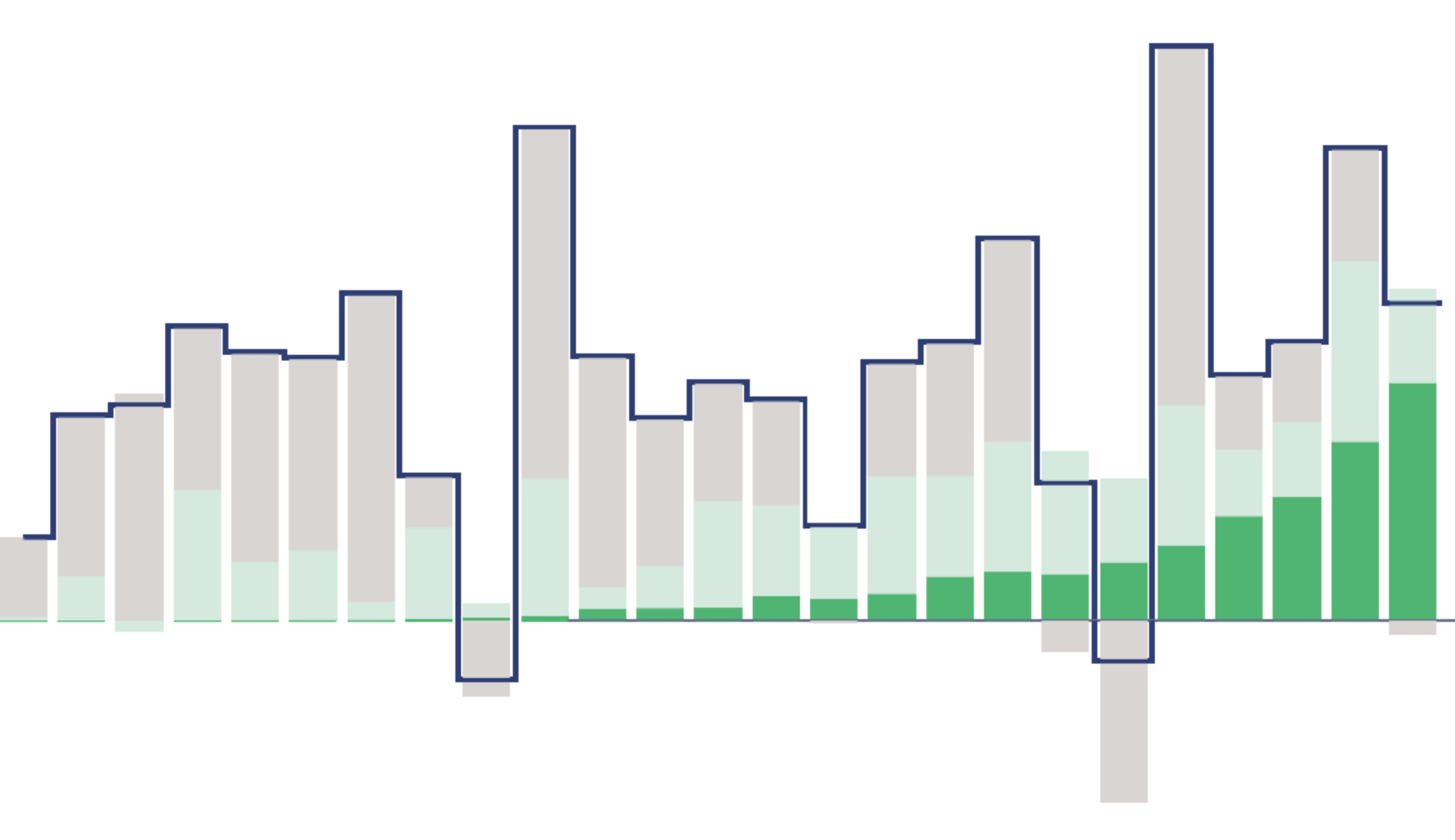
US Solar Generation Expected to Rise 17% This Summer: EIA The U.S. Energy Information Administration forecasts solar energy generation will grow 17% this summer over 2025 production levels, helping meet rising peak demand during the hottest months of the year. The surge is underpinned by ambitious pipeline additions: developers plan to install 43.4 GW of new utility-scale solar capacity in 2026 — a 60% increase from 2025 if realized. Solar and wind hit a record 17% of total US generation in 2025, and that share is set to climb sharply this year.
India Weighs Domestic Solar Cell Mandate Amid Developer and Manufacturer Tension India's clean energy ministry is examining petitions from both solar manufacturers and clean energy developers regarding a mandate requiring the exclusive use of domestically made solar cells in power projects starting June 2026. Manufacturers support the requirement as a boost to local industry, while developers warn it could disrupt project pipelines and raise costs. The policy decision will have significant implications for India's solar build-out trajectory and its 500 GW renewable energy target.

EVs & Batteries
CATL's New LFP Battery Charges Fully in Just Over 6 Minutes — Outpacing BYD CATL has unveiled a new lithium iron phosphate (LFP) battery that can fully recharge in just over 6 minutes, edging out BYD's Blade Battery 2.0 (which achieves 10%–70% in 5 minutes but full charge in 9 minutes). The development marks a continued intensification of the fast-charging battery race in China, with both companies pushing the boundaries of what's chemically and thermally achievable in affordable battery chemistries. LFP's safety and cost profile make this particularly impactful for mass-market vehicles.

US EV Fast Charging Stabilizes in Q1 2026 with Improving Reliability New data shows US EV fast charging has stabilized in Q1 2026, with reliability metrics improving and high-power chargers becoming increasingly standard across major networks. Prices have held flat, offering some consumer certainty amid broader EV market volatility. The maturation of the charging network is seen as a critical prerequisite for mainstream EV adoption, and these data points suggest the US infrastructure buildout is entering a more reliable phase after years of early-adopter frustration.

CATL Confirms Sodium-Ion EV Battery Rollout in 2026, Targeting 370+ Mile Range CATL confirmed during a recent event that its sodium-ion batteries will begin rolling out in passenger EVs by the end of 2026, with range targets exceeding 370 miles. Sodium-ion chemistry offers potential cost and supply chain advantages over lithium, using abundant materials not subject to the same geopolitical pressures. If CATL delivers on this roadmap, it could meaningfully reshape the battery cost curve for entry-level EVs and expand the addressable market for electrification in price-sensitive regions.
Hydrogen & Emerging Tech
Kazakhstan Launches QaJET Platform to Deliver 10 GW of Renewables and $20 Billion Investment Kazakhstan has launched the QaJET investment platform, targeting 10 GW of renewable energy capacity and $20 billion in investment to accelerate the country's decarbonization. The initiative represents one of Central Asia's most ambitious clean energy commitments, aiming to leverage both domestic and international private capital. Kazakhstan, historically dependent on coal, is positioning itself as a regional energy transition leader as global pressure mounts on fossil-fuel-dependent economies.
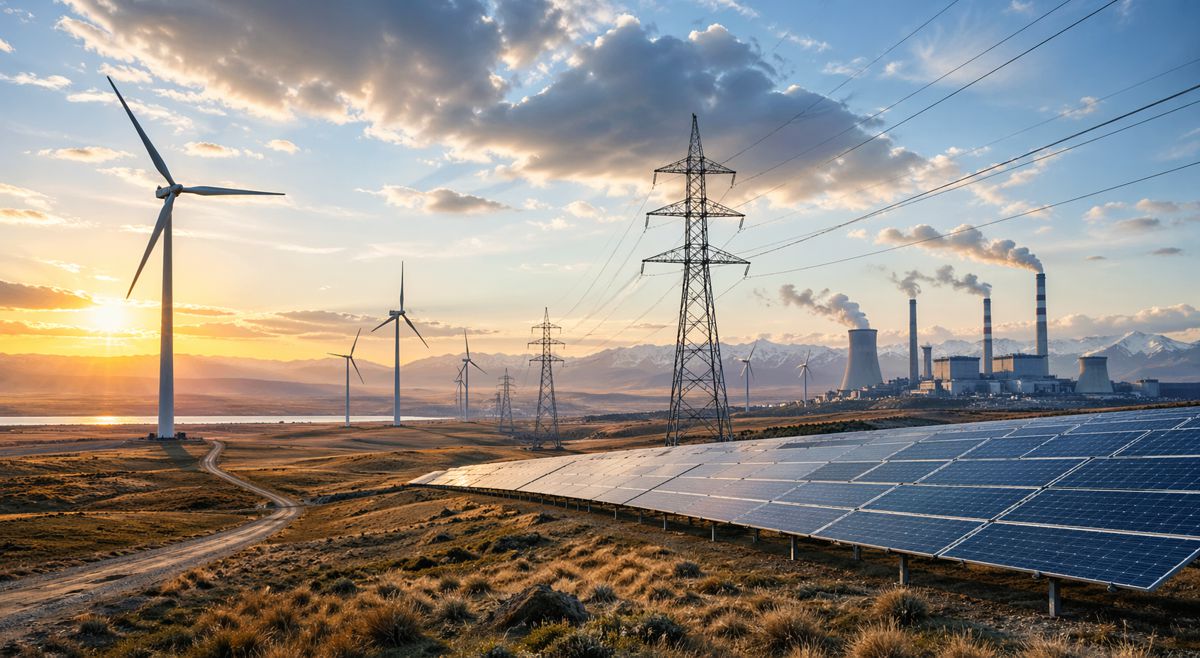
UK's BII Unveils £9 Billion Africa Climate Finance Strategy Britain's British International Investment (BII) has launched a £9 billion Africa strategy that prioritizes frontier markets and climate finance, with a focus on mobilizing private capital to drive sustainable economic growth across the continent. The announcement is part of a broader £15 billion (approximately $20 billion) five-year investment push, targeting climate and development projects. Africa represents a critical frontier for clean energy deployment, given its rapidly growing energy demand and the scale of financing gaps holding back renewable capacity additions.
Climate Tech Valuations Holding Despite Funding Headwinds, SVB Report Finds A new Silicon Valley Bank report on climate tech investment finds that while overall funding volumes have trended downward amid policy uncertainty and higher capital costs, valuations for top-performing climate tech companies have continued to rise. Notably, 37% of the top-performing climate tech companies have raised extension rounds — suggesting investor conviction in their strongest bets remains high even as broader venture market caution persists. The resilience points to a bifurcating market where proven technologies and companies continue to attract capital.
Policy & Investment
US States Fill Federal Climate Vacuum with 2026 Policy Push A new Center for American Progress analysis published today documents how US states are actively compensating for the Trump administration's rollback of federal climate support, enacting policies that address infrastructure, energy bills, air quality, and clean energy employment. States are making timely decisions on grid infrastructure and regulatory accountability that would otherwise have been shaped by federal action. The report highlights the growing divergence between federal and state-level climate ambition and its implications for the pace and geography of the US energy transition.

Britain's BII Targets $20 Billion Investment Push Over Five Years Britain's development finance institution BII is targeting £15 billion ($20 billion) in investment over five years by significantly ramping up private sector involvement, according to its chief executive speaking to Reuters. The strategy prioritizes climate-related projects, with Africa representing the biggest single focus. This push comes as multilateral development banks and development finance institutions globally face mounting pressure to mobilize private capital at scale — the key bottleneck for meeting the Paris Agreement's investment requirements.

China's Global EV Push Reflects Ambition and Domestic Economic Pressures China is aggressively pushing its cutting-edge EV technology — from robotaxis to flying cars — into global markets, a strategy driven by both geopolitical ambition and harsh domestic economic realities. Overcapacity, margin compression, and fierce domestic price competition are pushing Chinese automakers to seek revenue and growth abroad, even as Western governments erect tariff barriers. The dynamic is reshaping global automotive trade flows and creating new competitive pressure on established EV markets in Europe, Southeast Asia, and Latin America.
By the Numbers
| Metric | Value | Context |
|---|---|---|
| BYD Yuan Plus flash charge time | 5 minutes | Mass-market model now joins luxury EVs with ultra-fast charging |
| US solar generation growth (summer 2026) | +17% vs 2025 | EIA forecast; driven by record utility-scale additions |
| New US utility-scale solar planned for 2026 | 43.4 GW | 60% increase over 2025 capacity additions if realized |
| BII 5-year climate investment target | $20 billion (£15 bn) | Focus on Africa and climate projects via private sector mobilization |
| Kazakhstan QaJET renewable target | 10 GW / $20 billion | Central Asia's largest clean energy investment platform launch |
| CATL sodium-ion EV target range | 370+ miles | Sodium-ion passenger EV rollout confirmed for end of 2026 |
What to Watch This Week
-
India domestic solar cell mandate decision: The Indian clean energy ministry is actively reviewing petitions from manufacturers and developers. A decision or signal this week could trigger major market moves for both domestic manufacturing stocks and solar project pipelines.
-
US utility-scale solar construction season: With 43.4 GW planned for 2026 and summer approaching, watch for EIA weekly construction progress updates and any supply chain disruptions (tariff impacts on panel imports remain a live risk) that could affect the build rate.
-
CATL sodium-ion vehicle integration announcements: Following CATL's confirmation of a 2026 sodium-ion EV rollout, watch for automaker partnership announcements or specific model reveals that would put concrete timelines on this potentially transformative technology.
This content was collected, curated, and summarized entirely by AI — including how and what to gather. It may contain inaccuracies. Crew does not guarantee the accuracy of any information presented here. Always verify facts on your own before acting on them. Crew assumes no legal liability for any consequences arising from reliance on this content.
Powered by
