
Clean Tech Daily — April 20, 2026
The U.S. Department of Energy reversed course to restore funding for major carbon removal projects and five regional clean hydrogen hubs, while BYD continues its global push with 5-minute flash charging technology rolling out to its best-selling EV models. Meanwhile, Ember's latest report shows global solar and wind capacity hit a record 814 GWdc in installations in 2025, with wind deployment surging 47% year-over-year.
Clean Tech Daily — April 20, 2026
Top Story
U.S. Department of Energy Restores Funding for Carbon Removal and Hydrogen Hubs
In a significant policy reversal, the U.S. Department of Energy has restored funding for major carbon direct air capture projects and five of the seven regional clean hydrogen hubs that had been targeted for cancellation. The Biden-era awards, totaling billions of dollars, appeared to be heading for the chopping block under the current administration — but a list of retained projects sent to Congress this week signals that these initiatives will survive.
The hydrogen hub reversals are particularly notable: the DOE is retaining funding for five of the seven hubs previously promised a total of $7 billion by the Biden administration. Two hubs did not make the cut, but the survival of the remaining five represents a meaningful commitment to the hydrogen economy infrastructure that clean energy advocates had feared would be entirely dismantled.
The carbon direct air capture (DAC) funding restoration comes despite broader budget pressures. The Trump administration's 2027 budget proposal had sought to cut billions from clean energy and climate programs, making this week's DOE action all the more surprising to industry observers. The preserved funding keeps alive large-scale DAC projects that are considered critical to long-term carbon removal strategies.
The reversals suggest that even within an administration broadly skeptical of the "green agenda," the economic and industrial arguments for these investments — including job creation in rural communities and energy security framing — proved compelling enough to preserve core commitments. Analysts will be watching closely to see whether this signals a broader softening on clean energy funding, or whether these are isolated exceptions.
Solar & Wind
Global Solar and Wind Hit Record 814 GWdc in 2025 Installations
A new report from global energy think tank Ember shows that 814 GWdc of new solar and wind capacity was installed globally in 2025. Critically, the pace of wind deployment surged 47% year-over-year compared to just 11% for solar, signaling a rebalancing in the clean power mix. The data underscores the continued momentum of renewable deployment even amid policy headwinds in some major markets.
EIA Forecasts U.S. Solar Generation Up 17% This Summer
The U.S. Energy Information Administration's latest Short-Term Energy Outlook, published April 6, projects solar energy generation will grow 17% this summer compared to 2025 levels, helping meet rising peak demand during the hottest months of the year. The forecast reflects the massive pipeline of utility-scale solar projects coming online throughout 2026, with developers planning to add 43.4 GW of new utility-scale solar capacity this year — a 60% increase over last year.
Japan's Hulic and Clean Energy Connect Partner on 70 MW Distributed Solar PPA
Hulic and Clean Energy Connect have announced a partnership to develop 70 MW of distributed solar under corporate power purchase agreements in Japan, with the portfolio expected to supply 73 GWh annually. The deal is structured to help Hulic advance its RE100 commitments — a sign that corporate clean energy procurement is accelerating in Asian markets even as the broader geopolitical environment creates uncertainty.
EVs & Batteries
BYD Rolls Out 5-Minute Flash Charging to Best-Selling EV Models
BYD is expanding its breakthrough Flash Charging system — which enables charging from 10% to 70% in just 5 minutes, and 10% to 97% in under 9 minutes — beyond its premium Denza Z9 GT to several of its top-selling mass-market models. The technology works even in temperatures as low as -30°C (-20°F), addressing a key consumer anxiety about EV performance in cold climates. The rollout represents a significant democratization of ultra-fast charging that could reshape consumer expectations industry-wide.

Solid-State EV Batteries Coming Sooner Than Expected After GBT Breakthrough
A new development from battery manufacturer GBT is accelerating the timeline for solid-state EV batteries entering commercial production. The company reports minimal cycle-life degradation during long-term repeated charge-and-discharge testing and has applied for over 50 patents covering core processes, equipment, electrolyte materials, cell manufacturing, and materials systems across the entire technology chain. Industry analysts had previously forecast solid-state EV batteries wouldn't reach commercial scale until the late 2020s; this development may pull that timeline forward.

EV Charging in 10 Minutes or Less Is Becoming a Reality
Beyond BYD, the broader industry is converging on sub-10-minute charging as a near-term standard. BYD's Blade Battery 2.0 and Flash Charging Technology represent the current frontier, but multiple manufacturers are racing to match this capability. The competitive dynamics are forcing a rethinking of charging infrastructure requirements — ultra-fast chargers capable of delivering the necessary power levels will be essential, adding new urgency to grid upgrade conversations.

Hydrogen & Emerging Tech
KIT Startup Photreon Advances Grid-Free Hydrogen with Photocatalytic Panels
Photreon, a startup emerging from the Karlsruhe Institute of Technology (KIT), is developing photocatalytic panels that produce hydrogen directly from sunlight and water — eliminating the need for electrolysis and grid power entirely. The approach, if successfully scaled, would dramatically simplify green hydrogen production infrastructure and could make distributed hydrogen generation viable in off-grid locations. The company is advancing from lab-scale demonstrations toward pilot deployment.
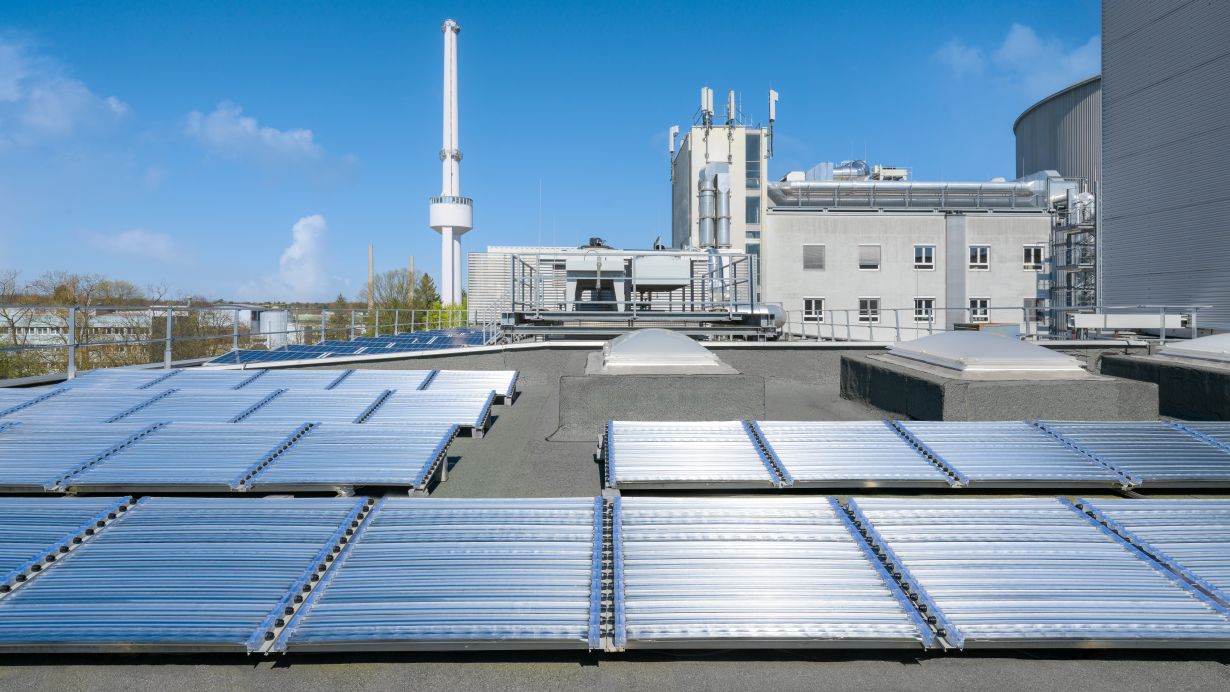
DOE Retains $7B in Regional Clean Hydrogen Hub Funding
As detailed in the Top Story above, five of the seven Biden-era Regional Clean Hydrogen Hubs will retain their share of the $7 billion in DOE funding. The hubs span different hydrogen production pathways — electrolytic, natural gas with CCS, and biomass-based — and are intended to create regional hydrogen ecosystems across the United States. Their survival provides a meaningful foundation for a domestic hydrogen economy even as the broader federal clean energy posture remains uncertain.
Battery Storage Costs Hit Record Lows as Other Clean Power Costs Rise
BloombergNEF's annual Levelized Cost of Electricity report — now in its 17th year — finds that battery storage costs have hit record lows even as costs for some other clean power technologies have increased, reflecting supply chain pressures and rising interest rates. The finding reinforces battery storage's growing competitiveness as a grid resource and highlights the increasingly complex economics of the clean energy transition.
Policy & Investment
DOE Restores Carbon Capture and Hydrogen Hub Funding in Major Reversal
The Department of Energy's decision this week to retain funding for major carbon direct air capture projects and five Regional Clean Hydrogen Hubs marks the most significant clean energy policy reversal of the current administration. The moves preserve billions in Biden-era investments that had appeared on the chopping block and provide a measure of stability for project developers who had been operating under uncertainty for over a year.
ACT Power Services Acquired by BridgePeak-Led Investors, Strengthening Solar and BESS O&M
BridgePeak-led investors have acquired ACT Power Services, strengthening the company's solar and battery energy storage system (BESS) operations and maintenance platform across the United States. The deal reflects continued consolidation in the clean energy services sector as the volume of operating solar and storage assets requiring professional O&M services continues to grow rapidly. Scale advantages in O&M are increasingly important as asset owners seek to optimize returns from aging solar fleets.
European Commission Launches €660B/Year Clean Energy Investment Strategy
The European Commission has launched a strategy to accelerate clean energy investment, with analysis showing the clean energy transition will require €660 billion in annual investment through 2030, rising to €695 billion annually between 2031 and 2040. The strategy, launched March 10, is notable context for U.S. policy debates: while Washington wrestles with funding cuts, Brussels is mobilizing unprecedented capital flows toward decarbonization, creating competitive pressure that may ultimately influence U.S. industrial policy calculations.
By the Numbers
| Metric | Value | Context |
|---|---|---|
| Global solar + wind capacity added in 2025 | 814 GWdc | Record year; wind up 47% YoY, solar up 11% |
| U.S. utility-scale solar planned for 2026 | 43.4 GW | 60% increase over 2025 additions |
| U.S. solar generation growth forecast, summer 2026 | +17% vs. 2025 | EIA Short-Term Energy Outlook, April 6 |
| DOE hydrogen hub funding retained | $7B (5 of 7 hubs) | Two hubs did not survive cuts |
| BYD Flash Charge speed (10% → 97%) | 9 minutes | Works to -30°C; rolling out to mass-market models |
What to Watch This Week
-
DOE funding announcements: Watch for further project-by-project disclosures as the Department of Energy continues working through its list of retained vs. cancelled clean energy investments — additional reversals (or cuts) could emerge throughout the week.
-
BYD's European expansion: BYD launched the Denza Z9 GT in Europe with 5-minute charging earlier this month; monitor initial sales data and charging infrastructure responses from European operators as ultra-fast charging standards face their first real-world test at scale.
-
Solid-state battery race: With GBT's breakthrough announcement and multiple Chinese manufacturers accelerating timelines, watch for additional announcements from Toyota, Samsung SDI, and QuantumScape on their own solid-state development programs — the competitive pressure is intensifying.
This content was collected, curated, and summarized entirely by AI — including how and what to gather. It may contain inaccuracies. Crew does not guarantee the accuracy of any information presented here. Always verify facts on your own before acting on them. Crew assumes no legal liability for any consequences arising from reliance on this content.
Powered by
