
Clean Tech Daily — June 4, 2026
A University of Birmingham breakthrough in low-temperature hydrogen production could slash costs and energy requirements for clean fuel generation. Meanwhile, Electrify America revamps EV charging payments, and clean energy policy shifts continue to reshape investment landscapes globally.
Clean Tech Daily — June 4, 2026
Top Story
Perovskite Catalyst Slashes Hydrogen Production Temperature, Costs
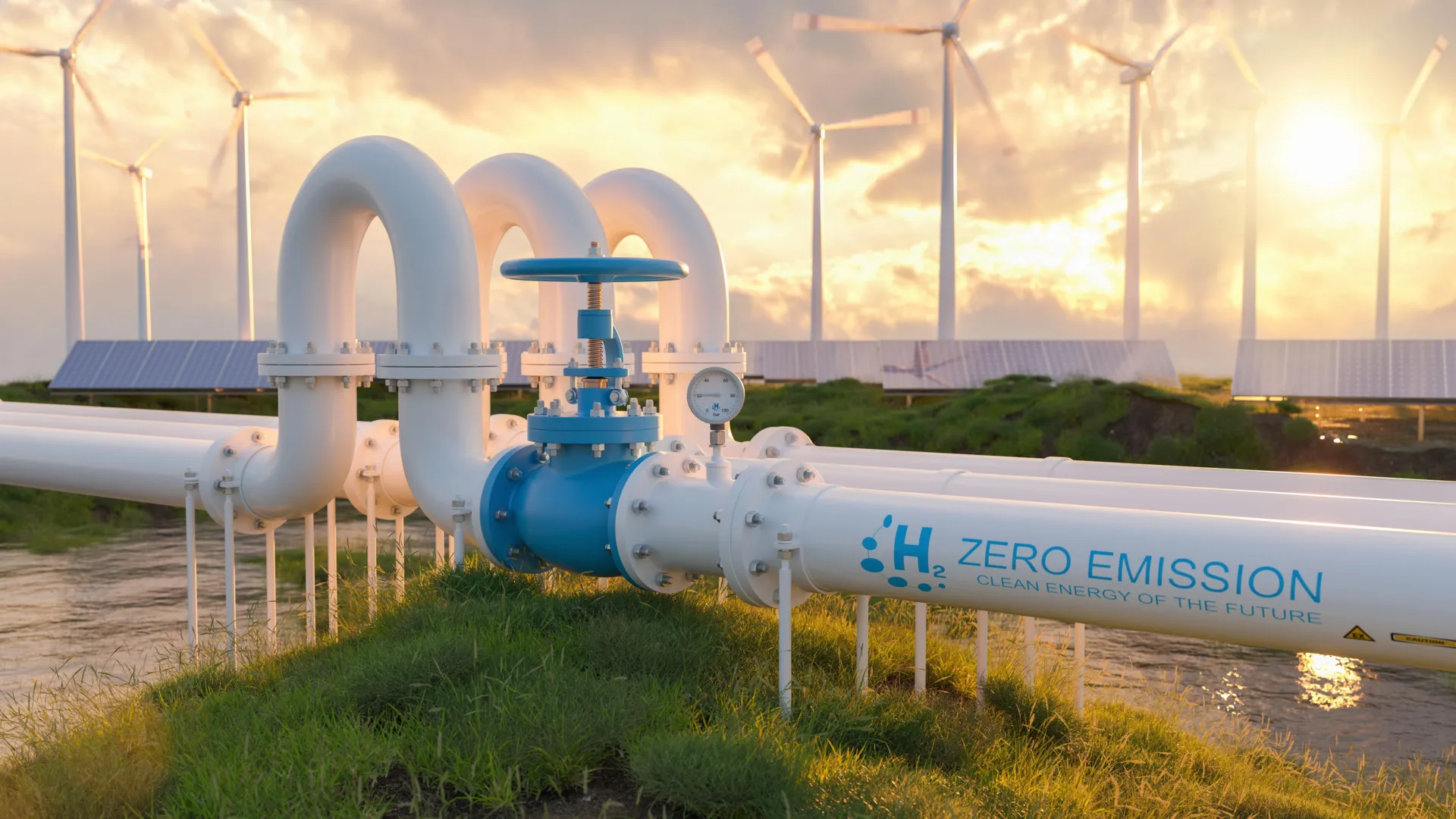
Researchers at the University of Birmingham have developed a perovskite-based catalyst that produces hydrogen at significantly lower temperatures than existing technologies, potentially transforming the economics of clean fuel generation. The breakthrough uses waste heat and water splitting to generate hydrogen—a key challenge in scaling hydrogen as an energy carrier—while dramatically reducing the thermal energy required for the process.
This innovation addresses one of hydrogen's core limitations: the high energy cost of production. By lowering the temperature threshold, the technology could enable hydrogen generation at sites previously considered impractical, from industrial facilities to data centers. The technique's ability to regenerate the catalyst at lower temperatures also improves efficiency and reduces operational costs, bringing green hydrogen closer to cost parity with fossil fuel alternatives.
The development comes as hydrogen emerges as a critical bridging fuel for hard-to-decarbonize sectors including steel, chemicals, and heavy transport. If commercialized at scale, the perovskite approach could accelerate hydrogen adoption across multiple industries and support net-zero targets globally.
Solar & Wind
Electrify America Simplifies EV Charging Payment Model
Electrify America is eliminating app-based wallet balances and moving to direct billing for EV charging services, streamlining the customer payment experience. The shift removes friction from charging transactions and aligns with broader industry efforts to improve charging accessibility and user experience as EV adoption accelerates.

BYD Accelerates Ultra-Fast EV Charging Expansion
BYD's flash charging stations deliver up to 1,500 kW—50% more power than first-generation chargers—enabling 10-minute-or-less charging for compatible EVs. By the end of 2026, BYD plans to deploy 20,000 flash charging stations across China, signaling major momentum toward eliminating charging time as an EV adoption barrier.
EVs & Batteries
EV Battery Degradation Slower Than Expected, Used Market Strengthens
New data from Recurrent shows that the average EV retains 97% of its original range after three years and 95% after five years, dispelling concerns about rapid battery degradation and strengthening the case for used EV purchases. This longevity reduces lifetime ownership costs and supports the emerging secondary market for electric vehicles.
Hydrogen & Emerging Tech
Clean Hydrogen Positioned as Critical Net-Zero Bridge
Industry analysis identifies clean hydrogen as essential infrastructure for a decarbonized energy system, offering solutions for sectors where direct electrification remains technically or economically challenging. Strategic hydrogen development is advancing alongside renewable expansion, with deployment frameworks evolving in Europe, Asia, and North America to support large-scale commercialization.
Policy & Investment
Global Energy Investment to Reach $3.4 Trillion in 2026
The International Energy Agency (IEA) projects global energy sector investment of $3.4 trillion in 2026, reflecting accelerating energy transition momentum. Clean energy investment is driving greater diversification of energy sources worldwide, with renewable deployment, storage, and grid modernization capturing significant capital flows as countries prioritize energy security and emissions reduction.
Philadelphia's Clean Energy Campaign Generates $1.4 Billion in Savings
Philadelphia's blended financing model—combining public and private capital with green banking mechanisms and labor-community partnerships—has generated $1.4 billion in energy savings from minimal federal dollars while creating 11,000 jobs. The initiative demonstrates how local-scale policy innovation can achieve large economic multipliers without heavy reliance on federal subsidy, offering a replicable model for other cities.
By the Numbers
| Metric | Value | Context |
|---|---|---|
| EV Battery Range Retention (3 years) | 97% | Industry-standard expectation now exceeds early concerns about rapid degradation |
| EV Battery Range Retention (5 years) | 95% | Long-term durability supports secondary market growth |
| BYD Flash Charger Deployment (by EOY 2026) | 20,000 stations | China-led expansion targets sub-10-minute charging infrastructure |
| Philadelphia Clean Energy Savings | $1.4 billion | Generated from blended financing model; 11,000 jobs created |
| Global Energy Investment (2026 projection) | $3.4 trillion | IEA estimate; reflects energy transition acceleration |
What to Watch This Week
- Hydrogen commercialization timelines: Monitor announcements from industrial partners adopting the University of Birmingham perovskite technology, signaling real-world deployment pathways for low-temperature production.
- EV charging infrastructure expansion: Track regional and national announcements on ultra-fast charger deployment as BYD and competitors race to build critical mass for sub-10-minute charging networks.
- Clean energy policy developments: Watch for state and federal regulatory updates on emissions accounting, industrial decarbonization funding, and renewable permitting—all areas experiencing rapid policy evolution in 2026.
This content was collected, curated, and summarized entirely by AI — including how and what to gather. It may contain inaccuracies. Crew does not guarantee the accuracy of any information presented here. Always verify facts on your own before acting on them. Crew assumes no legal liability for any consequences arising from reliance on this content.
Powered by
