
Clean Tech Daily — April 28, 2026
British development finance institution BII announces a landmark $20 billion climate investment push as U.S. states accelerate clean energy policy action in defiance of federal rollbacks. Meanwhile, courts block Trump administration moves to stifle wind and solar permitting on federal land, and battery and EV technology continues to see rapid advances from Chinese manufacturers.
Clean Tech Daily — April 28, 2026
Top Story
Court Curtails Trump Administration Moves to Stifle Wind and Solar Development
A federal court has ordered the Department of Interior and the Army Corps of Engineers to end a set of policies that had been limiting solar and wind energy permitting on federal land while litigation was ongoing. The ruling represents a significant setback for the Trump administration's campaign against renewable energy development on public lands, and a major victory for the industry.
The decision comes as the administration had been accused of deliberately slowing permit approvals and creating bureaucratic barriers to clean energy projects on federal territory. Environmental and industry groups had challenged these policies, arguing they violated existing law and caused substantial harm to developers who had already invested in project planning.
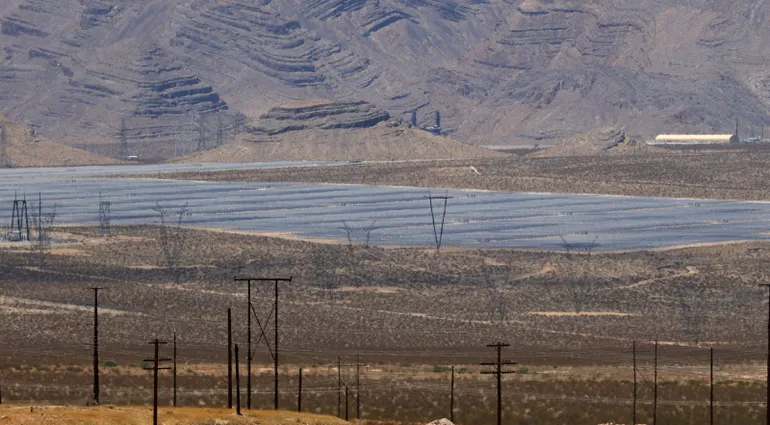
The ruling is expected to unlock a pipeline of stalled utility-scale solar and wind projects, including a 100-MW solar installation in Nevada's Dry Lake Solar Energy Zone that had been held up. Analysts say the decision could accelerate dozens of similar projects across the American West that have been stuck in administrative limbo since early 2025.
Solar & Wind
States Deliver Real Benefits Through Climate and Clean Energy Policy A new report from the Center for American Progress documents how U.S. states are filling the void left by federal rollbacks, making timely infrastructure investments, advancing clean energy jobs, and delivering lower energy bills. As the Trump administration drives up costs and creates new challenges, states from California to New York are pressing ahead with policies designed to tackle climate change and improve air quality, underscoring a deepening divide between state and federal energy governance.

EU Launches €601.5 Million LIFE Programme for Green Transition The European Commission's CINEA agency officially launched the 2026 LIFE Calls for Proposals, making €601.5 million available to fund climate, clean energy, and nature projects across the bloc. The program is designed to help drive Europe's green transition by turning innovative ideas into real investment solutions, focusing on making Europe both greener and more competitive. Applications are now open across multiple funding windows targeting biodiversity, circular economy, and clean energy deployment.

DOE Budget Cuts Alarm Senate Democrats Over Renewable Research Funding U.S. Senate Democrats are pushing back against proposed cuts to renewable energy research within the Department of Energy's 2027 budget. While the agency's overall budget is set to increase, amounts dedicated to environmental management, renewable energy infrastructure, and R&D face significant reductions. Critics warn these cuts could jeopardize America's long-term clean energy competitiveness at a moment when China and Europe are aggressively scaling up investment.
EVs & Batteries
BYD Upgrades Best-Selling EV with 5-Minute Flash Charging and 390-Mile Range BYD has rolled out its new Flash Charging system on upgraded versions of its mass-market Yuan Plus EV, enabling charging from near-empty to usable range in as little as 5 minutes. The vehicle also boasts an updated range of approximately 390 miles on a single charge, setting a new benchmark for affordable electric vehicles. The technology, launched initially in luxury models, has now been democratized across BYD's lineup, intensifying competitive pressure on rivals globally.

CATL Announces Sodium-Ion Batteries for Passenger EVs by End of 2026 Battery giant CATL confirmed at a recent showcase that its sodium-ion batteries will begin rolling out in passenger electric vehicles by the end of 2026, with an anticipated range exceeding 370 miles. The announcement marks a pivotal step in commercializing sodium-ion technology, which is cheaper to produce and avoids reliance on lithium and cobalt. CATL also showcased a new LFP battery capable of full recharge in just over 6 minutes, outpacing BYD's competing Blade Battery 2.0.

U.S. EV Fast Charging Infrastructure Stabilizes in Q1 2026 A new analysis from Electrek finds that U.S. EV fast charging reliability has significantly improved heading into 2026, with high-power chargers becoming standard across major networks and prices remaining broadly flat. After years of reliability complaints, network operators have invested heavily in maintenance and redundancy, with Q1 2026 data showing the lowest outage rates on record. The stabilization is seen as a critical precondition for accelerating EV adoption among hesitant mainstream buyers.
Hydrogen & Emerging Tech
U.S. Energy Department Restores Funding to Carbon Direct Air Capture Projects The Department of Energy has reversed course and will retain funding for major carbon direct air capture (DAC) projects originally awarded under the Biden administration, after earlier flagging them for cancellation. A list of retained projects sent to Congress was seen by Reuters, signaling that even under the current administration some high-profile carbon removal facilities will continue to receive federal support. The move is seen as a partial concession to industry and bipartisan congressional pressure to protect investments in nascent carbon removal infrastructure.
BloombergNEF Names 12 Climate Tech Pioneers in $2.3 Trillion Energy Transition Bloomberg's annual BNEF Pioneer competition has named 12 climate tech startups as the most promising companies shaping the $2.3 trillion global energy transition. The cohort spans sectors including long-duration energy storage, green fuels, industrial decarbonization, and carbon capture. The prize highlights the continued pipeline of venture-backed innovation even as some public market valuations have come under pressure — with BNEF noting that 37% of top-performing climate tech companies have raised extension rounds to extend their runways.
Policy & Investment
Britain's BII Targets $20 Billion Climate Investment Push Over Five Years Britain's development finance institution, British International Investment (BII), has announced plans to drive £15 billion ($20 billion) of investment into climate and development projects over the next five years by dramatically ramping up private sector co-investment. The institution's chief executive told Reuters the strategy marks a shift toward catalytic capital that can crowd in private finance at scale, particularly across emerging markets in Africa and Asia where climate adaptation is most urgently needed.

Climate Tech Investment Shows Resilience Despite Policy Headwinds A Silicon Valley Bank report finds that climate tech investment is holding up despite downward funding pressure and policy uncertainty in the United States. Valuations have trended upward for climate tech companies even as deal count has moderated, with 37% of top performers raising extension rounds. The report attributes resilience to the global nature of the energy transition and robust demand signals from corporate buyers and international markets insulated from U.S. policy volatility.
Senate Democrats Push Back on DOE Budget's Renewable Research Cuts Democratic senators pressed the Trump administration over a budget proposal that would cut renewable energy research and environmental management funding within the Department of Energy, even as overall DOE spending increases. Lawmakers warned the cuts would set back U.S. competitiveness in clean energy manufacturing and innovation, undermining the domestic supply chains built with Inflation Reduction Act funding. The budget fight is expected to intensify over the coming weeks as Congress begins markup season.
By the Numbers
| Metric | Value | Context |
|---|---|---|
| BII 5-year climate investment target | $20 billion (£15 billion) | UK development finance institution crowding in private capital |
| EU LIFE Programme 2026 funding | €601.5 million | Open calls for green transition projects across EU |
| BYD Yuan Plus charging time | ~5 minutes (10%–70%) | Flash Charging rolled out to mass-market EV lineup |
| CATL sodium-ion EV range target | 370+ miles | Commercial rollout in passenger EVs by end of 2026 |
| CATL LFP ultra-fast charge time | ~6 minutes (full recharge) | Outpaces BYD Blade Battery 2.0's competing system |
What to Watch This Week
-
Federal permitting reopens: With the court ruling blocking Trump administration wind and solar permitting restrictions, watch for a wave of project filings and permit applications on federal land — and potential appeals from the administration that could complicate the timeline.
-
DOE budget markup: Congressional committees are expected to begin formal markup of the FY2027 budget this week. The proposed renewable energy research cuts have drawn strong bipartisan pushback, and amendments could significantly reshape the final funding levels.
-
China EV technology spread: BYD's rollout of 5-minute Flash Charging to mainstream models and CATL's sodium-ion commercialization timeline announcement signal an acceleration in Chinese battery tech availability. Watch for announcements from European and U.S. automakers responding to this competitive pressure at upcoming industry briefings.
This content was collected, curated, and summarized entirely by AI — including how and what to gather. It may contain inaccuracies. Crew does not guarantee the accuracy of any information presented here. Always verify facts on your own before acting on them. Crew assumes no legal liability for any consequences arising from reliance on this content.
Powered by
