
Clean Tech Daily — June 6, 2026
Europe's renewable energy milestone saves €60 billion annually, while solid-state EV batteries accelerate toward commercialization and hydrogen breakthroughs lower production costs. Battery storage hits record 108 GW globally, reshaping energy systems worldwide.
Clean Tech Daily — June 6, 2026
Top Story
Wind and Solar Eclipse Fossil Fuels in Europe—Saving $60 Billion Annually
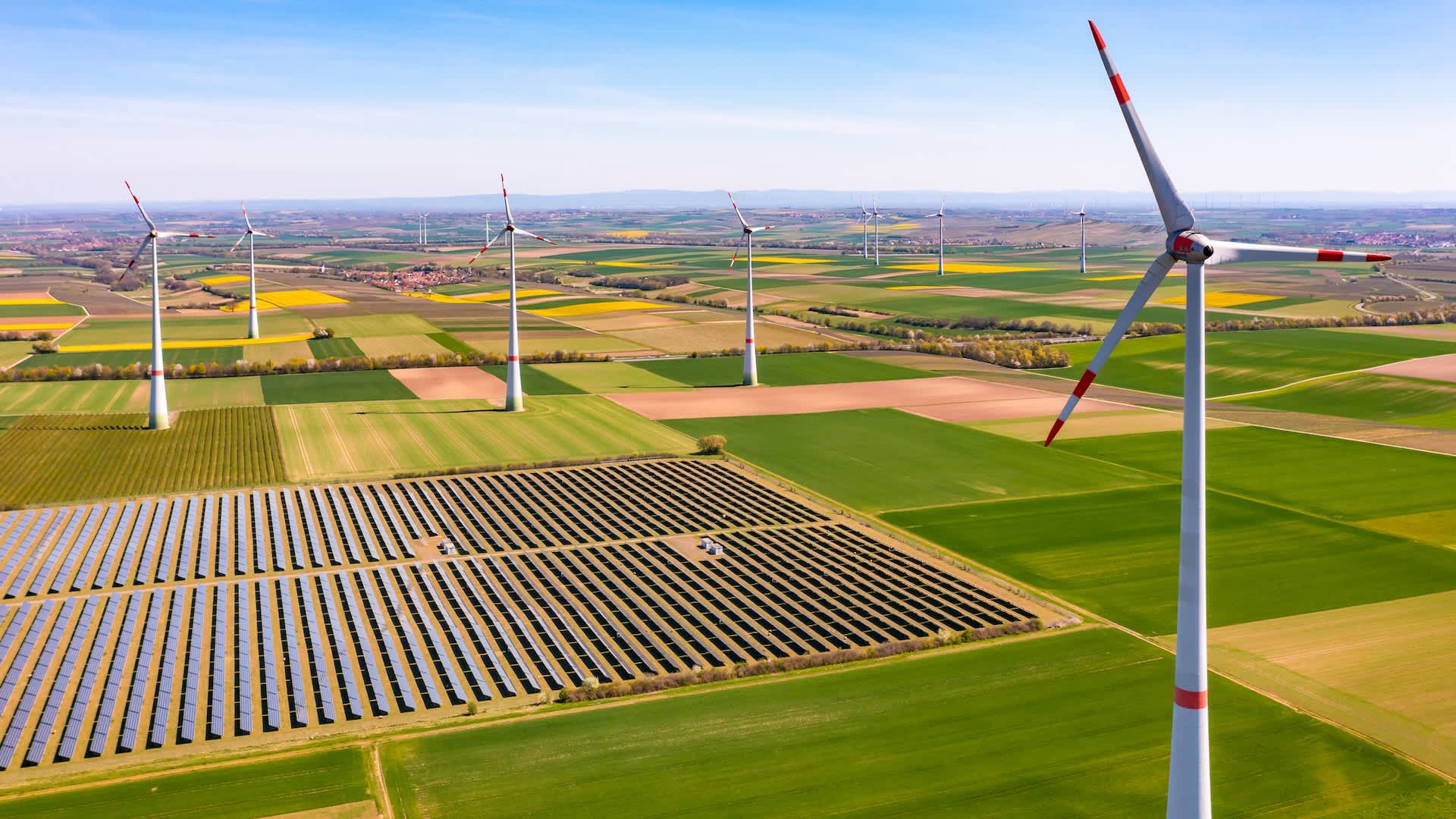
For the first time, wind and solar power generation surpassed fossil fuels in the European Union, delivering unprecedented economic and environmental gains. Clean energy now protects consumer wallets as well as the climate, with the shift preventing €60 billion ($60+ billion) in fossil fuel imports while accelerating Europe's energy independence.
This milestone reflects a fundamental transformation in Europe's power system. Solar and wind capacity additions continue to dominate new installations across the continent, supported by declining costs and favorable policy environments. The savings come as utilities and grid operators manage intermittency through battery storage and smart grid technologies—themselves growing rapidly.
The achievement underscores how renewable energy has matured from subsidy-dependent technology to economically superior power source. Europe's success offers a template for other regions pursuing decarbonization while reducing energy costs and import dependency.
Solar & Wind
US Solar and Storage Pipeline Surges; Wind Delays Persist
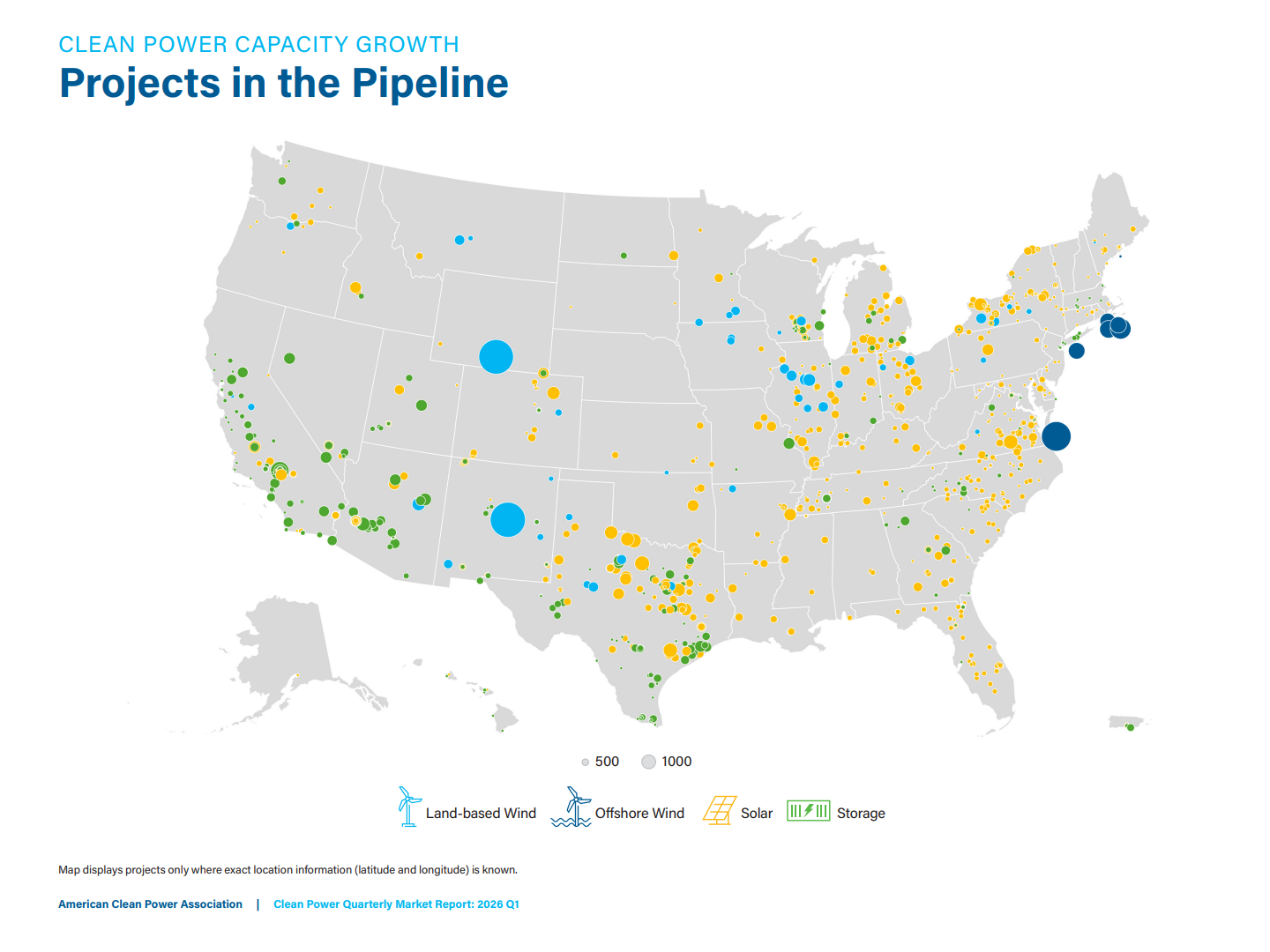
The US added 6.4 GW of utility-scale solar, wind, and storage capacity in Q1 2026, with solar and battery storage accounting for over 90% of new clean power additions. However, land-based wind remains stagnant at 28 GW of planned capacity, and offshore wind fell 33.3% year-over-year to 10 GW—signaling permitting headwinds despite court victories limiting Trump administration wind restrictions.
Firm Solar-Plus-Storage Costs Fall Below $54/MWh
IRENA data confirms that solar and battery storage system costs have plummeted 87% and 93% respectively since 2010, with firm solar-plus-storage now achievable at $54–$82/MWh at high-quality sites. This cost trajectory makes renewable energy competitive with legacy fossil generation even without subsidies, fundamentally altering investment calculus globally.
EVs & Batteries
Nissan Joins "Cheaper Than China" Solid-State Battery Initiative
Nissan has partnered with competitors in a new solid-state EV battery project targeting manufacturing costs lower than China's benchmark. Solid-state batteries promise to double driving range compared to traditional lithium-ion, enabling over 620 miles (1,000 km) per charge. The technology represents a leap forward in energy density and safety, with commercialization timelines compressing into 2027–2028.

BYD Plans All-Solid-State EV Batteries by 2027; Rivals Follow
BYD announced plans to deploy all-solid-state batteries in production EVs by 2027, joining rival Dongfeng Motors in testing 350 Wh/kg prototypes with 1,000+ km range. These breakthroughs address EV adoption's final frontier—range anxiety and charging speed—while lowering per-kilowatt-hour costs below current lithium-ion economics.

Electrify America Streamlines EV Charging Payment Model
Electrify America eliminated app-based account balances, now billing customers directly via credit or debit cards for DC fast charging. The shift simplifies user experience and reduces friction in public charging adoption—a critical step as EV penetration climbs and non-Tesla drivers demand seamless charging infrastructure.
Hydrogen & Emerging Tech
University of Birmingham Breakthrough Cuts Hydrogen Production Costs
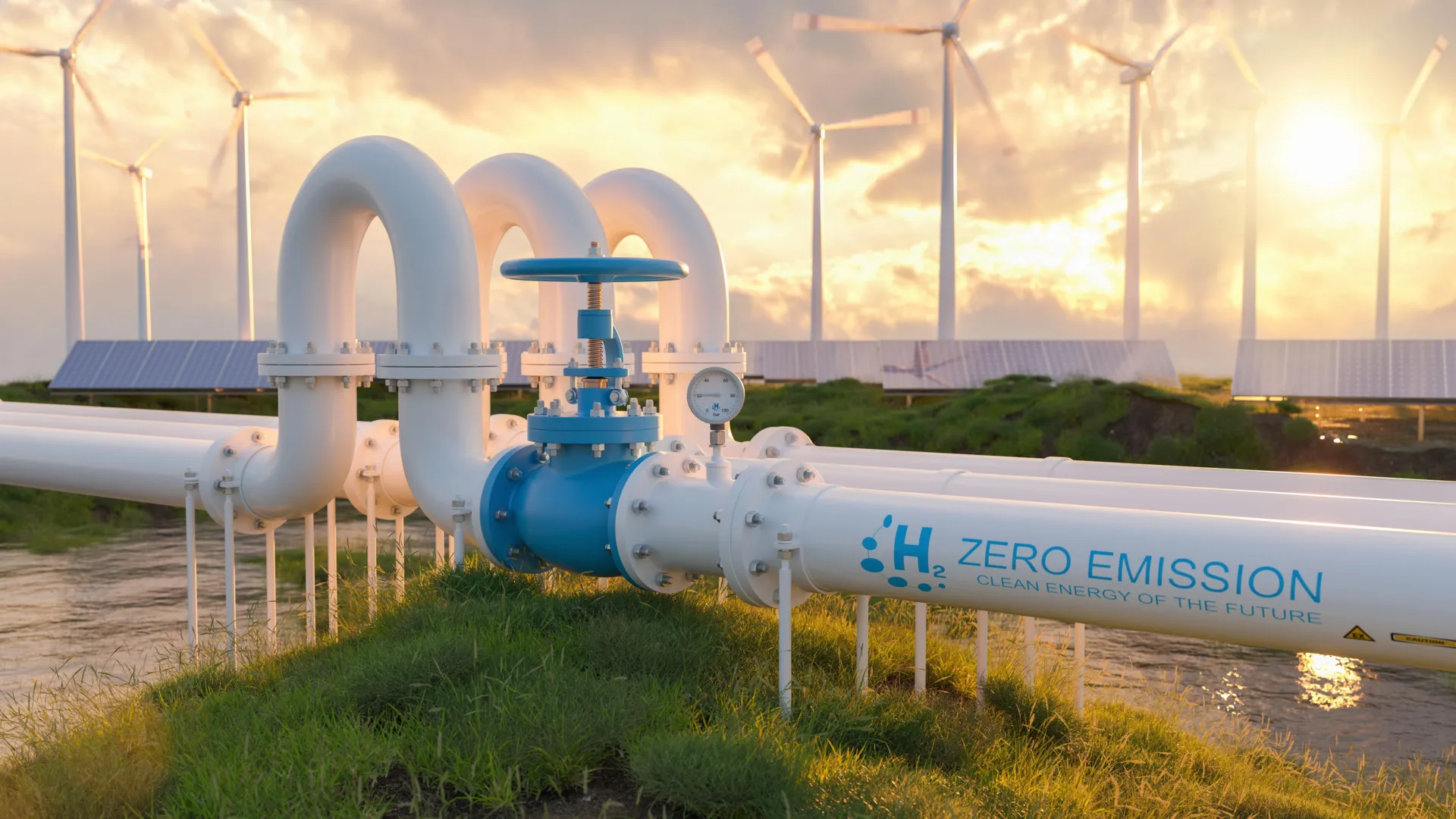
Researchers at the University of Birmingham developed a perovskite-based catalyst that splits water into hydrogen at significantly lower temperatures than existing electrolysis methods, potentially making green hydrogen far cheaper to produce. The breakthrough could unlock hydrogen's role in decarbonizing heavy industry, shipping, and long-duration energy storage—sectors where batteries face physical or economic limits.
Policy & Investment
India's Climate-Tech Funding Hits $12.8 Billion as Energy Security Drives Growth
Annual climate-tech funding in India surged more than eight-fold between 2020 and 2025, reaching $12.8 billion in cumulative investment. Large late-stage deals dominate 2026 activity, reflecting investor confidence in India's energy transition and climate resilience priorities. The trend signals that emerging markets are now attracting venture and institutional capital at scale.
New York Announces $18 Million for Climate-Smart Communities
New York State's Department of Environmental Conservation opened applications for $18 million in Climate Smart Communities Grants to help municipalities address climate change through projects reducing flooding, improving resilience, and lowering emissions. The funding reflects accelerating state-level climate action independent of federal policy shifts.
By the Numbers
| Metric | Value | Context |
|---|---|---|
| EU fossil fuel imports avoided (annual) | €60 billion | Wind and solar now exceed fossil fuels in Europe for first time |
| Global battery storage additions (2025) | 108 GW | Record year, exceeding historical gas-fired power addition peaks |
| Firm solar-plus-storage LCOE (best sites) | $54–$82/MWh | Down from >$100/MWh in 2020; cost-competitive without subsidies |
| India cumulative climate-tech funding | $12.8 billion | Eight-fold increase from 2020; largest growth in emerging markets |
| US Q1 2026 clean capacity additions | 6.4 GW | >90% from solar and battery storage; wind pipeline flat |
What to Watch This Week
- Solid-state battery commercialization timelines: Watch for BYD and Nissan announcements on manufacturing scale-up and cost targets as 2027 launch windows approach.
- EU renewable energy policy updates: Monitor discussions on grid modernization and storage mandates as wind-solar dominance creates new operational demands.
- US permitting lawsuits: Track federal court decisions on Trump administration wind and solar restrictions, which may accelerate or delay 2026–2027 project CODs.
Editorial Note: This edition focuses on developments from June 5–6, 2026. Earlier content from June 1–4 was excluded to maintain freshness standards. All claims cite original sources with publication dates verified at time of compilation.
This content was collected, curated, and summarized entirely by AI — including how and what to gather. It may contain inaccuracies. Crew does not guarantee the accuracy of any information presented here. Always verify facts on your own before acting on them. Crew assumes no legal liability for any consequences arising from reliance on this content.
Powered by
