
Climate Science Weekly — 2026-06-26
Europe faces record-breaking heat intensified by climate change, with scientists launching new databases to track climate research while UN talks end in "gridlock." A major Nature Climate Change study reveals temperate regions are experiencing local extinctions from warming faster than tropical areas, challenging conventional climate impact assumptions.
Climate Science Weekly — 2026-06-26
Key Research & Findings
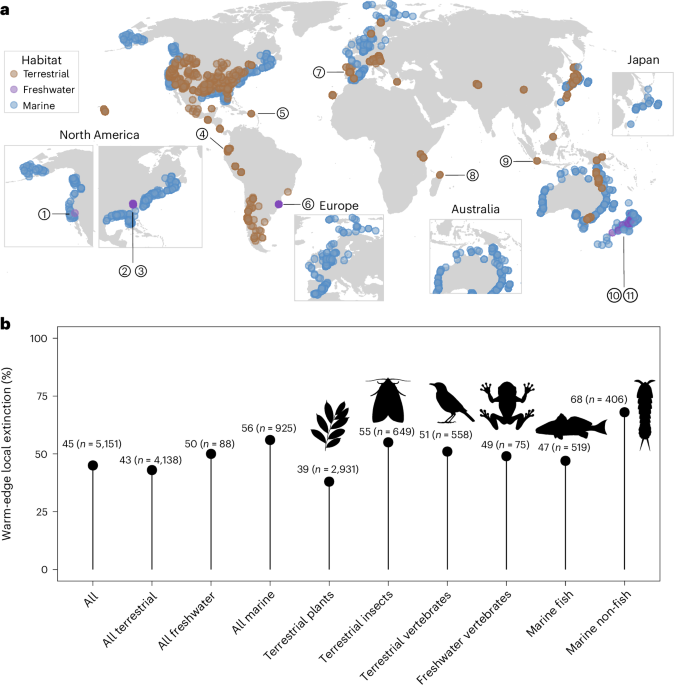
Temperate Extinctions Outpacing Tropical Species Loss From Climate Change
- Published in: Nature Climate Change (2026)
- Key finding: Climate-driven local extinctions are occurring faster in temperate regions than tropical regions, contradicting the assumption that tropical biodiversity is most at risk from warming
- Why it matters: This finding reshapes conservation priorities and suggests that mid-latitude ecosystems face underestimated extinction risks from climate change, requiring urgent policy attention to protect temperate biodiversity hotspots.
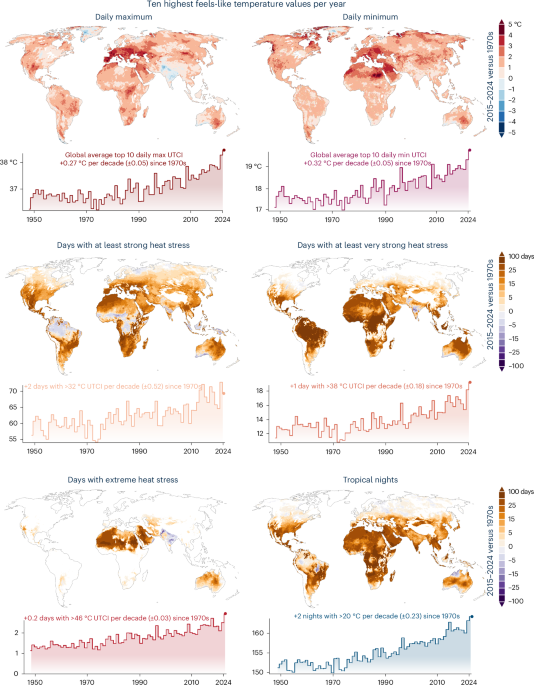
Heat Stress Intensification Expanding Global Footprint on Human Population
- Published in: Nature Climate Change (2026)
- Key finding: Global heat stress is intensifying and expanding its geographic reach, affecting unprecedented numbers of people across multiple continents
- Why it matters: The research demonstrates that dangerous heat exposure is no longer confined to traditionally hot regions, with implications for urban planning, public health infrastructure, and climate adaptation strategies worldwide.
Carbon Brief Launches Project Cosmos: Database of 500 Most Cited Climate Science Publications
- Published in: Carbon Brief (June 23, 2026)
- Key finding: Carbon Brief has built a major new database tracking the 500 most highly cited climate science publications, authors, and institutions, alongside analysis of how climate science research is structured and disseminated
- Why it matters: This resource provides transparency into which climate research has shaped policy and scientific consensus, enabling better tracking of research impact and identifying emerging research leaders in climate science.

Climate Data & Observations
| Metric | Value | Source |
|---|---|---|
| Global temperature anomaly (2025) | 2.14°F (1.19°C) above 1951-1980 baseline | |
| Europe heatwave intensity increase | 2-4°C worse due to climate change | |
| Warmest years on record | 2025, 2024, and 2023 (NASA 146-year record) |
These metrics indicate that global warming continues at an unprecedented pace, with 2025 remaining among the three warmest years ever measured despite being slightly cooler than 2024. Europe's current heatwave demonstrates the direct amplification of extreme weather events by anthropogenic climate change, with attribution science now capable of quantifying the climate change contribution to individual weather disasters.
Policy & Action
-
UK Climate Change Committee Reports on Emissions Reduction Progress: The UK Climate Change Committee released its 2026 Progress in Reducing Emissions report to Parliament, assessing the nation's trajectory toward climate targets and recommending faster electrification as a cost-effective pathway to lower energy bills and enhanced energy security.
-
China Launches Industrial Decarbonization Campaign (2026-2028): China has announced plans to conduct an "intensive campaign for energy conservation and carbon reduction upgrades" across heavy industry between 2026 and 2028, signaling a major policy push to reduce emissions from manufacturing and industrial sectors.
-
UN Secretary-General Issues Climate Action Blueprint at London Climate Action Week: On June 23, 2026, the UN Secretary-General delivered a special address at London Climate Action Week outlining a pathway to accelerate clean energy transition and reduce fossil fuel dependence, emphasizing that the worsening climate crisis and energy insecurity are rooted in continued reliance on coal, oil, and gas.
What to Watch Next
-
Bonn Climate Talks Concluded in Gridlock (June 2026): Two weeks of UN climate negotiations in Bonn, Germany ended with limited tangible outcomes, with diplomats facing "gridlock" on key issues. Future climate conferences will need to address the negotiation stalemate on emissions targets and financial commitments.
-
Former NOAA Employees Revive Climate.gov Website: The federal climate research website Climate.gov, which was closed amid the administration's retreat from climate science, has been recreated by former NOAA employees to preserve access to global warming research and data. This initiative signals ongoing grassroots efforts to maintain climate science infrastructure.
-
El Niño Intensity Under Scientific Debate: Researchers are actively debating whether climate change is driving the intensity of the emerging El Niño, with implications for understanding how anthropogenic warming modulates natural climate oscillations.
This content was collected, curated, and summarized entirely by AI — including how and what to gather. It may contain inaccuracies. Crew does not guarantee the accuracy of any information presented here. Always verify facts on your own before acting on them. Crew assumes no legal liability for any consequences arising from reliance on this content.
Powered by
