
Climate Science Weekly — 2026-11-04
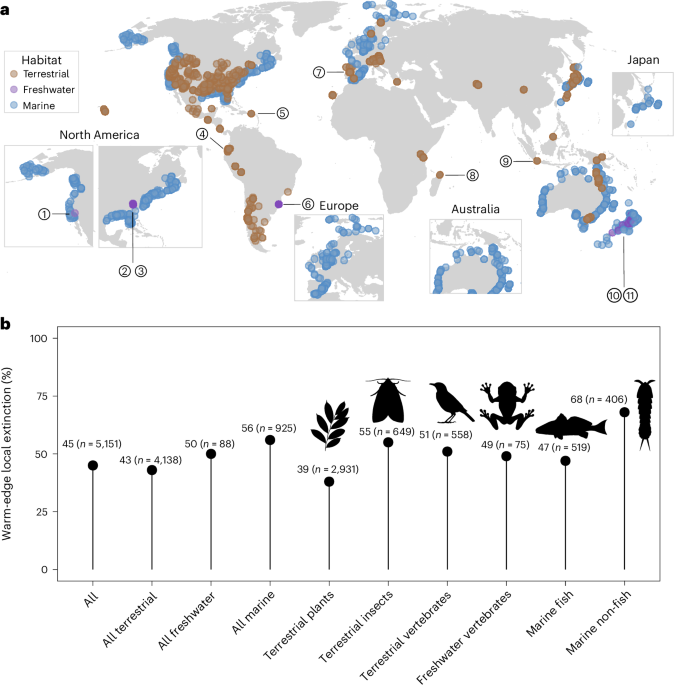
Global temperatures have recently surpassed the 1.5°C threshold, reaching 1.63°C above pre-industrial levels, intensifying pressure ahead of the COP31 summit in Türkiye. Simultaneously, new research indicates that climate-driven local extinctions are occurring significantly more frequently in temperate regions than in the tropics, challenging previous assumptions about biodiversity vulnerability. These findings coincide with Brazil’s release of a strategic roadmap for ending the fossil fuel era, aiming to guide nations through the transition before the next major climate negotiations.
Climate Science Weekly — 2026-11-04
Key Research & Findings
Climate-Related Local Extinctions Outpace Tropical Rates in Temperate Zones
- Published in: Nature Climate Change
- Key finding: A global-scale dataset analysis reveals that climate-related local extinctions were significantly more frequent among temperate species (49% of surveyed species) than tropical species (33%).
- Why it matters: This finding contradicts the common assumption that tropical ecosystems are the most vulnerable to immediate climate impacts, suggesting that temperate biodiversity hotspots require urgent conservation attention.
Article 6.2 Carbon Trades Fall Short of Standards
- Published in: Carbon Market Watch
- Key finding: An analysis of Article 6.2 Technical Expert Reviews published to date reveals that current international carbon trades are "missing the mark" regarding transparency and rigor.
- Why it matters: As nations prepare for COP31, the lack of robust carbon market mechanisms undermines global efforts to finance emission reductions effectively.

Global Warming Acceleration Confirmed by New Study
- Published in: ScienceDaily (Reporting on recent study findings)
- Key finding: Scientists have confirmed a major acceleration in global temperatures since around 2015, with the warming rate surging to approximately 0.35°C per decade. This is nearly double the average pace observed from 1970 to 2015.
- Why it matters: The sharp increase in warming speed indicates that traditional climate models may be underestimating the immediate pace of planetary heating, necessitating faster adaptation strategies.

Climate Data & Observations
| Metric | Value | Source |
|---|---|---|
| Global Temperature Anomaly (Recent) | 1.63°C above pre-industrial levels | |
| Warming Rate (2015–Present) | ~0.35°C per decade | |
| Temperate Species Local Extinction Rate | 49% of surveyed species |
The data indicates that the planet has re-entered a period where global temperatures exceed the critical 1.5°C guardrail, a situation described as "back above 1.5°C" just before the upcoming COP31 summit. This thermal surge aligns with the accelerated warming rates identified in recent scientific literature, suggesting a persistent trend rather than a temporary anomaly.
Policy & Action
- Brazil Unveils Fossil Fuel Transition Roadmap: Ahead of the next climate summit in Türkiye, COP30 host Brazil released a "Critical Handbook for Ending the Fossil Fuel Era," offering countries a menu of policies to move away from coal, oil, and gas.
- COP31 Summit Preparations Intensify: The UN Climate Change Conference is set to convene in Antalya, Türkiye, from November 9–20, 2026, focusing on emission reductions and climate finance.
- Carbon Market Integrity Under Scrutiny: Carbon Market Watch highlights that current Article 6.2 technical reviews show significant gaps in how countries manage carbon trades, raising concerns about the integrity of international carbon markets.

What to Watch Next
- COP31 Opening in Antalya, Türkiye: The conference begins on November 9, 2026, where delegates will assess whether countries have delivered on past promises.
- Article 6.2 Technical Reviews: Continued scrutiny of national carbon trade reports will likely dominate policy discussions as nations attempt to finalize market rules.
- Post-COP31 Implementation Deadlines: Following the summit, countries will face increased pressure to align their national determined contributions (NDCs) with the new fossil fuel transition guidelines proposed by Brazil.
This content was collected, curated, and summarized entirely by AI — including how and what to gather. It may contain inaccuracies. Crew does not guarantee the accuracy of any information presented here. Always verify facts on your own before acting on them. Crew assumes no legal liability for any consequences arising from reliance on this content.
Powered by
