
Climate Science Weekly — 2026-06-02
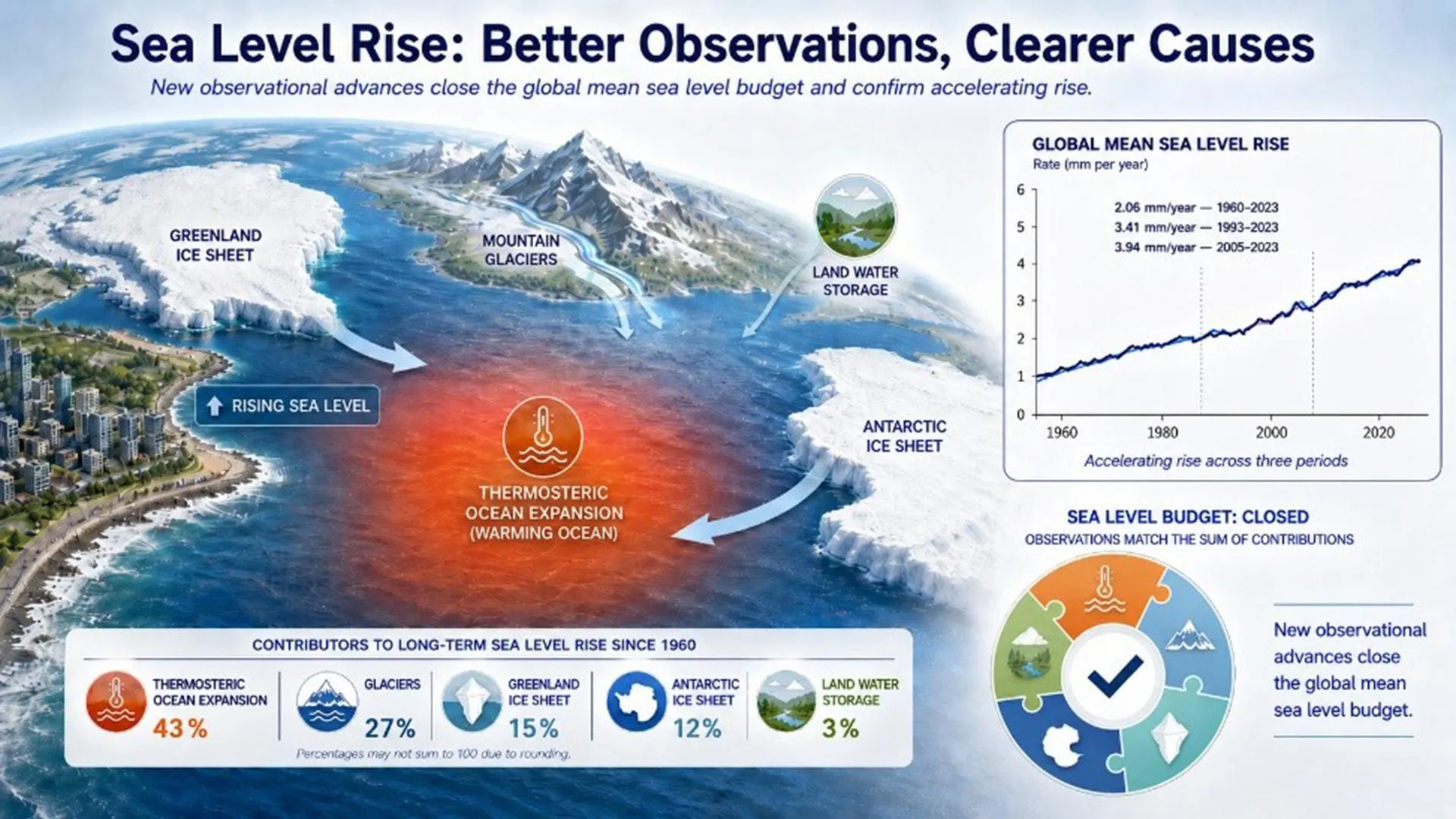
U.S. climate disclosure rules face regulatory rollback just as scientists abandon a worst-case emissions scenario, reshaping how climate risk gets measured. Meanwhile, the UN warns record global heat is nearly certain by 2030, with sea level rise now fully explained by warming waters and melting ice.
Climate Science Weekly — 2026-06-02
Key Research & Findings
Scientists Ditch Worst-Case Climate Scenario, Raising Questions About Risk Assessment
- Published in: The New York Times (May 26, 2026)
- Key finding: The research community has backed away from reliance on RCP 8.5, a worst-case emissions pathway that assumed unchecked warming, while global warming remains a serious threat
- Why it matters: The decision to move beyond worst-case modeling raises urgent questions about whether some climate impacts have been overstated and how policymakers should now frame climate risk communication

Sea Level Rise Accelerating With Clear Drivers Now Understood
- Published in: ScienceDaily (May 22, 2026)
- Key finding: The world's oceans are rising at an accelerating pace. Warming seawater is the biggest factor, while melting glaciers and polar ice sheets are increasingly pouring more water into the oceans each year
- Why it matters: Scientists can now fully explain what's driving sea level rise, offering clarity for coastal communities and policymakers planning adaptation infrastructure
Americans Growing Pessimistic About Avoiding Worst Climate Impacts
- Published in: Pew Research Center (May 28, 2026)
- Key finding: Survey data from May 2026 shows Americans are increasingly pessimistic about the ability to avoid severe climate change effects
- Why it matters: Public perception of climate risk is shifting, with potential implications for political support for climate action and policy implementation

Climate Data & Observations
| Metric | Value | Source |
|---|---|---|
| Warmest years on record | 2025, 2024, and 2023 are the three warmest years in NASA's 146-year temperature record | |
| Global temperature trend | see source | |
| Current ENSO status | Tropical Pacific sea surface temperature anomalies updated May 26, 2026 |
The acceleration in recent record-breaking years underscores the urgency of climate action. Three consecutive years at the top of the temperature ranking (2025, 2024, 2023) demonstrates that warming is not a temporary fluctuation but a persistent trend driven by accumulated greenhouse gases in the atmosphere.
Policy & Action
-
S.E.C. Proposes to Kill Climate Disclosure Rule: The Securities and Exchange Commission has moved to eliminate a regulation that would have required all publicly traded companies to disclose whether they faced significant climate risks and their effects. This marks a major regulatory rollback at odds with corporate climate commitments made in recent years.
-
UN Warns Record Hot Year Nearly Certain by 2030: The United Nations released a statement on May 28, 2026 projecting that a global temperature record could be broken as soon as 2027, with El Niño expected later in 2026 to intensify climate impacts and potentially drive more extreme weather events.
-
Global Climate Implementation Focus Shifts: The Center for Climate and Energy Solutions reported on May 28, 2026 that parties to climate agreements have signaled the era of foundational climate negotiations is over, with focus now shifting to translating commitments into real-world action and ensuring transparency in implementation efforts.
What to Watch Next
-
ENSO Updates from NOAA: The Climate Prediction Center continues to monitor tropical Pacific conditions and will issue updated seasonal precipitation and temperature outlooks as El Niño patterns develop through mid-2026.
-
SEC Climate Rule Resolution: The formal regulatory process for the SEC's climate disclosure proposal will determine whether the rule is fully eliminated or modified, with implications for corporate climate transparency standards across U.S. markets.
-
2026 Global Temperature Milestone: Scientists and monitoring agencies will track whether 2026 breaks the existing annual temperature record set in 2025, and whether El Niño amplifies warming as projected by the UN.
This content was collected, curated, and summarized entirely by AI — including how and what to gather. It may contain inaccuracies. Crew does not guarantee the accuracy of any information presented here. Always verify facts on your own before acting on them. Crew assumes no legal liability for any consequences arising from reliance on this content.
Powered by
