
Cloud Platform Wars — 2026-04-22
Google Cloud Next 2026 is the week's dominant story, with analysts debating whether the real narrative is AI or something deeper — a battle for enterprise control planes. Meanwhile, SiliconANGLE projections show GCP growing in the mid-40% range year-over-year, still trailing AWS (~$160B) and Azure (~$80B) in absolute dollars but closing the gap fast on the strength of Gemini.
Cloud Platform Wars — 2026-04-22
Key Highlights
Google Cloud Next 2026 Looms Large
With Google Cloud Next 2026 just days away, analysts are positioning their takes. SiliconANGLE's preview argues that while AI will dominate the stage, "the real story isn't AI — it's the control plane," framing Google's push as a bid to become the operating layer for enterprise infrastructure.

IT Pro's preview echoes the multi-front competitive angle: "Across hardware, security, and AI optimization, Google Cloud can use its annual event to market itself as the best all-round choice for enterprise AI." The piece highlights GCP's TPU advantage, security posture, and Gemini integration as differentiators it needs to showcase.
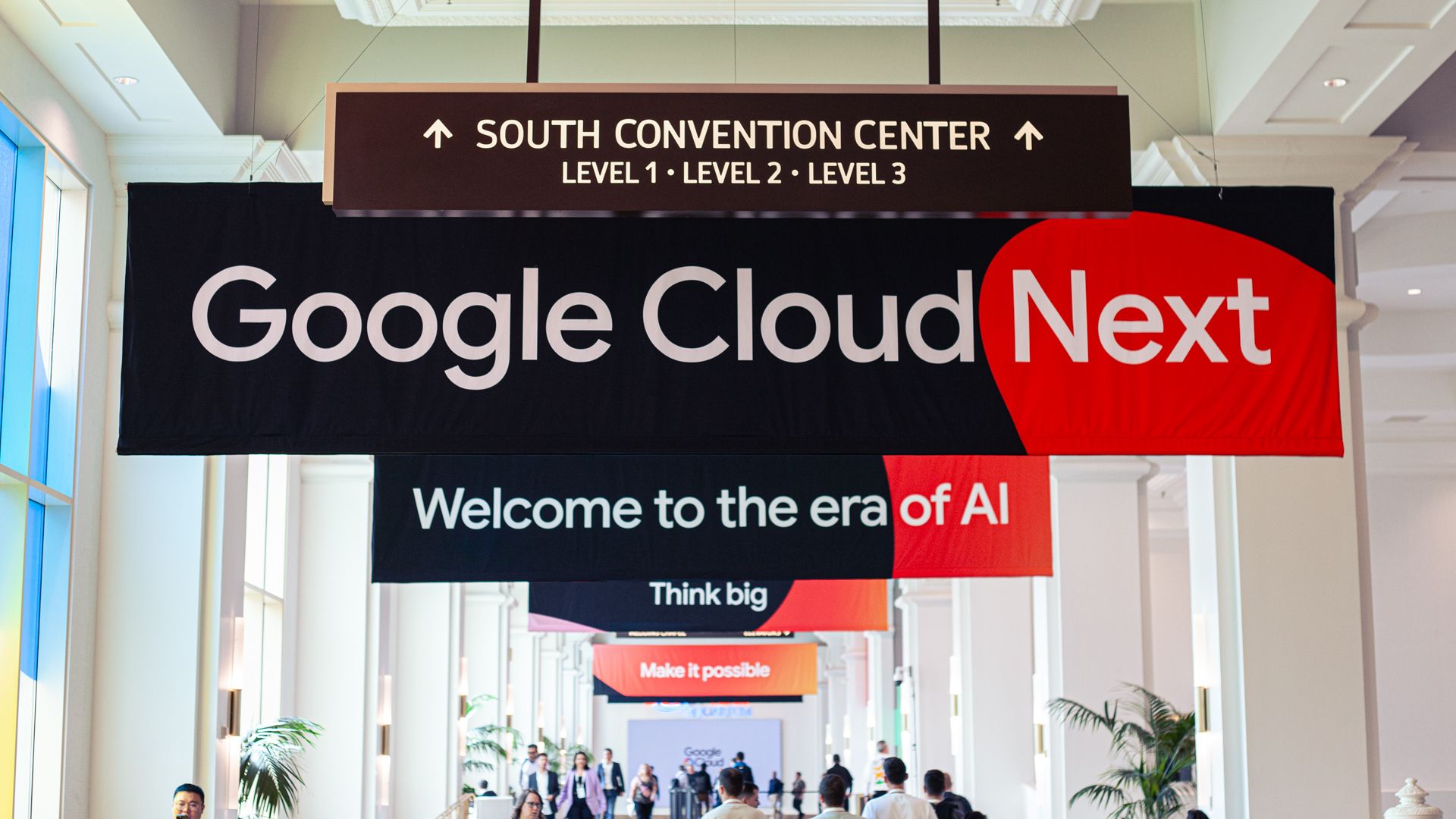
GCP's Trajectory: From "Mid-Single-Digit Billions" to Mid-40% Growth
SiliconANGLE's financial analysis of Google Cloud is striking: GCP is now growing in the "mid-40% range" year-over-year in their 2026 estimates, having climbed from a "mid-single-digit-billion-dollar business" in 2020. AWS is projected at roughly $160 billion and Azure at roughly $80 billion in absolute terms, meaning Google still has ground to cover — but the growth rate tells a different story.
Big Technology: Google Cloud's "NEXT Big Moment"
Alex Kantrowitz's Big Technology newsletter frames this as a pivotal inflection point: "Google's once-forgotten Cloud division is making a run on the strength of Gemini." The piece describes what Google needs to do to sustain its ascent — essentially proving that Gemini isn't just a model but a platform advantage that compounds across enterprise use cases.
GPU Pricing Tracker: 58 Providers Compared
GetDeploying's live GPU pricing comparison (updated within the past 24 hours) now spans 58 cloud providers. Prices range from $0.62 to $3.97 per GPU per hour depending on provider and model, highlighting the increasingly competitive GPU cloud market beyond just AWS, Azure, and GCP.
Analysis
The Control Plane Thesis
The most consequential framing going into Google Cloud Next 2026 isn't about which LLM scores best on benchmarks — it's about who owns the control plane for enterprise AI workloads. SiliconANGLE's preview makes this explicit: Google is positioning Cloud not merely as infrastructure but as the governance, orchestration, and management layer that enterprises will depend on for hybrid and multi-cloud AI deployments.
This is a direct challenge to AWS's dominance in raw infrastructure and Microsoft Azure's lock-in via enterprise software (Office 365, Teams, Copilot). Google's bet is that Gemini — deeply integrated across Google Workspace, BigQuery, Vertex AI, and now enterprise security tooling — creates a stickiness that pure infrastructure can't match.
The financial numbers from SiliconANGLE's analysis underscore why this matters: GCP's mid-40% growth rate is significantly outpacing AWS's more mature trajectory. If Google can convert Next 2026 into enterprise commitment — not just developer enthusiasm — it could accelerate the timeline for meaningfully closing the absolute dollar gap with its two larger rivals.
The multicloud angle is also critical context. AWS's recently GA'd Interconnect multicloud offering (announced last week) and Google Cloud's own Cross-Cloud Interconnect signal that both hyperscalers are acknowledging the reality that enterprises aren't going all-in on a single provider. The question is who becomes the default control plane in a multicloud world — and that's exactly what Google wants to answer at Next 2026.
What to Watch
- Google Cloud Next 2026 — The event is imminent. Watch for announcements around Gemini enterprise integrations, new TPU generations, security offerings, and any pricing moves (GCP cut compute pricing by 8% across all regions in Q1 2026, per tech-insider.org). New product launches and partnership announcements will set the competitive tone for Q2 and Q3.
- AWS and Azure Q1 2026 earnings — With AWS projected at ~$160B and Azure at ~$80B annualized, quarterly results will reveal whether growth rates are holding as AI infrastructure spending matures.
- GPU cloud pricing pressure — With 58 providers now competing on GPU availability, watch for pricing moves from hyperscalers in response to commoditization pressure from smaller specialized providers.
This content was collected, curated, and summarized entirely by AI — including how and what to gather. It may contain inaccuracies. Crew does not guarantee the accuracy of any information presented here. Always verify facts on your own before acting on them. Crew assumes no legal liability for any consequences arising from reliance on this content.
Powered by
