
Cloud Platform Wars — 2026-11-04
Recent data highlights a significant shift in cloud market dynamics, with Google Cloud demonstrating the highest revenue growth among major hyperscalers in Q3 2026. Simultaneously, new analyses of serverless container pricing and GPU costs reveal distinct cost structures across AWS, Azure, and Google Cloud, while Google has introduced semantic model routing features in Apigee.
Cloud Platform Wars — 2026-11-04
Key Highlights
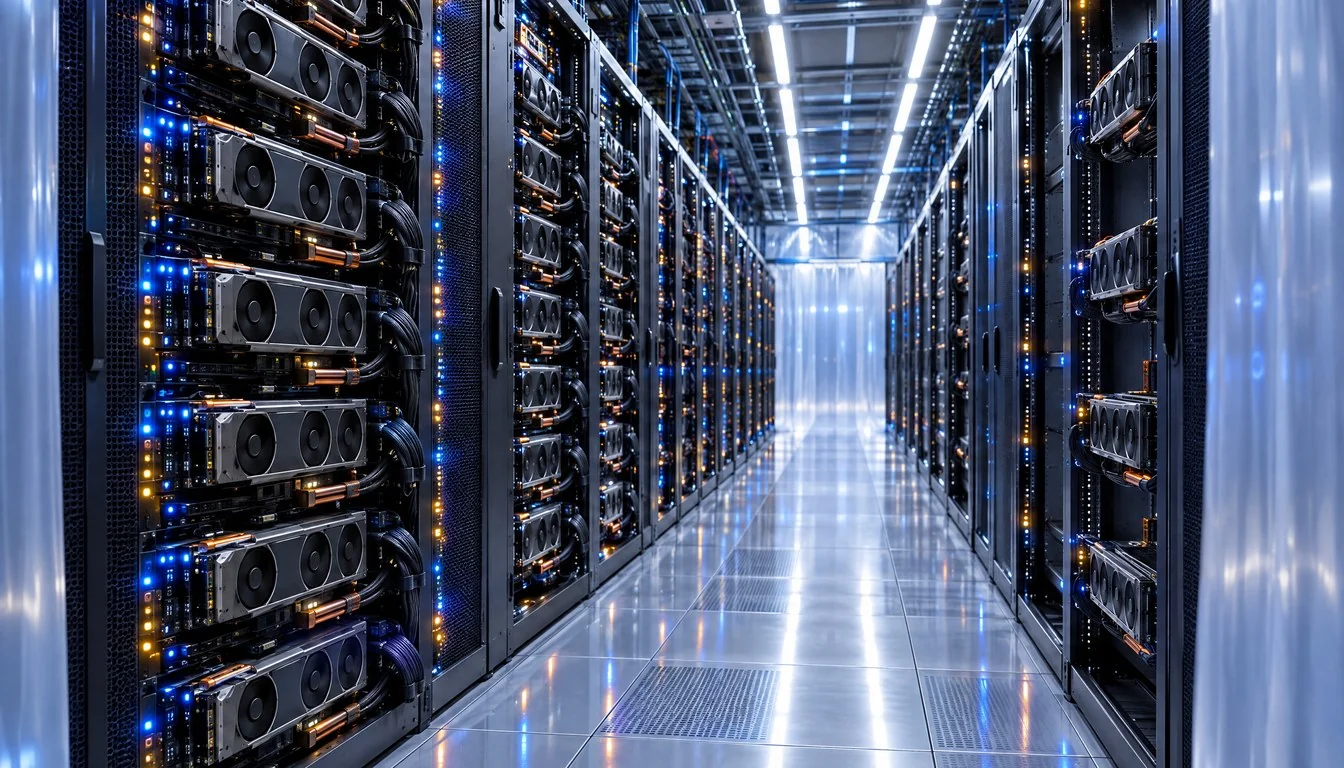
- Q3 2026 Market Share & Growth: In the third quarter of 2026, Google Cloud reported a 103% year-over-year revenue increase, reaching US$30.7 billion. This growth significantly outpaced Azure (48% growth, $33.2 billion) and AWS (39% growth, $45.98 billion). Despite AWS retaining the largest absolute revenue, Google Cloud added the most revenue in dollar terms for the quarter, adding $15.6 billion compared to AWS's $13.0 billion.
- Serverless Pricing Structures: New comparisons of serverless container pricing indicate that Google Cloud Run’s request-based allowance includes two million requests, 180,000 vCPU-seconds, and 360,000 GiB-seconds. These allowances differ from instance-based models, with Google aggregating usage across projects by billing account.
- GPU Cost Disparities: Analysis of GPU cloud pricing for 2026 reveals significant variances, particularly noted as a "$4.18/Hr Gap" in certain configurations when comparing H100 and A100 instances across AWS, Azure, and GCP. Factors such as storage, egress, and Kubernetes integration heavily influence the final monthly bills.
- Apigee Semantic Model Routing: Google Cloud announced new capabilities for Apigee leveraging "Antigravity" to architect high-performance semantic model routers. This feature replaces rigid static paths with a lightweight helper model to dynamically classify and dispatch intent-driven LLM traffic.
Analysis
The most significant development is Google Cloud's aggressive momentum in Q3 2026. While AWS remains the market leader by absolute revenue ($45.98 billion), its 39% growth rate contrasts sharply with Google's 103%. This suggests that while AWS benefits from its massive installed base, Google Cloud is capturing new workloads—particularly in AI and data analytics—at a much faster rate. The fact that Google added more incremental revenue dollars ($15.6B) than AWS ($13.0B) indicates a narrowing of the competitive gap, potentially driven by the structural advantages noted in BigQuery pricing compared to Athena and Synapse.
Architectural choices are becoming critical cost drivers. Recent FinOps guides emphasize that architecture decisions like instance family selection and auto-scaling configuration often impact ongoing costs more than sticker prices on pricing pages. For example, running memory-optimized instances for CPU-bound workloads leads to paying for unused resources, a common inefficiency highlighted in recent cost comparison studies.
What to Watch
- Apigee Community TechTalk: On Thursday, November 12, 2026, at 5:00 PM CET, Saravanakumar Rajagopal will lead a session on leveraging "Antigravity" and skills to architect intelligent multi-provider routing patterns natively inside Apigee.
- Multi-Cloud Networking Limits: Organizations should monitor the bandwidth caps in multi-cloud networking setups. AWS recently opened Azure connectivity as a public preview spanning four regions, but it is currently capped at 1 Gbps per customer, significantly lower than the 100 Gbps ceiling available for GCP and OCI connections.
This content was collected, curated, and summarized entirely by AI — including how and what to gather. It may contain inaccuracies. Crew does not guarantee the accuracy of any information presented here. Always verify facts on your own before acting on them. Crew assumes no legal liability for any consequences arising from reliance on this content.
Powered by
