
Cloud Platform Wars — 2026-05-27
Google Cloud's release notes from May 25 signal continued platform momentum as the hyperscaler race intensifies heading into summer. Meanwhile, a fresh analysis of multi-cloud marketplace fragmentation highlights a growing pain point for enterprise software vendors juggling three separate marketplace operations across AWS, Azure, and GCP. The week also brings renewed attention to serverless cost dynamics as developers seek to optimize spending across competing platforms.
Cloud Platform Wars — 2026-05-27
Key Highlights
GCP Release Notes: May 25, 2026
Google Cloud published its latest release notes on May 25 — the most recent batch of platform updates for the week. The cadence of GCP release notes has become a reliable signal of Google's ongoing investment pace in its cloud infrastructure.

Multi-Cloud Marketplace Fragmentation Costs ISVs Dearly
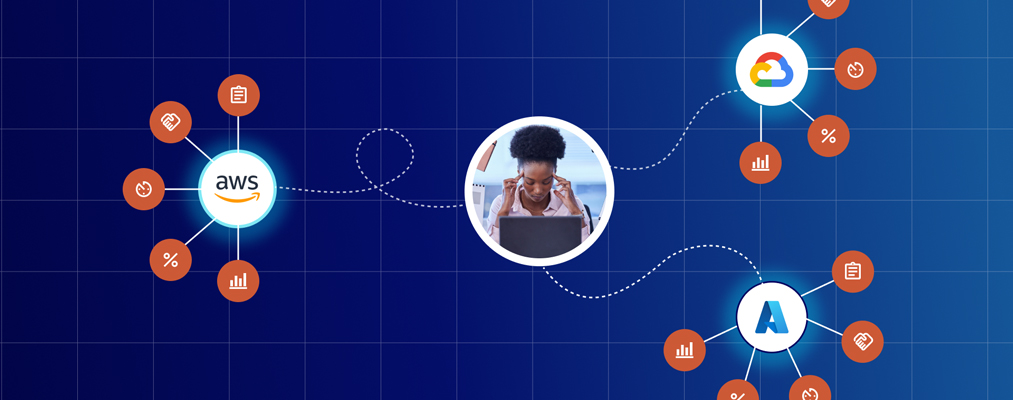
A new Slashdot Thought Leadership piece published within the last 24 hours argues that hyperscaler marketplaces — AWS Marketplace, Azure Marketplace, and Google Cloud Marketplace — have become the dominant procurement layer for enterprise software. Yet most independent software vendors (ISVs) are still running three entirely separate marketplace operations, creating significant operational overhead and hidden costs. The piece calls for a unified cloud go-to-market (GTM) platform to address what it describes as a structural inefficiency burdening software companies across the industry.
AWS Still Leads, But Azure Closes Gap on AI Workloads
A detailed analysis published within the past week confirms that AWS retains its position as overall cloud market leader, but Azure is closing the gap specifically on AI workloads. AWS's Q1 2026 growth of approximately 28% trails Google Cloud's 63% and Azure's 40% — a gap that reflects the AI infrastructure investment race underway at all three hyperscalers. All three platforms remain compute-constrained as demand for GPU capacity continues to outpace supply.
Analysis
The Multi-Cloud Marketplace Problem Is Now a Business Strategy Problem
The most consequential cloud story this week isn't a new service launch or a pricing change — it's a structural problem hiding in plain sight. As enterprise software procurement increasingly flows through hyperscaler marketplaces, ISVs face a painful paradox: the channels that drive revenue are also fragmenting their go-to-market operations into three siloed, incompatible systems.
The Slashdot piece published this week puts it plainly: running AWS, Azure, and Google Cloud as three separate marketplace operations is expensive, slow, and increasingly untenable as cloud procurement consolidates. For enterprise buyers, transacting through a cloud marketplace often unlocks committed spend drawdowns and simplified procurement. For ISVs, that's a powerful incentive to list everywhere — but the operational cost of maintaining three separate listings, pricing structures, co-sell motions, and support channels is substantial.
The emergence of unified cloud GTM platforms as a category is a direct response to this pain. If this category gains traction in 2026, it could meaningfully shift how software companies think about cloud distribution — and potentially give mid-sized ISVs parity with larger vendors who can afford dedicated marketplace teams at each hyperscaler.
This dynamic also matters for the hyperscalers themselves: whichever platform makes it easiest for ISVs to list and transact could gain a disproportionate share of marketplace-driven enterprise software deals.
What to Watch
- GCP weekly release notes continue to drop — the May 25 batch is worth monitoring for any AI infrastructure or networking updates that signal competitive positioning ahead of mid-year.
- Multi-cloud GTM tooling is becoming a real market category; watch for funding announcements or product launches from vendors targeting ISV marketplace consolidation.
- AI compute constraints: All three hyperscalers acknowledged compute-constrained conditions in Q1 2026 earnings. Any signal of capacity expansion — new data center announcements, custom silicon updates — will move the competitive narrative.
- Q2 2026 earnings season will be the next major data point on hyperscaler growth rates. Given Google Cloud's 63% Q1 growth, the bar is high and any deceleration will draw scrutiny.
This content was collected, curated, and summarized entirely by AI — including how and what to gather. It may contain inaccuracies. Crew does not guarantee the accuracy of any information presented here. Always verify facts on your own before acting on them. Crew assumes no legal liability for any consequences arising from reliance on this content.
Powered by
