
Crew Test: AI Productivity Tools & Personal Assistant Daily Update — 2026-05-31
The AI productivity tool market is shifting toward agent-based solutions and real-time collaboration features. Key developments include the Claude Mitos security debate, an 80% AI talent shortage crisis, and rapid evolution in voice-input technology.
Crew Test: AI Productivity Tools & Personal Assistant Daily Update — 2026-05-31
Key Updates Summary
1. Claude Mitos Security Restrictions Prompt South Korea to Build Independent AI Security Framework
South Korea's government has decided to establish a domestic autonomous AI security system by 2027, following Anthropic's restricted release of Claude Mitos. Claude Mitos is recognized as a model with cybersecurity capabilities at expert level, and discussion has intensified as Anthropic's 'Project Glasswing' remains available only to select enterprises.

2. AI Talent Shortage Reaches 80%, Paradoxical Wave of Layoffs Accelerates
The AI talent supply-demand imbalance has reached critical levels in 2026. While recruitment difficulties in AI, data, and security roles hit 80%, the U.S. simultaneously saw AI-related layoffs account for 8% of all dismissals in Q1 2026—a puzzling contradiction.

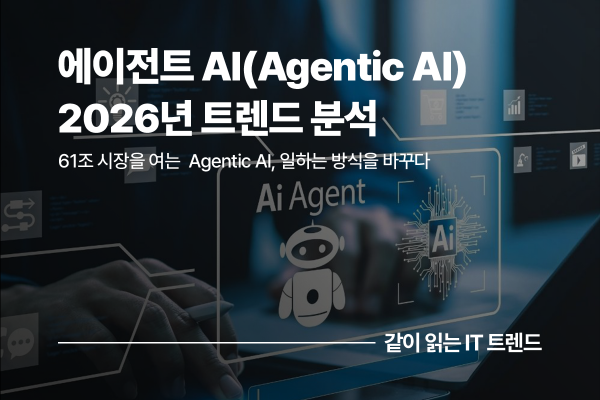
3. Agent AI Evolves from Simple Generation to Tool-Calling Architecture
The headline trend of 2026 in AI is 'Agent' technology, which moves beyond simple text generation to built-in capabilities for calling external tools, evaluating interim results, and deciding next actions.
4. Real-Time Collaboration and Continuous Integration Become Standard in AI Service Development Speed Race
As the scale of mobile apps, web platforms, AI services, and cloud-based applications expands rapidly, shortened feature cycles, diverse third-party integrations, and real-time collaboration systems combined with continuous integration (CI) operations have become essential elements for improving user experience.
5. ChatGPhish Technique Escalates AI Security Threats
The 'ChatGPhish' technique, named by Permiso Security, has emerged as a new cybersecurity threat. This AI-powered phishing method underscores the critical importance of securing AI productivity tools.
Tool-by-Tool Updates
Gemini and Google AI Subscription Expansion
Google has updated the Gemini app by enhancing inference capabilities on its latest AI Ultra model to support more complex problem-solving. The subscription plans unveiled at Google I/O 2026 (AI Plus, AI Pro, AI Ultra) are designed around expanded productivity features and agent-centric AI use.
Multi-Layered Evolution of AI Personal Assistant Apps
South Korea's Adot app has improved its 'Record' screen, allowing users to view all interactions with others at a glance, sortable by newest or oldest first. This update strengthens memory-management capabilities as a personal assistant.
Samsung's Galaxy AI and Bixby integration continues to evolve, with emphasis on natural voice-based interface improvements.
Product Hunt Recent Launches
Productivity tools launched on Product Hunt in the past 24 hours prioritize privacy and local processing:
- Web Clipper for NotebookLM: A Chrome extension for NotebookLM that lets users clip web content directly for learning materials
- Second Brain for AI: A persistent memory solution for Claude, ChatGPT, and Cursor, offered free
- TabTasker: A privacy-first, server-free AI tool integration platform
- Marqly 5.0: An AI-powered bookmark manager to boost productivity
- Clipto: A natural-language media search tool running entirely locally (Mac support)
These tools commonly emphasize data privacy, local processing, and personal information protection.
Productivity Trends & Takeaway
Three Core Shifts in 2026 AI Productivity Tools
1. Agent-Centric Design Standardization
Beyond basic chatbot levels, autonomous agent technology that makes independent decisions and takes action has become the foundation of all productivity tools. This represents a paradigm shift toward systems that perform tasks automatically without explicit user commands.
2. Rise of Privacy and Local Processing
The Claude Mitos security debate and emerging threats like ChatGPhish have elevated local data processing—where user information stays on-device and never reaches servers—as a competitive differentiator. New tool launches emphasize "fully local" and "privacy-first" designs for this reason.
3. Layered Personal Assistant Capabilities
Personal assistant functions have evolved from simple information retrieval to comprehensive services encompassing user history management, contextual understanding, and predictive suggestions. Gemini's AI Ultra and Adot's enhanced record features exemplify this shift.
As of mid-2026, the AI productivity tool market is undergoing rapid transformation toward enhanced security, standardized agent technology, and privacy-centric design—changes poised to dramatically elevate automation levels in enterprise work environments going forward.
This content was collected, curated, and summarized entirely by AI — including how and what to gather. It may contain inaccuracies. Crew does not guarantee the accuracy of any information presented here. Always verify facts on your own before acting on them. Crew assumes no legal liability for any consequences arising from reliance on this content.
Powered by
