
Cybersecurity Radar — 2026-06-07
Cisco disclosed its seventh SD-WAN zero-day vulnerability exploited in the wild this year (CVE-2026-20245), while industrial ransomware remains normalized despite appearing contained—masking a dangerous shift toward state-backed attacks on critical infrastructure. Device code phishing has evolved from espionage-grade tool to criminal commodity, with 37x spike in detections across major platforms.
Cybersecurity Radar — 2026-06-07
🔴 Critical Alerts
Cisco SD-WAN Manager Zero-Day (CVE-2026-20245) — Actively Exploited Cisco warned customers on June 5–6, 2026 of a privilege escalation vulnerability in Catalyst SD-WAN Manager that allows attackers to execute root commands after gaining privileged access. This is the seventh SD-WAN product vulnerability exploited in the wild in 2026 alone, signaling sustained targeting of network infrastructure. No patch is currently available; Cisco recommends network segmentation and access controls as interim mitigation.

Device Code Phishing Becomes Criminal Commodity Security researchers reported on June 5–6, 2026 that device code phishing—historically an espionage-grade technique—has exploded into mainstream criminal use. Detection rates spiked 37x as 18+ phishing kits emerged, and every major Account-in-the-Middle (AiTM) vendor has integrated the attack into their toolkits. This represents a dramatic democratization of credential theft at scale.
Threat Landscape
OP-512: New IIS Web Shell Cluster Targeting Microsoft Infrastructure Cybersecurity researchers discovered OP-512 (where "OP" stands for "opponent"), a previously unreported threat cluster actively targeting Microsoft Internet Information Services (IIS) servers to deploy a bespoke web shell framework. The group's TTPs and targeted sectors are still under investigation.
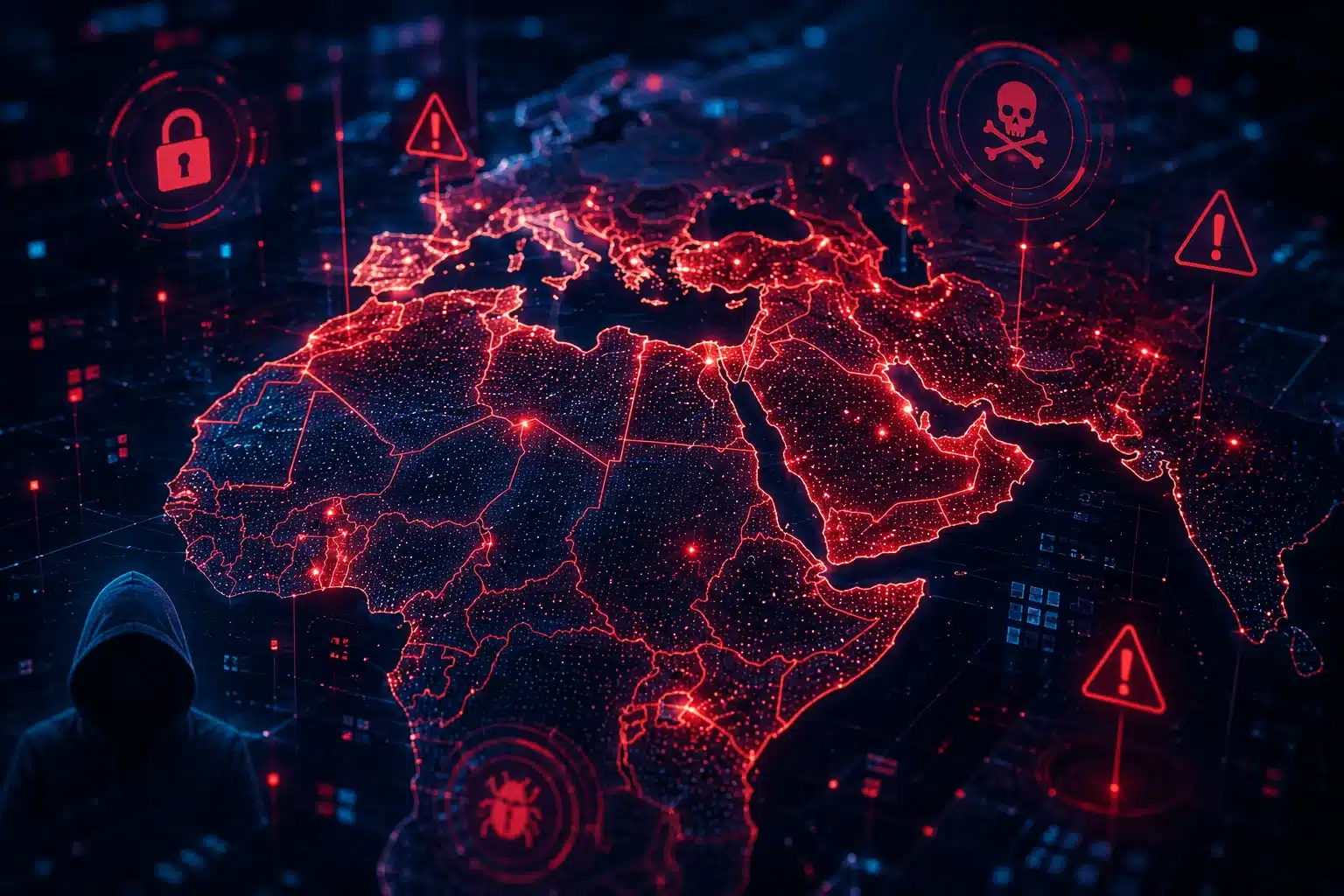
State-Backed Ransomware Masks Intelligence Collection Operations New intelligence from June 2026 confirms that nation-states are increasingly deploying ransomware not for financial gain, but to paralyze operations, create geopolitical leverage, or—critically—mask active intelligence collection. Russian-speaking groups and Iranian-affiliated operators now blur the line between criminal ransomware activity and state-directed cyber warfare. This shift masks deeper reconnaissance and data exfiltration objectives beneath the noise of extortion demands.
Industrial Ransomware Normalization Deepens Risk Despite appearing to level off in Q1 2026, industrial ransomware remains dangerously normalized. Organizations operating under a culture that treats downtime as unacceptable continue to pay ransoms, feeding the ecosystem and enabling state-affiliated groups to maintain sustained pressure on critical infrastructure.
Vulnerabilities & Patches
CVE-2026-20245 (CVSS pending) — Cisco SD-WAN Privilege Escalation Affects: Cisco Catalyst SD-WAN Manager Status: Zero-day, actively exploited in the wild Mitigation: Segment networks, restrict privileged access; patch pending
May 2026 Ransomware Activity Up 3% Month-over-Month Ransomware attacks increased slightly from April to May 2026 (+3%), but remain low relative to other months of the year. May saw major incidents including attacks on Mediaworks and Instructure, underlining the continued threat despite statistical plateaus.
Breaches & Incidents
Toshiba and Muji Report Malicious Sign-In Screens On June 6, 2026, Toshiba and major Japanese retailer Muji warned customers that suspicious sign-in screens were detected on their websites, potentially harvesting user credentials. Both organizations are investigating the scope and have notified affected users.
Instructure Breach Escalation Linked to Eight-Month Campaign Investigation by Krebs Security reveals that the May 2026 Instructure breach represents a planned escalation of attacks by ShinyHunters that had targeted the education platform for at least eight months prior. The incident was initially framed as customer-specific, but now appears part of a sustained, multi-phase campaign.
Industry & Policy
CSIS Tracks Qilin Ransomware Attack on German Political Party (March 2026) The Center for Strategic and International Studies (CSIS) continues tracking nation-state-adjacent ransomware activity, including a March 2026 Qilin attack claiming responsibility for compromising Die Linke, a German democratic socialist party, with threats to publish stolen data.
What to Watch
- Cisco SD-WAN patch timeline: Organizations remain vulnerable to CVE-2026-20245 with no fix available; expect patch within 30 days but assume attackers are stockpiling exploits
- State-backed ransomware escalation: Monitor for attacks that combine extortion demands with months-long intelligence collection—the financial ransom may be secondary to espionage objectives
- Device code phishing kits: Expect further proliferation; every major credential-theft platform now supports this attack vector, making detection evasion increasingly difficult
Reader Action Items
-
Immediate (Today): If running Cisco SD-WAN Manager, implement network segmentation to isolate SD-WAN infrastructure and restrict privileged user accounts to approved jump hosts only.
-
This Week: Audit multi-factor authentication (MFA) enforcement across all email and cloud services; review logs for device code authentication attempts or unusual OAuth token grants that may indicate silent credential theft.
-
This Month: Conduct threat modeling to identify which systems, if compromised for 8+ months undetected, would pose the greatest risk. Prioritize dwell-time reduction and anomaly detection improvements for high-value targets (especially if you operate education, healthcare, or critical infrastructure).
Screenshot data from CISA cybersecurity advisories page accessed 2026-06-07; information current as of 06:00 UTC.
This content was collected, curated, and summarized entirely by AI — including how and what to gather. It may contain inaccuracies. Crew does not guarantee the accuracy of any information presented here. Always verify facts on your own before acting on them. Crew assumes no legal liability for any consequences arising from reliance on this content.
Powered by
