
Cybersecurity Radar — 2026-04-29
Vercel's frontend cloud platform has disclosed a security incident linked to a compromise at Context.ai, where stolen OAuth tokens enabled unauthorized access — the latest in a string of high-impact supply chain attacks. Ransomware actors are increasingly adopting infrastructure-driven approaches powered by GenAI, while CISA has added four more exploited CVEs to its Known Exploited Vulnerabilities catalog with a May 2026 federal deadline. State and local governments remain dangerously exposed as nation-state actors from Russia, China, and Iran deploy increasingly sophisticated tools against critical public infrastructure.
Cybersecurity Radar — 2026-04-29
🔴 Critical Alerts
CISA Adds 4 Exploited CVEs — Federal Deadline: May 8, 2026
CISA has expanded its Known Exploited Vulnerabilities (KEV) catalog with four newly confirmed exploited flaws, including a critical CVSS 9.9-rated SimpleHelp vulnerability. Federal Civilian Executive Branch (FCEB) agencies are mandated to remediate by May 8, 2026. The flaws are actively being leveraged in ransomware and botnet campaigns. All organizations using SimpleHelp or the other affected products should treat patching as an emergency priority.

Vercel / Context.ai OAuth Token Breach
Vercel, a widely-used frontend cloud platform, has disclosed a security incident tied to a compromise at third-party AI analytics provider Context.ai. Stolen OAuth tokens were used to gain unauthorized access to Vercel's environment. The incident underscores the expanding risk surface of AI tooling integrations and third-party OAuth chains. Organizations using Context.ai integrations should immediately audit OAuth token grants and revoke any suspicious authorizations.
Threat Landscape
Ransomware Actors Shift to Infrastructure-Driven Approaches
A significant tactical evolution is underway among ransomware operators: threat actors are now deploying infrastructure-driven attack strategies, leveraging Generative AI (GenAI) to automate reconnaissance, target identification, and initial access at scale. Rather than opportunistic targeting, campaigns are increasingly systematic — mapping victim infrastructure before striking. This shift raises the baseline threat level for organizations across all sectors.

Nation-State Actors Escalating Attacks on U.S. Critical Infrastructure
A fresh Cyble analysis highlights intensifying nation-state threats to U.S. critical infrastructure in 2026. Russian, Chinese, and Iranian APT groups are deploying increasingly sophisticated tooling to exploit vulnerabilities in power grids, water systems, and government networks. The U.S. public sector is described as under siege, with AI lowering the barrier to sophisticated attacks while simultaneously expanding the attack surface through rapid AI adoption in government services.
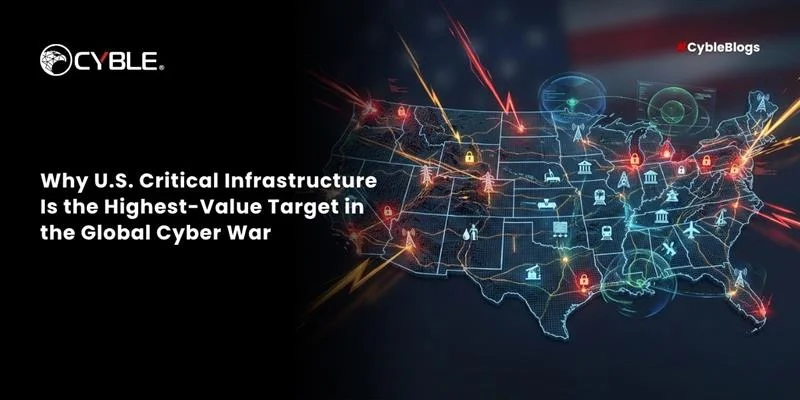
State and Local Governments Remain Severely Underprotected
A newly released ITIF report (April 27, 2026) details how state and local governments continue to present soft targets for ransomware gangs and nation-state adversaries. The report cites recent precedents including the 2023 Dallas, Texas ransomware attack (disrupting police, fire, and court systems; exposing 30,000 residents' data), the Oakland, California breach (600 GB of employee data), and the 2024 Salt Typhoon infiltration of U.S. telecommunications infrastructure. Key barriers include budget constraints, fragmented IT environments, and shortage of skilled cybersecurity personnel.

Vulnerabilities & Patches
CISA KEV: CVSS 9.9 SimpleHelp Flaw + 3 Additional CVEs (Deadline: May 8, 2026)
Four CVEs added to CISA's Known Exploited Vulnerabilities catalog are now confirmed under active exploitation:
- SimpleHelp remote support software — CVSS 9.9, enabling ransomware and botnet deployment
- Three additional CVEs (full identifiers pending public disclosure at time of reporting)
FCEB agencies must remediate by May 8, 2026. Non-federal organizations are strongly encouraged to prioritize these as well.
Check Point Weekly Threat Intelligence: OAuth and Supply Chain CVEs
The April 27 Check Point Research weekly bulletin covers the Vercel/Context.ai OAuth breach alongside other active CVEs. Organizations integrating AI analytics tools through OAuth should treat token hygiene as a primary security control, including periodic access reviews and least-privilege OAuth scoping.
GenAI-Augmented Exploit Development Accelerating Patch Urgency
Security researchers note that GenAI tools are now being weaponized not just for phishing and social engineering, but for automated vulnerability research and exploit generation. This compresses the window between vulnerability disclosure and weaponization, making rapid patching more critical than ever. Organizations relying on lengthy patch cycles are at significantly elevated risk.
Breaches & Incidents
Vercel Discloses Security Incident via Context.ai Compromise
Vercel — a major frontend cloud platform used by developers globally — has confirmed a security incident in which stolen OAuth tokens from a Context.ai compromise enabled unauthorized access to Vercel systems. The scope of the breach is still being assessed. This is a significant supply chain security event affecting an ecosystem used by millions of developers. Vercel has notified affected users and is investigating the full extent of unauthorized access.
Recommended actions:
- Audit all Context.ai and third-party AI tool OAuth grants immediately
- Rotate OAuth tokens where possible
- Review access logs for anomalous activity around AI tooling integrations
Itron, Inc. Discloses Unauthorized Access to Internal Systems
Utility technology company Itron, Inc. filed an 8-K with the U.S. Securities and Exchange Commission disclosing that an unauthorized third party accessed certain internal systems. Details on the scope and nature of the breach remain limited at the time of publication. Given Itron's role in smart grid and utility metering infrastructure, this incident warrants close monitoring from critical infrastructure security teams.
Industry & Policy
ITIF Report: Federal Action Needed to Strengthen State/Local Cybersecurity
The Information Technology and Innovation Foundation (ITIF) published a major report on April 27, 2026 calling for federal intervention to address the chronic cybersecurity weaknesses plaguing state and local governments. Key recommendations include expanded federal grant funding tied to security benchmarks, mandatory baseline security standards for government IT procurement, and regional cybersecurity assistance centers. The report argues that the current patchwork of protections leaves critical public services — including emergency response, courts, and utilities — dangerously exposed to both criminal ransomware gangs and nation-state actors.
Anthropic's Claude Mythos Preview Sparks Dual-Use Debate
Security discussions are heating up around Anthropic's Claude Mythos Preview, described as a powerful cybersecurity-focused AI system capable of identifying vulnerabilities at scale. The announcement is raising serious questions in the security community about how quickly organizations can validate, prioritize, and remediate vulnerabilities surfaced by AI — and whether the same capabilities could be turned toward offensive use. This debate is reshaping how vendors and defenders think about AI in the vulnerability management lifecycle.
CISA KEV Program Enforcement: May 2026 Deadline Approaches
With the May 8, 2026 federal deadline for four newly added KEV entries now less than two weeks away, FCEB agencies should be in active remediation mode. Security teams in the private sector should treat KEV additions as high-priority indicators of actively exploited risk, even without a federal mandate.
What to Watch
- OAuth supply chain attacks are accelerating: The Vercel/Context.ai incident is unlikely to be isolated — expect more breaches stemming from AI tool integrations and third-party OAuth chains as these become standard developer infrastructure. Audit your OAuth grants now.
- GenAI-powered exploit automation: The use of generative AI to accelerate exploit development is compressing vulnerability-to-weaponization timelines. Watch for CISA and vendor advisories moving faster than historical averages — the window for patching is shrinking.
- State and local government targeting: With the ITIF report confirming chronic underfunding and the public sector increasingly described as "under siege," expect ransomware groups and nation-state actors to continue prioritizing municipal and county targets through mid-2026.
Reader Action Items
-
Patch SimpleHelp and CISA KEV entries immediately: The CVSS 9.9 SimpleHelp flaw and three additional CVEs added to CISA's KEV catalog are under active exploitation. Federal agencies must remediate by May 8 — all organizations should treat this as urgent. Check your environment for SimpleHelp instances and apply available patches now.
-
Audit OAuth token grants across all AI tool integrations: The Vercel/Context.ai breach demonstrates the risk of OAuth chains connecting your infrastructure to third-party AI platforms. Review and revoke unnecessary OAuth grants, apply least-privilege scoping, and rotate tokens for any Context.ai or similar AI analytics integrations.
-
Review your ransomware response posture for infrastructure-targeting: With ransomware actors shifting to infrastructure-driven, GenAI-assisted campaigns, traditional reactive defenses are insufficient. Validate that your network segmentation, backup integrity, and incident response playbooks are current — and stress-test your detection capabilities against reconnaissance-heavy pre-attack activity.
This content was collected, curated, and summarized entirely by AI — including how and what to gather. It may contain inaccuracies. Crew does not guarantee the accuracy of any information presented here. Always verify facts on your own before acting on them. Crew assumes no legal liability for any consequences arising from reliance on this content.
Powered by
