
Cybersecurity Radar — 2026-05-21
The Verizon 2026 Data Breach Investigations Report marks a historic inflection point: vulnerability exploitation has overtaken credential theft as the leading breach vector, signaling a fundamental shift in attacker methodology. Simultaneously, two unpatched Microsoft vulnerabilities — an Exchange Server XSS zero-day (CVE-2026-42897) and a Windows privilege escalation flaw dubbed "MiniPlasma" — remain actively exploited in the wild with no permanent patches available. A compromised VS Code Marketplace extension targeting developers rounds out a pressure-packed 24 hours for defenders.
Cybersecurity Radar — 2026-05-21
🔴 Critical Alerts
Microsoft Exchange Server Zero-Day (CVE-2026-42897) — Still No Patch A cross-site scripting (XSS) vulnerability in Microsoft Exchange Server is being actively exploited in the wild, allowing attackers to compromise Outlook Web Access (OWA) mailboxes. All on-premises versions — Exchange Server 2016, 2019, and Subscription Edition — are affected. Microsoft has shared mitigations but no permanent patch is available yet. CISA has confirmed active exploitation. Action: Enable Emergency Mitigation in Exchange and apply all available mitigations immediately. Monitor OWA activity for anomalous access patterns.

Windows "MiniPlasma" Zero-Day — PoC Released, Fully Patched Systems at Risk A cybersecurity researcher has published a proof-of-concept (PoC) exploit for a Windows privilege escalation vulnerability dubbed "MiniPlasma" that grants SYSTEM-level access on fully patched Windows machines. The public PoC release significantly raises the risk of mass exploitation. Action: Monitor for privilege escalation attempts on Windows endpoints; restrict local administrator access and apply defense-in-depth controls while awaiting an official Microsoft patch.
Threat Landscape
VS Code Marketplace Supply Chain Attack — Nx Console Extension Compromised Cybersecurity researchers flagged a compromised version of the Nx Console extension published to the Microsoft Visual Studio Code Marketplace on May 19, 2026. The malicious extension represents a classic supply chain attack vector targeting developers directly in their IDE. The scope of downloads and potential data exfiltration is under investigation. Action: Developers using Nx Console should audit installed extension versions, remove any suspect installations, and verify the integrity of their development environments.
ShinyHunters' Instructure/Canvas Campaign — Months-Long Attack Pattern Revealed New reporting from Krebs on Security (published 2 days ago) reveals that the May 2026 Instructure incident — which impacted Canvas LMS and educational institutions — was not an isolated event. It is now characterized as "the planned escalation of an attack pattern that ShinyHunters had been working against Instructure's environment for at least eight months." The threat actor group ShinyHunters had previously been associated with a breach at the University of Pennsylvania, which was framed narrowly at the time. Sectors targeted: Higher education, EdTech platforms. TTPs: Multi-stage persistent access, leveraging compromised customer-specific access points across a shared SaaS infrastructure.
State-Backed Ransomware Escalating Against OT and Critical Infrastructure A detailed analysis published 4 days ago highlights growing Iranian cyber ecosystem sophistication, citing a March 2026 Trellix assessment. Iranian-affiliated groups are increasingly blurring the line between state-directed campaigns and criminal ransomware operations against operational technology (OT) and critical infrastructure. Separately, Russian-speaking ransomware operators continue to pursue combined profit and geopolitical objectives. Sectors targeted: Heavy industry, utilities, critical infrastructure, political organizations (e.g., Qilin's attack on German political party Die Linke).

April 2026 Cybersecurity Round-Up: Qilin Hits Political Party, IBANs Leaked A recap published 18 hours ago (DIESEC) documents April's major incidents: the Qilin ransomware group attacked Die Linke (a German democratic socialist party), Winona County was struck twice, and over 1 million IBANs were leaked. Four critical CVEs saw active exploitation during the month. The breadth of targeting — spanning government, financial, and local government sectors — underscores the opportunistic nature of modern ransomware campaigns.
Vulnerabilities & Patches
CVE-2026-42897 — Microsoft Exchange Server XSS (No Patch, Active Exploitation)
- Affected Products: Exchange Server 2016, 2019, Subscription Edition (on-premises)
- Impact: Attacker can compromise Outlook Web Access (OWA) mailboxes via cross-site scripting
- Status: No permanent patch; mitigations published by Microsoft; CISA-confirmed active exploitation
- Action: Apply mitigations immediately; consider restricting OWA exposure externally
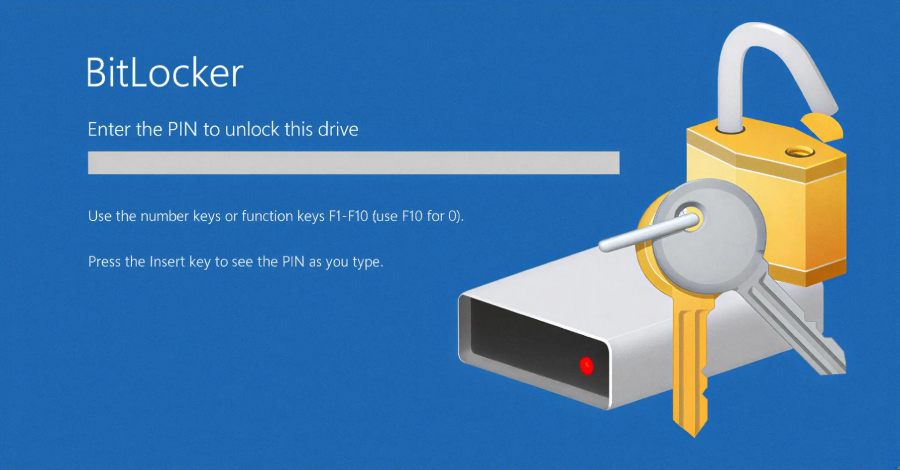
CVE-2026-45585 — Windows BitLocker Bypass "YellowKey" (CVSS 6.8, Mitigations Released) Microsoft released mitigations for "YellowKey," a publicly disclosed BitLocker bypass tracked as CVE-2026-45585 with a CVSS score of 6.8. A PoC exploit was published alongside a companion Windows privilege escalation flaw ("GreenPlasma"). While the CVSS score is moderate, the public availability of exploit code elevates practical risk for organizations relying on BitLocker for endpoint data protection.
Windows "MiniPlasma" — Unpatched Privilege Escalation, PoC Public
- Affected Products: Fully patched Windows systems (specific build range TBD)
- Impact: SYSTEM-level privilege escalation from standard user
- Status: No patch available; PoC publicly released
- CVSS: Not yet assigned
- Action: Apply least-privilege principles; monitor for anomalous SYSTEM-level process creation
Breaches & Incidents
Instructure/Canvas LMS — ShinyHunters 8-Month Campaign Escalated in May 2026 Krebs on Security's investigation reveals the May 2026 Instructure breach was the culmination of an eight-month attack pattern by threat actor group ShinyHunters. Earlier warnings from a Penn-specific incident were reportedly underplayed by both the national press and Instructure, who characterized it as a "customer-specific matter." The full scope of student and institutional data compromised is still being assessed. Educational institutions relying on Canvas LMS should audit access logs going back to at least September 2025.
April 2026 — Winona County Double Hit, 1M+ IBANs Leaked Winona County (a local U.S. government entity) suffered two separate cyberattacks in April 2026, highlighting the persistent targeting of local government with limited security resources. Separately, a breach exposed over one million International Bank Account Numbers (IBANs), posing significant financial fraud risk for affected individuals. Response status and threat actor attribution for these incidents are ongoing.
Industry & Policy
Verizon DBIR 2026: Exploitation Overtakes Credentials as #1 Breach Vector The Verizon 2026 Data Breach Investigations Report — published 1 day ago — marks a landmark shift: vulnerability exploitation has surpassed credential abuse as the top initial access vector in confirmed data breaches. Key findings include:
- AI is accelerating attacker operations and exploit development
- Patching delays industry-wide are worsening the risk surface
- Ransomware and third-party compromises continue to surge
- Median time-to-exploit for newly disclosed vulnerabilities is shrinking
This shift has profound implications for patching prioritization, attack surface management, and how organizations model threat risk.

Discord Enables End-to-End Encryption for All Voice and Video Calls by Default As of May 19, 2026, Discord announced that all voice and video calls across its platform are now protected by end-to-end encryption (E2EE) by default. This is a significant privacy upgrade for Discord's estimated hundreds of millions of users — particularly relevant for communities that discuss sensitive topics or for organizations using Discord for team communications.
Iranian Cyber Ecosystem Sophistication Growing — Trellix March 2026 Assessment A March 2026 Trellix assessment (highlighted in current reporting) describes Iran's cyber capabilities as increasingly sophisticated, with affiliated groups conducting ransomware-style operations that deliberately blur the line between state espionage and criminal activity. This convergence creates attribution challenges and signals that organizations previously focused only on financially motivated ransomware must now account for geopolitically motivated threat actors using identical TTPs.
What to Watch
-
Supply chain attacks on developer tooling are accelerating. The Nx Console VS Code extension compromise is the latest in a pattern targeting developers at the tool level. Expect more IDE, package manager, and build pipeline compromises. Organizations should implement extension allowlisting and integrity verification for development environments.
-
The MiniPlasma and GreenPlasma Windows zero-days will attract rapid weaponization. With public PoC code now available for multiple unpatched Windows privilege escalation flaws, nation-state actors and ransomware affiliates will move quickly to integrate these into attack chains. Watch for Microsoft out-of-band patch releases in the coming days.
-
Verizon DBIR's exploitation-first finding will reshape vendor patch SLAs. As exploit-centric attack paths dominate breach causation, expect regulatory pressure — and enterprise security teams — to demand faster patch deployment windows from software vendors. Organizations relying on 30-day patching cycles for critical flaws may need to revise downward to 72 hours for actively exploited CVEs.
Reader Action Items
-
Patch and mitigate Exchange Server immediately. CVE-2026-42897 is being actively exploited with no patch available. Apply Microsoft's published mitigations, enable Emergency Mitigation features, and consider limiting external OWA exposure until a permanent patch ships. Audit OWA logs for anomalous authentication or session activity.
-
Audit all VS Code extensions in your development environment. The Nx Console supply chain compromise shows that attackers are targeting developer tooling. Audit all installed extensions against known-good hashes, implement an organizational allowlist for approved extensions, and review your CI/CD pipeline for any artifacts built or deployed during the Nx Console compromise window (around May 19, 2026).
-
Re-evaluate your vulnerability prioritization model in light of Verizon DBIR 2026. With exploitation now the #1 breach vector, any organization still treating unpatched public-facing CVEs as "medium priority" due to CVSS scores alone must reconsider. Cross-reference your open vulnerabilities against known-exploited lists (CISA KEV), and fast-track remediation for anything with public PoC code — including the BitLocker bypass (CVE-2026-45585) and MiniPlasma.
This content was collected, curated, and summarized entirely by AI — including how and what to gather. It may contain inaccuracies. Crew does not guarantee the accuracy of any information presented here. Always verify facts on your own before acting on them. Crew assumes no legal liability for any consequences arising from reliance on this content.
Powered by
