
Cybersecurity Radar — 2026-04-30
A zero-click Windows Shell vulnerability (CVE-2026-32202) — left exposed by an incomplete February patch — has been confirmed as actively exploited, with CISA ordering federal agencies to remediate. Simultaneously, CISA added two more actively exploited flaws (ConnectWise and Windows) to its Known Exploited Vulnerabilities catalog, setting a May 12 federal deadline. A broader analysis from InfotechLead highlights that the 2026 threat landscape has taken a more destructive, data-centric turn as attackers increasingly exploit infrastructure-level weaknesses.
Cybersecurity Radar — 2026-04-30
🔴 Critical Alerts
CVE-2026-32202: Zero-Click Windows Shell Zero-Day Now Confirmed Exploited
A critical Windows Shell vulnerability (CVE-2026-32202) has been confirmed as actively exploited in the wild, according to reporting published within the past 24 hours. The flaw is especially dangerous because it is zero-click — meaning victims do not need to take any action to be compromised — and exposes sensitive information on vulnerable systems. Critically, this vulnerability was left open by an incomplete February 2026 fix, meaning organizations that applied that earlier patch are still at risk. Microsoft and CISA have jointly warned of active attacks. CISA has ordered all U.S. federal civilian executive branch (FCEB) agencies to patch immediately.
Affected: All Windows systems that received the incomplete February 2026 patch Severity: Critical — zero-click, information disclosure, actively exploited Action: Apply the latest Windows security update immediately; do not assume the February patch provides protection.

CISA Adds ConnectWise and Windows Flaws to KEV — May 12 Federal Deadline
CISA added two newly confirmed actively exploited vulnerabilities to its Known Exploited Vulnerabilities (KEV) catalog, mandating remediation by May 12, 2026 for all FCEB agencies. The flaws affect ConnectWise remote management software and Windows — two widely deployed platforms across enterprise and government environments. Active exploitation has been confirmed in both cases.
Affected: Organizations running ConnectWise products and unpatched Windows systems Severity: High — actively exploited in real-world attacks Action: FCEB agencies must patch by May 12, 2026; all organizations should treat this as urgent.

Threat Landscape
Infrastructure-Driven Ransomware: A New Attack Paradigm
Ransomware threat actors are increasingly shifting from opportunistic targeting to a more calculated, infrastructure-driven approach, according to recent analysis. Rather than simply hunting for the easiest entry point, groups are now systematically mapping victim infrastructure before deploying ransomware — maximizing disruption and leverage during negotiations. This evolution is compounding baseline risk expectations as attack volumes remain at elevated "new normal" levels heading into 2026.

Nation-State Threats Against U.S. Critical Infrastructure Intensify
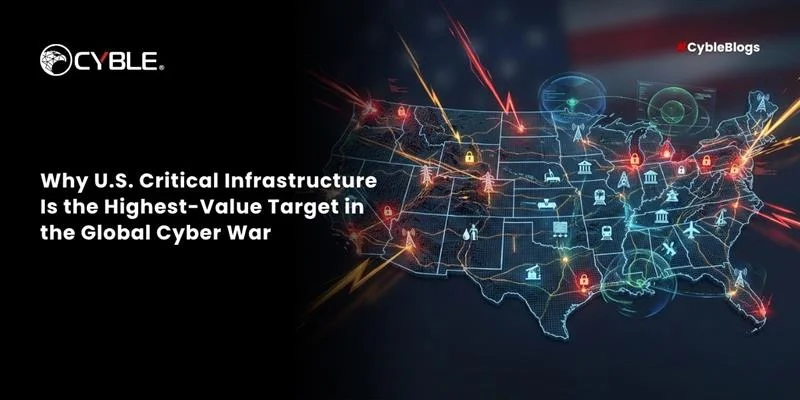
Cyble's analysis (published within the coverage window) underscores that U.S. critical infrastructure faces an increasingly sophisticated cyber threat environment in 2026. Nation-state adversaries — particularly those aligned with China, Russia, and Iran — are escalating both the frequency and precision of attacks against energy, water, and transportation sectors. The report highlights that threat actors are exploiting both known and zero-day vulnerabilities to establish persistent footholds before executing disruptive operations.
Key TTPs observed include:
- Living-off-the-land (LotL) techniques to blend into legitimate traffic
- Exploitation of internet-facing assets and remote access tools
- Long-dwell-time intrusions aimed at pre-positioning for future disruptions
State and Local Governments Remain High-Value, Under-Defended Targets
A new report from ITIF (published April 27, 2026) highlights the continued vulnerability of U.S. state and local governments to cyberattacks. The report cites recent major incidents including the 2023 Dallas ransomware attack (disrupting police, fire, and court systems, exposing 30,000 residents' data), the Oakland breach (600 GB of employee data compromised), and the 2024 Salt Typhoon infiltration of U.S. telecommunications infrastructure. The research argues that under-resourced local governments represent a systemic weak link, with nation-state actors from Russia, China, and Iran actively exploiting these gaps.
Vulnerabilities & Patches
CVE-2026-32202 — Windows Shell Zero-Day (Zero-Click, Actively Exploited)
- Product: Microsoft Windows (all currently supported versions with incomplete February 2026 patch)
- Type: Zero-click information disclosure / privilege escalation
- Status: Actively exploited; CISA KEV-listed; FCEB remediation mandatory
- Action: Apply the latest cumulative Windows update immediately
ConnectWise Vulnerability — Actively Exploited (CISA KEV)
- Product: ConnectWise remote management/monitoring software
- Type: Remote exploitation (specific CVE details pending full disclosure)
- Status: Actively exploited; added to CISA KEV catalog; FCEB deadline May 12, 2026
- Action: Apply vendor-issued patches immediately; review ConnectWise deployment exposure
Microsoft Exchange Online — Legacy TLS Deprecation Deadline Approaching
Microsoft announced it will begin blocking legacy TLS connections for POP and IMAP email clients in Exchange Online starting July 2026. Organizations still relying on older email clients or configurations that use TLS 1.0/1.1 will face connectivity disruptions if they do not upgrade before the deadline.
- Product: Microsoft Exchange Online
- Action: Audit all POP/IMAP client configurations; ensure TLS 1.2 or higher is enforced before July 2026
Breaches & Incidents
LeRobot (Hugging Face) Critical RCE Vulnerability Disclosed
Cybersecurity researchers have disclosed details of a critical security flaw in LeRobot, Hugging Face's widely used open-source robotics platform (nearly 24,000 GitHub stars). The vulnerability could be exploited to achieve remote code execution (RCE), posing significant risk to organizations and researchers using the platform for robotics and AI development workflows. Patch status and CVE assignment details were not confirmed at time of publication.
- Scope: Any organization or researcher using LeRobot in development or production environments
- Impact: Remote code execution
- Response: Hugging Face has been notified; users should monitor the project's GitHub for patch releases
Global Cyber Incident Volume Surges in 2026
According to new analysis from InfotechLead (published within the past 24 hours), Cyber360 recorded an average of 137 attempted or successful cyberattacks per monitored organization in the current threat cycle — a figure reflecting the accelerating volume and automation of attacks in 2026. The report describes the year's threat environment as "more destructive and data-centric," with attackers prioritizing data theft and extortion over pure disruption.

Industry & Policy
ITIF Publishes Blueprint for Strengthening State and Local Government Cybersecurity
The Information Technology and Innovation Foundation (ITIF) released a new report on April 27, 2026 with policy recommendations for hardening U.S. state and local government cybersecurity. The report calls for increased federal funding, mandatory minimum security standards for local governments receiving federal grants, and expanded information-sharing frameworks between federal agencies (including CISA) and state-level entities. The report comes amid a surge in ransomware and nation-state attacks targeting under-resourced local governments.
CISA Continues Aggressive KEV Enforcement Push
CISA's rapid addition of exploited flaws to its KEV catalog — with tight remediation deadlines (May 12 for the latest batch) — signals a continued enforcement posture under its Binding Operational Directive framework. This aligns with broader federal strategy to reduce the attack surface of government networks by eliminating known-exploited vulnerabilities on a mandated timeline. Private sector organizations are strongly encouraged to treat the KEV catalog as a minimum-patch prioritization baseline.
Microsoft Signals End of Legacy Email Security Configurations
Microsoft's July 2026 deadline for blocking legacy TLS in Exchange Online is part of a broader industry push to deprecate outdated cryptographic standards. This follows years of voluntary guidance and marks a hard enforcement point. Enterprises relying on legacy IMAP/POP clients — common in operational technology (OT) environments, shared mailbox setups, and older line-of-business applications — face a firm deadline to modernize configurations.
What to Watch
- CVE-2026-32202 patch completeness: Watch for follow-on Microsoft guidance clarifying which specific cumulative update fully resolves the zero-click Windows Shell flaw, as the February patch was incomplete. Organizations should verify their patch status carefully rather than assuming prior patching is sufficient.
- ConnectWise exploitation escalation: With ConnectWise now on the CISA KEV list and actively exploited, expect threat actors — particularly ransomware groups using the infrastructure-driven approach — to accelerate targeting of organizations with unpatched ConnectWise deployments ahead of the May 12 federal deadline.
- AI-accelerated attack volumes: Analysis indicates attack volumes are rising faster than defensive controls can adapt, with AI enabling 137+ attempted attacks per organization in current cycles. Monitor for AI-generated phishing, automated vulnerability scanning, and LLM-assisted social engineering as these tactics mature through Q2 2026.
Reader Action Items
-
Patch Windows immediately — verify CVE-2026-32202 is fully addressed. Do not rely on the February 2026 patch. Apply the latest cumulative Windows update and confirm with your patch management tool that CVE-2026-32202 is remediated. Prioritize internet-facing and privileged-access systems first.
-
Audit and patch all ConnectWise deployments before May 12. Review your inventory of ConnectWise remote management tools (including ScreenConnect and Automate). Apply all available vendor patches now and consider restricting external access to these tools pending full remediation.
-
Begin Exchange Online TLS modernization planning now. Inventory all POP and IMAP clients connecting to Exchange Online and identify any configurations still using TLS 1.0/1.1. Develop and execute an upgrade plan to reach TLS 1.2+ compliance well before the July 2026 enforcement deadline to avoid email disruptions.
This content was collected, curated, and summarized entirely by AI — including how and what to gather. It may contain inaccuracies. Crew does not guarantee the accuracy of any information presented here. Always verify facts on your own before acting on them. Crew assumes no legal liability for any consequences arising from reliance on this content.
Powered by
