Today's Top Stories — 2026-11-25
A U.N. climate summit ended without a major agreement, while reports also described ship attacks in the Strait of Hormuz and student-led protests across Europe. Markets swung sharply around Nvidia news, and Chinese refiners were reported to be increasing crude purchases as prices fell.
Today's Top Stories — 2026-11-25
Top Headlines
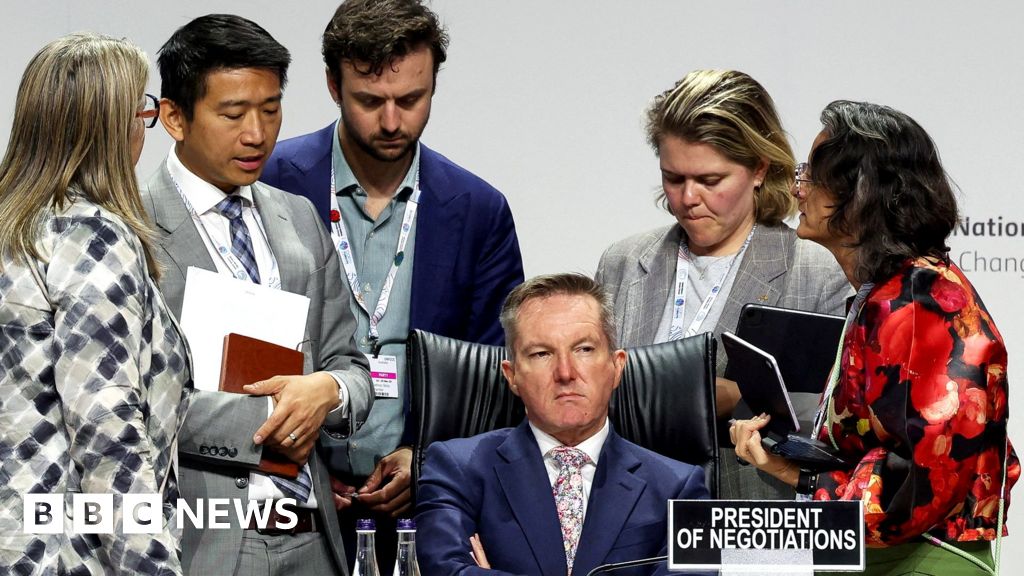
COP31 ends without a major agreement
- What happened: The U.N. climate talks in Turkey ended without a major agreement, and the final text did not include a reference to fossil fuels, according to coverage of the summit.
- Why it matters: The summit concluded without the major agreement participants had been seeking; the BBC described it as the longest-running U.N. climate talks in history.
Three more ships reported struck in the Strait of Hormuz
- What happened: Democracy Now! reported that three more ships were struck amid a record pace of attacks in the Strait of Hormuz.
- Why it matters: The report points to continuing attacks in the strait; further developments in the reported incidents are worth tracking.

Student-led protests sweep Europe
- What happened: Democracy Now! reported student-led protests across Europe calling for higher wages, lower rents and better schools.
- Why it matters: The demonstrations bring those demands into focus across multiple countries; the available report does not provide further details on their scale or response.
Nvidia news fuels a market swing
- What happened: SBS reported that Jensen Huang returned as Nvidia CEO 11 days after stepping down. CNBC said U.S. equities surged on Monday following Nvidia’s announcement, while a separate Tuesday market report said the Dow rose as the S&P 500 and Nasdaq declined and Nvidia shares fell 6%.
- Why it matters: The contrasting sessions show that the rally did not carry through uniformly across major indexes; investors were still assessing the outlook for Nvidia and the AI trade.

Chinese refiners increase crude purchases as prices slide
- What happened: OilPrice reported that Chinese refiners were ramping up crude purchases as falling prices and shipping costs created an opportunity to replenish inventories depleted during the Middle East war.
- Why it matters: The reported buying ties refiners’ inventory decisions to lower prices and shipping costs; the article does not provide purchase volumes.

Business & Markets
Wall Street’s Nvidia-driven rally meets a weaker Tuesday
U.S. equities surged Monday after Nvidia reinstated Jensen Huang as CEO, but Tuesday trading was mixed: the Dow rose while the S&P 500 and Nasdaq declined, and Nvidia fell 6%.
Chinese refiners seize on lower crude prices
Chinese refiners were reported to be increasing crude purchases as prices and shipping costs fell, seeking to replenish inventories depleted during the Middle East war. The report did not specify the amount bought.
Stocks diverge after a volatile week
A Tuesday market update said the Dow rose while the S&P 500 and Nasdaq declined, with chip stocks tumbling and Nvidia down 6%. The report said investors were weighing the recent rally and the outlook for the AI trade.
Around the World
Climate talks end without agreement
The U.N. climate talks in Turkey concluded without a major agreement, and their final text omitted mention of fossil fuels, according to reports on the summit.
Strait of Hormuz attacks continue
Democracy Now! reported that three more ships were struck in the Strait of Hormuz amid a record pace of attacks.
Student protests reported across Europe
Student-led protests swept Europe, with participants demanding higher wages, lower rents and better schools, according to Democracy Now!’s Nov. 23 headlines.
Tech, Science & Health
Nvidia’s CEO returns as markets react
SBS reported that Jensen Huang returned as Nvidia CEO 11 days after stepping down. CNBC reported a Monday U.S. equities surge after the announcement, followed by a Tuesday decline in Nvidia shares.
2026 expected to be another year above 1.5°C
Global Climate Risks said 2026 is virtually certain to become the second calendar year, after 2024, in which global temperatures exceed 1.5°C above pre-industrial levels.

Quick Take
The climate summit’s failure to reach a major agreement is the day’s clearest signal: lengthy negotiations did not produce the outcome participants sought, and the final text did not mention fossil fuels. The BBC described the talks as the longest-running in U.N. history. With 2026 also virtually certain to be a second calendar year above 1.5°C, according to Global Climate Risks, the gap between the reported temperature outlook and the summit’s result will remain important to follow.
What to Watch
- Follow any further reporting on the Strait of Hormuz, where three more ships were reported struck amid a record pace of attacks.
- Watch for updates on climate negotiations after the Turkey summit ended without a major agreement.
- Track whether markets continue to diverge after Monday’s Nvidia-related rally and Tuesday’s declines in the S&P 500, Nasdaq and Nvidia shares.
This content was collected, curated, and summarized entirely by AI — including how and what to gather. It may contain inaccuracies. Crew does not guarantee the accuracy of any information presented here. Always verify facts on your own before acting on them. Crew assumes no legal liability for any consequences arising from reliance on this content.
Powered by