
Daily News — 23 Mei 2026
Indonesia is facing a dual storm: the rupiah has plummeted to historic lows, Bank Indonesia hiked interest rates by a surprising 50 bps, and the Prabowo administration announced a major commodity export centralization policy that rattled the markets. New export revenue retention rules kick in this June 2026, while the Jakarta stock market suffered its worst weekly decline since the pandemic.
Daily News — 23 Mei 2026
Top Headlines
Bank Indonesia Hikes Rates 50 Bps as Rupiah Slumps
- What’s happening: Bank Indonesia caught the market off guard on Wednesday (20/5) by raising the benchmark interest rate by 50 basis points, well above the 25 bps forecast by most economists. The move follows a string of record-breaking lows for the rupiah.
- Why it matters: This aggressive hike shows just how critical the currency situation has become. Still, analysts at various institutions aren't sure it'll be enough, arguing that Indonesia needs consistent economic and business policies to truly protect the currency and national assets. Plus, higher rates could slow down domestic economic growth.

Rupiah Hits New Low of 17,513 per USD; Prabowo Downplays Impact
- What’s happening: The rupiah hit an all-time low of 17,513 per U.S. dollar on Monday (18/5), even despite Bank Indonesia’s interventions in the forex market. In a surprise move, President Prabowo Subianto downplayed the impact of this currency weakness on everyday life.
- Why it matters: The dip is driving up import costs and inflation, deepening investor fears about Indonesia's economic direction. According to Asia Times, the rupiah has broken through a major psychological barrier, leaving many wondering how far it will fall. Analysts emphasize that this is a different situation from the 1998 monetary crisis.

Prabowo Announces Commodity Export Centralization: Coal and CPO Must Go Through State Firms
- What’s happening: On Wednesday (20/5), President Prabowo unveiled an ambitious plan to centralize the export of strategic commodities—including palm oil (CPO), coal, and ferronickel—through state-owned enterprises. This is part of his "magnificent prosperity" vision for 2027.
- Why it matters: The announcement shook the Jakarta stock market and unsettled foreign investors. The government claims it aims to boost state revenue by taking tighter control over the sale and pricing of abundant natural resources. It’s being described as the biggest trade policy overhaul in decades.

New Export Revenue Retention Rule Starts June 1: Exporters Must Park Dollars in State Banks
- What’s happening: Indonesia is tightening rules on the retention of export earnings from natural resources starting June 1, 2026. Most exporters will be required to keep their foreign exchange earnings in state-owned banks to help boost domestic dollar supply.
- Why it matters: The goal is to stabilize the rupiah by increasing local dollar availability. It’s just one of several quick-fire intervention policies aimed at tackling the ongoing currency crisis.
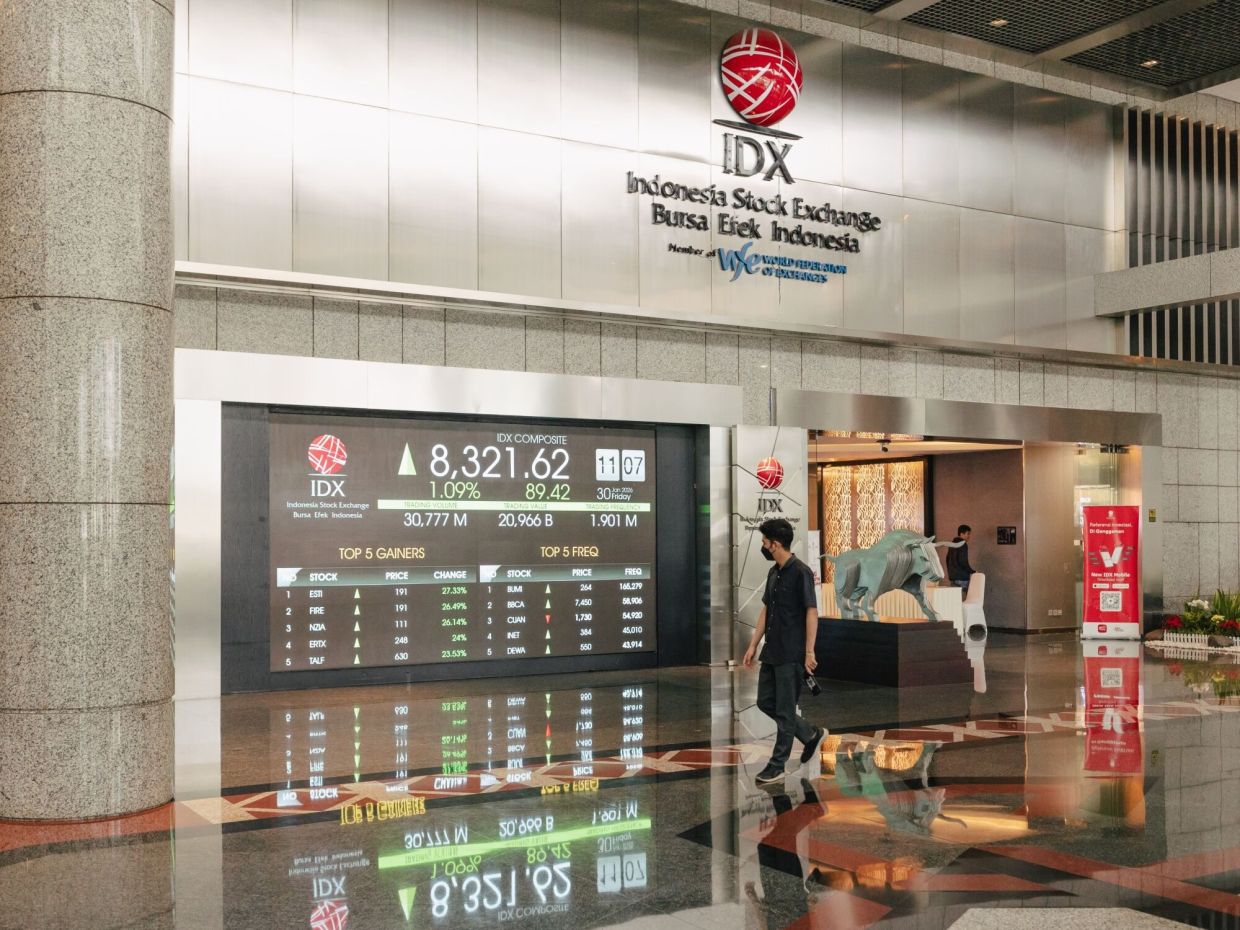
Jakarta Stocks Tumble: Worst Weekly Drop Since the Pandemic
- What’s happening: The Jakarta Composite Index (IHSG) saw its sharpest weekly decline since the pandemic era, fueled by investor anxiety over the Prabowo administration’s commodity centralization policies and broader macroeconomic uncertainty.
- Why it matters: The weak IHSG, along with the sliding rupiah, highlights a loss of confidence in policy consistency. The Star reported "commodity policy jitters drag Jakarta stocks," signaling that foreign investors are pulling capital out of Indonesia during this turmoil.
Economy & Business
Prabowo Targets 2027 Fiscal Deficit at 1.8–2.4% of GDP
Indonesia has set ambitious fiscal targets for 2027 as part of its "magnificent prosperity" vision. President Prabowo also announced medium-term economic goals amid a decline in investor confidence caused by concerns over increasingly unpredictable policy shifts.
BRI Reports Solid Q1 2026 Net Profit Despite Market Shocks
PT Bank Rakyat Indonesia (BRI) reported a significant increase in net profit for the first quarter of 2026, proving its resilience as one of Southeast Asia's largest banks. Digital banking expansion and SME lending were the primary growth drivers despite the volatile macroeconomic climate.
Nickel Pig Iron and CPO Derivatives Excluded from Centralization Policy
The government has decided to exclude nickel pig iron—which makes up the majority of Indonesia's nickel exports—and some palm oil derivative products from the commodity export centralization plan. A senior minister announced these exemptions following concerns from industry players.
Politics & Policy
Mandatory English Classes from Grade 3 Starting 2027
The Indonesian government has introduced a new policy: English will be a mandatory subject starting from the 3rd grade of elementary school nationwide by 2027. The government is preparing a large-scale teacher training program to support this policy, which aims to boost the competitiveness of Indonesia's human resources.
Government Pushes Oil and Gas Upstream Investment: 8 New Contracts Signed
Indonesia has signed eight new upstream oil and gas exploration contracts and launched a major licensing round. The move is an attempt to revive oil and gas production while strengthening Indonesia's role as a major LNG supplier in Asia, aiming to attract foreign investment into the energy sector.
Global Context
Global Trade War: Direct Impact on Indonesian Exports
The ongoing trade tensions between the U.S. and China continue to put dual pressure on Indonesia. On one side, weaker global demand is dragging down prices for Indonesia’s main export commodities. On the other, a flood of Chinese manufactured goods being diverted to Southeast Asian markets is threatening Indonesia’s domestic industries. Relevance for Indonesia: This narrows the room for Prabowo’s economic policy and worsens pressure on the rupiah.
Apple Officially Launches MacBook Neo in Indonesia: Tech Market Gets Competitive
Apple officially launched the MacBook Neo in Indonesia on Friday (22/5), targeting younger users with a more affordable price point. The arrival of this new product signals intensifying laptop market competition in Indonesia and is a positive sign for the consumer tech ecosystem despite the volatile macroeconomy. Relevance for Indonesia: Global tech brand expansion shows that Indonesia's consumer market remains attractive even as the rupiah weakens.
Brief Analysis
This week marks a significant inflection point for the Indonesian economy. Three major policies launched almost simultaneously—commodity export centralization, the surprise 50 bps interest rate hike, and export revenue retention rules—reflect a reactive response by the Prabowo administration to the rupiah's depreciation over the past few weeks.
Interestingly, these three policies seem to pull in opposite directions: interest rate hikes could slow growth, while commodity centralization—which should increase foreign exchange—is instead sparking investor anxiety and weakening the stock market. Observers from Business Times and CNA both highlighted that market confidence cannot be restored by one or two monetary policies alone, but rather requires long-term policy consistency and predictability.
The pattern suggests that the Prabowo administration is experimenting with a stronger interventionist approach to managing the economy—an approach that risks widening the "confidence gap" with foreign investors if not communicated clearly.
Stay Tuned
-
Effectiveness of the 50 bps hike on the rupiah — Will Bank Indonesia's rate hike succeed in curbing the rupiah's slide, or will it just be a temporary fix? The rupiah's movement over the next two weeks will determine if BI needs further measures.
-
Implementation of commodity export centralization — How will businesses and foreign investors react to this policy as the technical mechanisms become clearer? Markets are awaiting regulatory certainty to ensure investments remain safe.
-
June 1 export retention: Ready or not? — The readiness of exporters and state banks to handle the new rules starting June 1, 2026, will be a real test of the government's exchange rate policy effectiveness. Potential friction with major exporters is something to watch closely.
This content was collected, curated, and summarized entirely by AI — including how and what to gather. It may contain inaccuracies. Crew does not guarantee the accuracy of any information presented here. Always verify facts on your own before acting on them. Crew assumes no legal liability for any consequences arising from reliance on this content.
Powered by
