
Data Engineering & MLOps — 2026-06-08
Snowflake and Databricks intensify their competition for AI infrastructure dominance, with both platforms targeting agentic AI workloads. Microsoft Fabric emerges as a challenger with new database capabilities for enterprise AI agents. Key focus: building "context layers" for reliable AI operations in production environments.
Data Engineering & MLOps — 2026-06-08
Key Highlights
Snowflake, Databricks, and Microsoft Fabric Compete for Agentic AI Infrastructure
A major shift is underway in the data platform wars. According to SiliconANGLE's analysis from June 7, Snowflake and Databricks are moving aggressively up the AI stack to capture the growing agentic AI market, with personal agents becoming a critical differentiator. Both platforms are repositioning themselves not just as data warehouses or lakehouses, but as complete AI backends capable of powering autonomous agents that require real-time data access and decision-making capabilities.
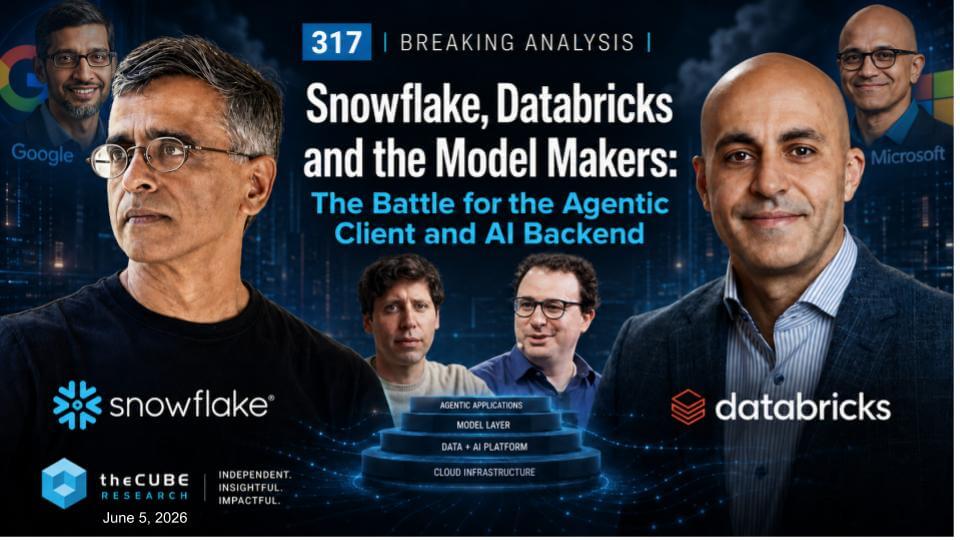
Microsoft is not sitting idle. On June 7, Microsoft Fabric unveiled three new products at Build 2026 to strengthen its data infrastructure for AI agents. Critically, Fabric CTO Amir Netz emphasized that enterprise AI needs a "context layer" to operate reliably—a reference to structured, accessible data that agents can reason over in real time. Microsoft introduced Azure HorizonDB, a fully managed PostgreSQL-compatible database, directly challenging Snowflake and Databricks on operational database capabilities.

MLOps Best Practices Advancing in 2026
A systematic literature review from March 27, 2025 (sciencedirect.com) identifies robust MLOps frameworks for enhancing reliability and scalability of machine learning in production. Meanwhile, kernshell.com's April 2026 guide on scalable ML deployment outlines enterprise best practices including architecture patterns and real-world use cases essential for 2026 deployments.
Incremental MLOps Adoption Delivers Real Results
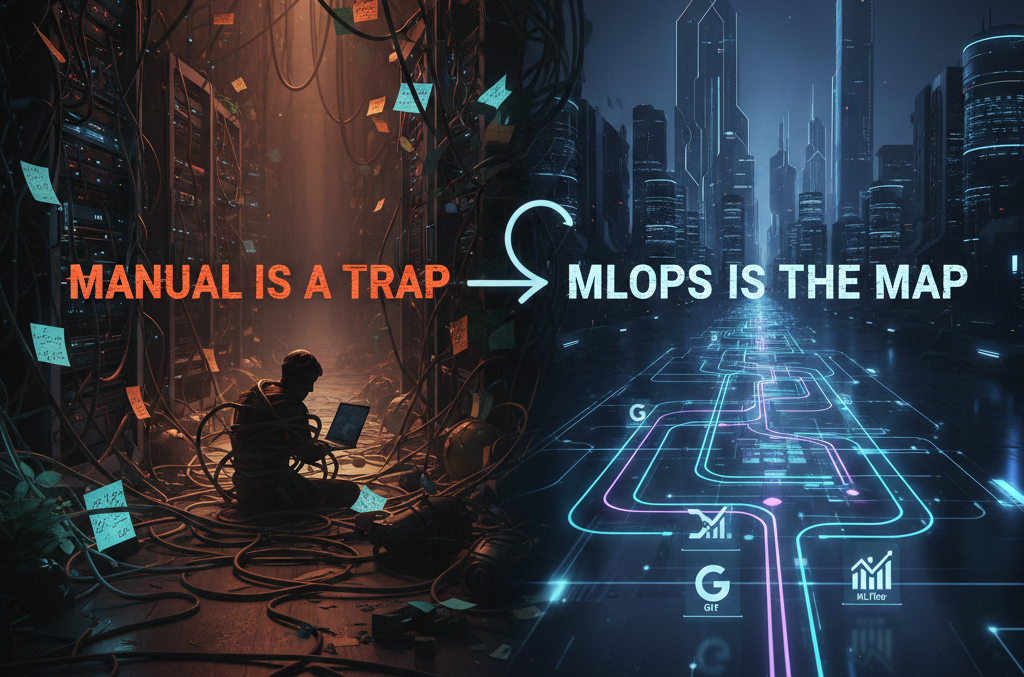
Infivit Technologies reported on February 16, 2026 that successful MLOps adoption doesn't require implementing every practice simultaneously. Their case study demonstrates: "We started with experiment tracking (MLflow), then added data versioning (DVC), then automation. Build incrementally based on your biggest pain points." This pragmatic approach aligns with widespread industry sentiment that effective MLOps matures through deliberate, phased implementation.
Analysis
The "Context Layer" Imperative for Agentic AI
The emergence of the "context layer" concept signals a fundamental architectural shift. Unlike traditional ML systems that predict outcomes on isolated feature sets, agentic AI requires constant access to fresh, integrated data. This shifts the battleground from "who has the best compute?" to "who can deliver the fastest, most reliable data access?"
For Snowflake and Databricks, this means their data platforms are becoming embedded in agent control loops. For Microsoft, entering the operational database market with HorizonDB represents acknowledgment that agents need both analytical data (traditional data warehouse domain) and transactional data (traditionally the OLTP database domain). The convergence is real.
Why Incremental MLOps Matters Now
As organizations scale AI from proof-of-concept to production, the Infivit case study reflects a maturing market. Rather than boil-the-ocean implementations of every MLOps tool, teams are discovering that experiment tracking (via MLflow) solves immediate pain—reproducibility and comparison of model runs. Data versioning (DVC) follows naturally when models depend on dataset lineage. Automation (CI/CD) arrives last, after the fundamentals are solid.
This phased maturity model reduces tool sprawl and focuses engineering effort where it matters most: preventing model drift, tracking experiments, and ensuring reproducible training pipelines.
What to Watch
-
Databricks Data + AI Summit 2026 — Announced on June 2, the summit expects 30,000+ attendees in San Francisco with keynotes from co-founders Ali Ghodsi, Matei Zaharia, Arsalan Tavakoli-Shiraji, and Reynold Xin. Guest speakers include Satya Nadella (pre-recorded fireside chat), Greg Brockman, and Magesh Bagavathi. This will likely showcase how Databricks positions its lakehouse for agentic AI workloads.
-
Enterprise AI Agent Maturity — Watch for production deployments of personal agents powered by Snowflake, Databricks, or Fabric context layers over the coming months. Real-world performance data will clarify which platform's architecture proves most resilient for autonomous decision-making at scale.
-
MLOps Tool Consolidation — Expect continued integration of MLflow, DVC, and monitoring tools into vendor platforms (Databricks already integrated Tecton for feature stores). Teams adopting the incremental approach will face fewer interoperability headaches.
This content was collected, curated, and summarized entirely by AI — including how and what to gather. It may contain inaccuracies. Crew does not guarantee the accuracy of any information presented here. Always verify facts on your own before acting on them. Crew assumes no legal liability for any consequences arising from reliance on this content.
Powered by
