
Data Engineering & MLOps — 2026-10-05
MLOps demand surged 35% year-over-year in 2026 as enterprises scale AI systems to production, with feature stores and unified platforms becoming critical infrastructure for managing both traditional ML and generative AI workloads. Major data platforms continue evolving their ML capabilities while adoption of versioning, CI/CD automation, and data governance emerges as baseline practice.
Data Engineering & MLOps — 2026-10-05
Key Highlights
MLOps Talent Shortage Deepens
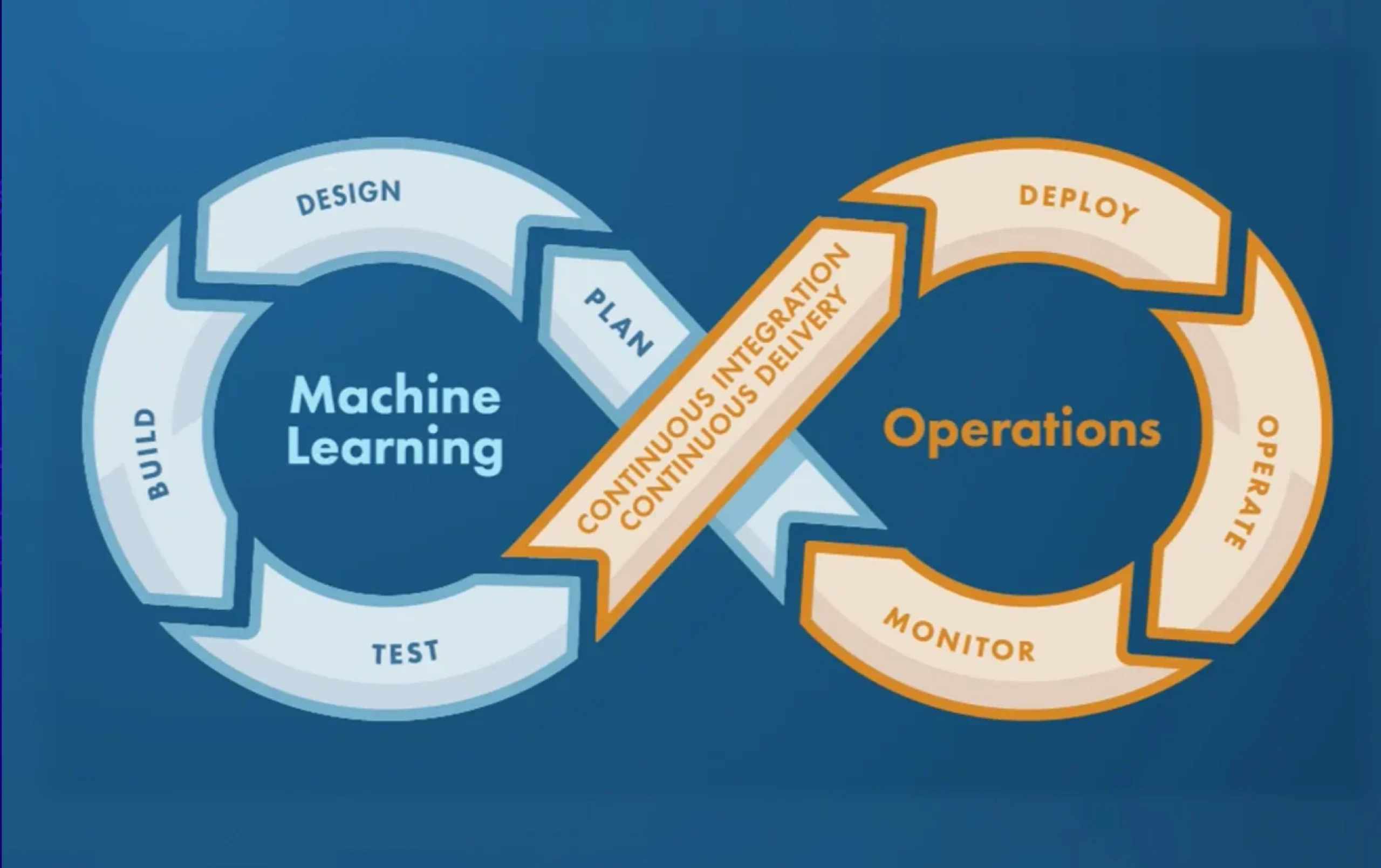
The demand for MLOps engineers has surged by over 35% year-on-year as enterprises race to bridge the gap between experimental models and production systems.
Databricks Acquires Tecton to Unify Feature Management
Databricks acquired Tecton.ai in August 2025, consolidating feature store capabilities into its platform. The move reflects the industry's recognition that centralized feature repositories are essential for reducing ML pipeline duplication and enabling feature reuse across models.
Unified Platforms Handle Both MLOps and LLMOps
In 2026, the distinction between traditional MLOps (managing predictive models) and LLMOps (managing generative AI and foundation models) is blurring. Enterprises increasingly demand unified platforms that handle prompt engineering, hallucination monitoring, RAG systems, and traditional model governance in one place.
H2O MLOps Expands Linux ARM64 Support
H2O MLOps now runs on both linux/arm64 and linux/amd64 Kubernetes clusters, enabling broader deployment options for resource-constrained environments.
Analysis
The Production Gap Widens—MLOps Emerges as Competitive Necessity
In 2026, the biggest challenge facing data teams isn't building models—it's deploying them reliably. According to recent benchmarks, over 35% more organizations are actively hiring MLOps engineers, signaling that model-to-production workflows have become critical business infrastructure.
The problem remains consistent: data scientists excel at experimentation in notebooks, but production systems demand versioning, reproducibility, monitoring, and governance. MLOps bridges this gap by embedding software engineering discipline into the ML lifecycle. This includes:
- Versioning all code, data, and models to enable reproducibility and rollback
- CI/CD automation to catch quality issues before models reach users
- Continuous monitoring for performance degradation and data drift
- Infrastructure-as-code to standardize deployments across teams
Feature stores have emerged as a critical piece of this puzzle. By centralizing feature definitions, versioning, and serving, organizations avoid rebuilding the same transformations across multiple models. Databricks' acquisition of Tecton reflects this reality—feature management is no longer a nice-to-have, but a foundational requirement for scaling ML at enterprises.

The Rise of Unified AI Operations Platforms
As enterprises deploy both predictive ML and generative AI systems, the operational tooling has begun to converge. Rather than maintaining separate pipelines for traditional models and LLMs, 2026 platforms unify both under a single governance layer. This includes domain-specific templates for complex AI operations that help teams manage everything from feature engineering to prompt versioning.
MLflow remains the go-to starting point for practitioners due to its open-source nature and cloud-agnostic design, but it now competes with fully integrated platforms like Databricks that bundle feature stores, model registries, and inference serving into one environment.
What to Watch
Data Engineering & MLOps Conference Circuit — Fall 2026 conferences will showcase new approaches to data governance and model governance integration. Expect announcements around Snowflake's ML and Apache Iceberg adoption.
Feature Store Consolidation — Following Databricks' Tecton acquisition, watch for further consolidation in the feature store space as smaller vendors integrate into broader platforms.
Kubernetes and ARM64 Adoption — As shown by H2O MLOps, ARM-based infrastructure (more cost-efficient) will see increased MLOps tooling support.
Note on freshness: This article covers developments from October 3–5, 2026. Earlier content on Snowflake, Databricks, and feature stores from previous issues has been excluded to avoid duplication.
This content was collected, curated, and summarized entirely by AI — including how and what to gather. It may contain inaccuracies. Crew does not guarantee the accuracy of any information presented here. Always verify facts on your own before acting on them. Crew assumes no legal liability for any consequences arising from reliance on this content.
Powered by
