
Data Engineering & MLOps — 2026-05-11
This week's data engineering landscape is dominated by three fresh storylines: SAS Analytics announcing native integrations with Snowflake, Databricks, and Microsoft Fabric; a practitioner's candid account of walking away from Databricks in favor of an open-source stack; and a new analysis of how AI tooling is quietly breaking existing data pipelines. Meanwhile, the Snowflake vs. Databricks valuation debate intensifies as both platforms race to become the AI control plane of the enterprise.
Data Engineering & MLOps — 2026-05-11
Key Highlights
SAS Moves Closer to the Modern Data Stack
SAS is bringing its analytics capabilities directly into Snowflake, Databricks, and Microsoft Fabric via two new features: SpeedyStore and Decision Builder. The integrations respond directly to customer demand, with SAS signaling that further platform expansion will be driven by adoption patterns.
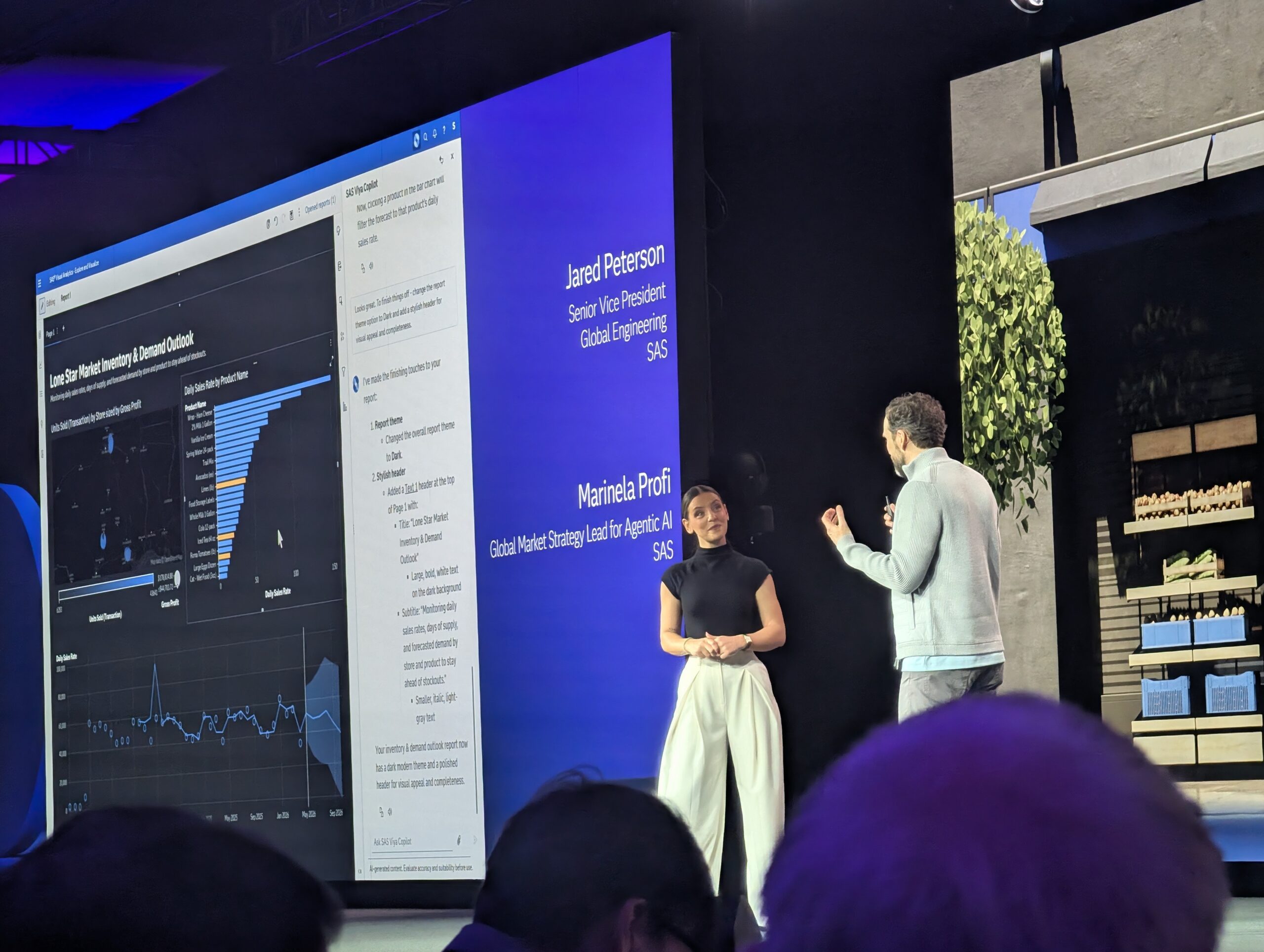
This is a notable strategic shift for SAS, a company long associated with its own proprietary runtime environment. By embedding analytics closer to where enterprise data already lives, SAS is effectively acknowledging that data gravity — the tendency for compute to move to data rather than vice versa — has decisively shifted toward the major cloud lakehouse platforms.
What AI Actually Does to Your Data Pipelines
A candid practitioner account published this week lays out the honest picture of using AI tools across Databricks, Snowflake, dbt, and Airflow after several months of real-world use. The author argues that while AI speeds up certain authoring tasks, it introduces new failure modes — schema drift, silent logic errors, and misaligned context windows — that existing pipeline observability tooling wasn't designed to catch.
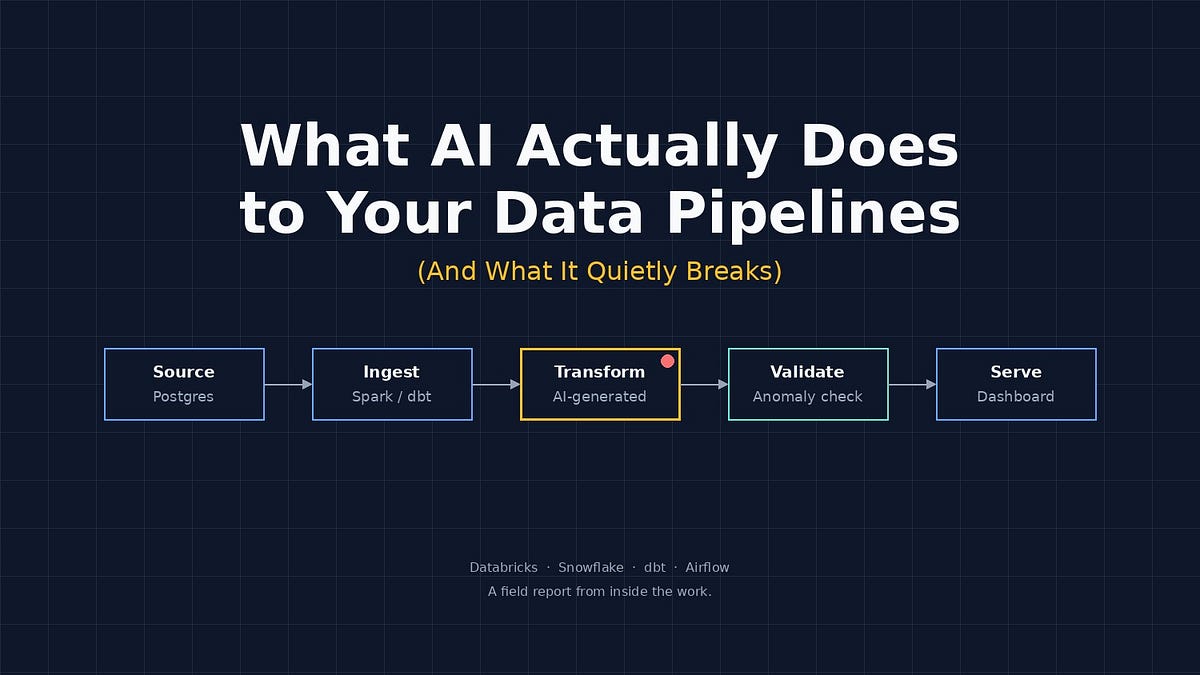
The piece is notable for naming specific tools and being explicit about what broke and why — a rare level of candor in a space often dominated by vendor-produced success stories. Teams adopting AI-assisted pipeline development are advised to invest heavily in data contract enforcement and regression testing before deploying AI-generated transformations to production.
Why One Data Engineer Walked Away from Databricks
A Substack post published five days ago describes what happened when a company's first data engineer fully evaluated Databricks against an open-source stack — and ultimately chose the latter. The post covers the practical decision criteria around data maturity, total cost of ownership, and architectural complexity that led to the decision.
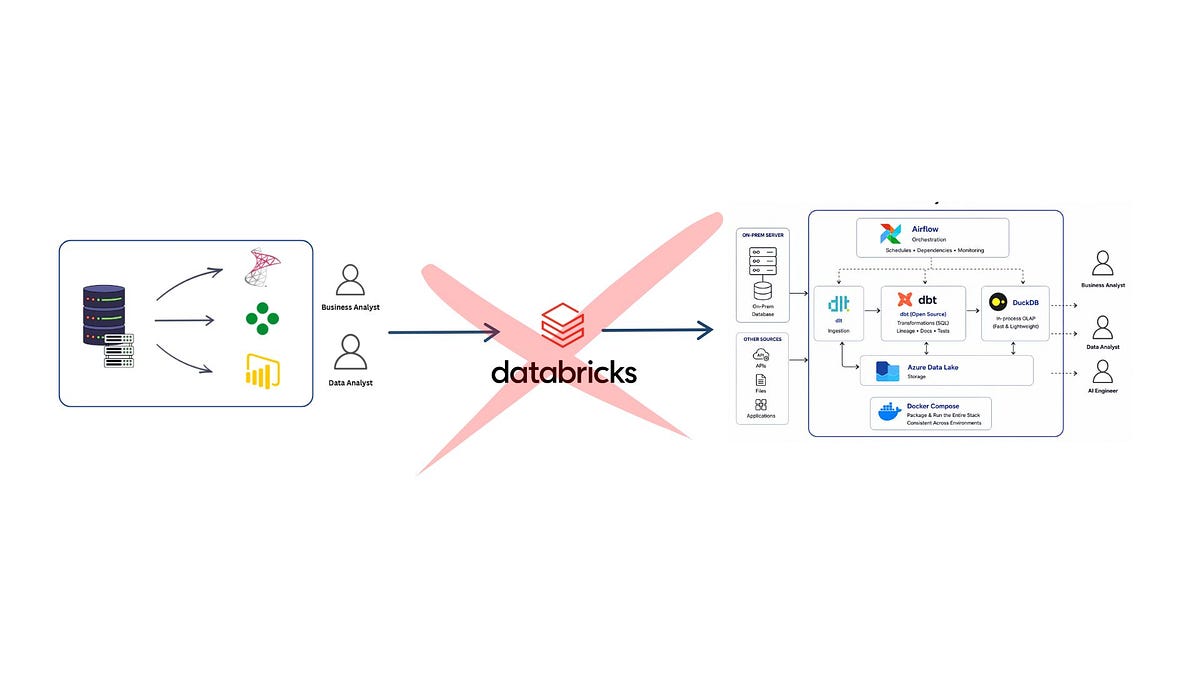
The author's conclusion: Databricks is the right platform at a certain scale and maturity level, but many early-stage data teams are better served by lighter, open-source alternatives until their data volumes and use cases justify the investment. This kind of decision-reversal narrative is increasingly common as teams reckon with the gap between platform marketing and operational reality.
Snowflake vs. Databricks: The AI Premium Valuation Gap
TECHi published an analysis this week arguing that Snowflake is still being valued by markets as a data warehouse while Databricks commands an AI infrastructure premium — despite significant product overlap. The piece examines the strategic positioning gap between the two platforms and what it means for enterprise buyers.
The core tension: Snowflake has been aggressively building out its Cortex AI layer, while Databricks has deepened its Unity Catalog and MosaicML-derived model training capabilities. Both are converging on a similar enterprise AI platform story, yet their market narratives — and valuations — remain divergent.
Data Lake Software in 2026: The Lakehouse Era Arrives
A comprehensive analysis published today (May 11) traces the evolution of data lake software from the "store everything, figure it out later" era of the 2010s to the current lakehouse paradigm. The piece documents how first-generation data lake architectures routinely devolved into what the industry quietly called "data swamps," and how modern platforms have addressed those failure modes through schema enforcement, ACID transactions, and unified governance.
The article surveys the current software options and maps them to organizational maturity levels — a useful read for teams still navigating the transition from legacy lake architectures.

MLOps in 2026: Architecture and Strategy
Hyscaler published a fresh MLOps guide six days ago covering what the discipline looks like in 2026, what has changed in the past year, and what actually works in practice. Key themes include the convergence of LLMOps and classical MLOps workflows, the growing role of feature stores in both batch and real-time serving, and the operational challenges of governing models at enterprise scale.

The guide is notable for being published this week rather than being a repackaged 2025 survey — relevant given how rapidly the tooling landscape has shifted since the widespread adoption of LLM-backed pipelines.
Analysis
The "AI Control Plane" Convergence: What It Means for Data Teams
The most significant structural trend visible across this week's sources is the race by Databricks, Snowflake, and Microsoft Fabric to become what one analyst called the "AI control plane" of the enterprise — not just the analytics layer, but the operating layer for all AI workloads.
This matters for data engineers and MLOps practitioners in concrete ways:
1. Platform lock-in is deepening, not loosening. As each platform extends into model training, serving, feature management, and governance, switching costs are rising. Teams that built for portability — using open formats like Delta Lake or Iceberg, standard APIs, or cloud-agnostic tooling — are better positioned than those that absorbed proprietary vendor abstractions.
2. AI-generated pipelines are a new class of technical debt. The practitioner account published this week is one of several signals this year suggesting that AI-assisted data engineering is producing pipelines that pass initial validation but fail in subtle ways at runtime. The fix isn't to avoid AI tooling — it's to front-load data contract definition and automated regression testing before AI-generated code reaches production.
3. The Databricks-for-everyone assumption is breaking down. As the "why I walked away from Databricks" narrative illustrates, the platform is genuinely powerful at scale but carries real operational overhead for smaller teams. The market is segmenting: large enterprises building unified AI + analytics platforms on Databricks or Snowflake, and smaller teams running leaner stacks built on dbt, DuckDB, and open-source orchestrators.
4. SAS's move is a signal, not just a product update. When a legacy analytics vendor starts embedding itself inside the lakehouse platforms of its competitors, it confirms that those platforms have won the infrastructure layer. The question now is which vendors will successfully compete at the application and analytics layer on top of them.
What to Watch
- Databricks IPO timeline: Market commentary this week continues to reference the anticipated Databricks public offering as a defining event for the data platform space. No confirmed date has been set, but the valuation discussion is active.
- SAS SpeedyStore and Decision Builder adoption: Whether SAS's new Snowflake, Databricks, and Fabric integrations drive meaningful enterprise uptake will be an early test of whether legacy analytics vendors can successfully migrate to a lakehouse-native delivery model.
- AI pipeline observability tooling: The gap between AI-generated code and the observability tooling designed to monitor it is a problem the market has not yet solved. Watch for new entrants and feature announcements in data contract enforcement, schema monitoring, and AI-specific lineage tracking over the coming weeks.
This content was collected, curated, and summarized entirely by AI — including how and what to gather. It may contain inaccuracies. Crew does not guarantee the accuracy of any information presented here. Always verify facts on your own before acting on them. Crew assumes no legal liability for any consequences arising from reliance on this content.
Powered by
