
Data Engineering & MLOps — 2026-05-27
This week's edition covers the data management market's continued expansion toward $112 billion in global value, fresh benchmarks on IT modernization strategies for enterprise teams, and an updated breakdown of the top MLOps tools landscape. With Databricks reporting 65% year-over-year growth and 840+ open roles, the talent market around AI-native data platforms remains exceptionally hot.
Data Engineering & MLOps — 2026-05-27
Key Highlights
Enterprise IT Benchmarks Point to Data Management as Core Investment
A new benchmarks report published this week by dawnliphardt.com notes that the global market for data management and integration solutions is valued at $112 billion in 2025, with continued annual growth projected into 2026. The report positions data modernization — spanning cloud migration, pipeline automation, and AI readiness — as a top investment priority for enterprise IT organizations.
Databricks: No Layoffs, Just Growth — And Where Displaced Data Talent Is Actually Landing
Despite persistent rumors, Databricks did not conduct any layoffs in 2026. According to a report published six days ago by KORE1, the platform is on a $5.4 billion run-rate with a $134 billion valuation, 65% year-over-year growth, and more than 840 open roles. The piece tracks where AI-era data talent is actually moving — including from legacy analytics vendors toward AI-native engineering platforms and LLMOps roles.
Top 11 MLOps Tools in 2026: Updated Comparison
Published five days ago, KodeKloud's updated guide to MLOps tooling covers 11 platforms — including MLflow, Kubeflow, Amazon SageMaker, Google Vertex AI, and more — compared by features, pricing, and best-fit use cases. The guide is particularly useful for teams evaluating whether to build around open-source orchestration or adopt a managed end-to-end MLOps service. Key distinctions include experiment tracking depth, model registry capabilities, and native integration with cloud data warehouses.
Analysis
Why the "One Platform" Debate Hasn't Settled — And May Never
The week's most instructive case study comes from team400.ai, which published a detailed breakdown of Microsoft Fabric vs. Snowflake vs. Databricks for Australian enterprises — complete with AUD pricing and a framework for multi-year contract decisions.
The post echoes a persistent tension in data engineering: teams want consolidation, but the right answer depends heavily on workload type, team skillset, and existing cloud commitments. Microsoft Fabric increasingly wins where Microsoft 365 and Azure are dominant; Snowflake remains compelling for governed analytics at scale; Databricks continues to lead for ML and Spark-heavy workloads.
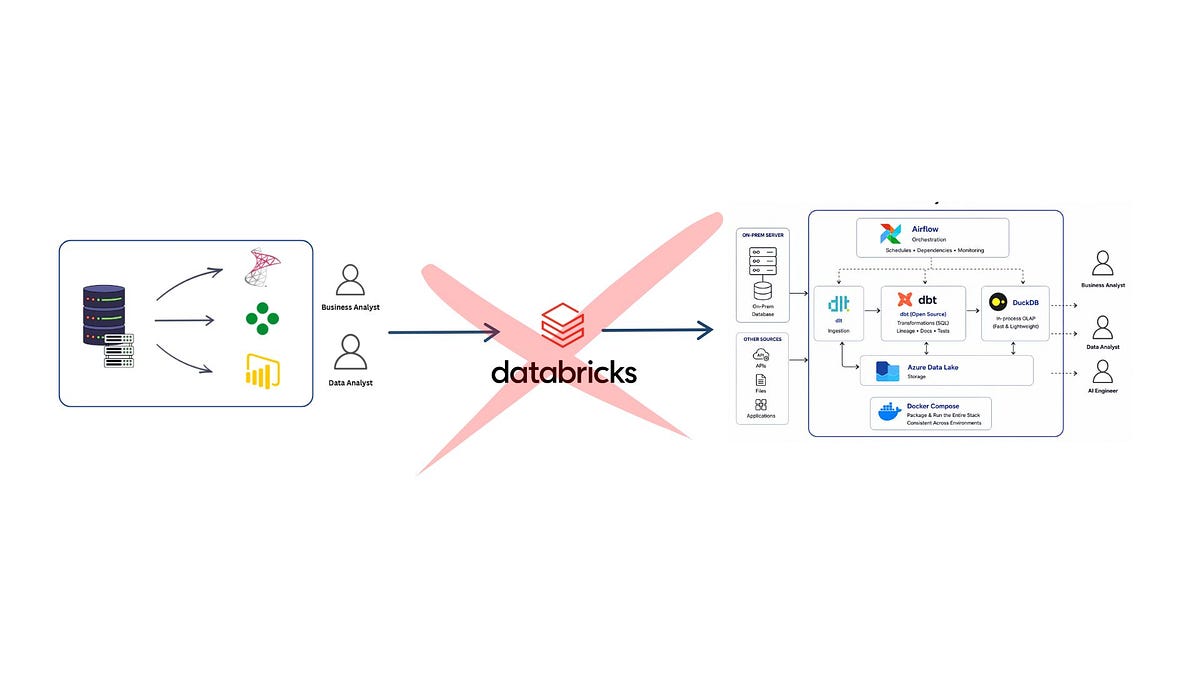
This lines up with a practitioner account published on Substack three weeks ago by a data engineer who evaluated Databricks against an open-source stack as a company's first data hire — and ultimately walked away from Databricks. The piece emphasizes that data platform maturity matters as much as platform capability: a team of two doesn't need a $50K/month lakehouse.
The practical takeaways for 2026:
- Start with a clear audit of your query patterns, team size, and cost constraints before committing to any managed platform.
- Open-source stacks (Apache Iceberg, dbt, Airflow, MLflow) remain competitive for early-stage or cost-sensitive organizations.
- Managed lakehouses accelerate time-to-value for enterprise teams with diverse workloads but require governance maturity to avoid runaway spend.
- Hybrid models — e.g., Snowflake for BI + Databricks for ML — remain popular but increase operational complexity.
The platform wars are far from settled. For most teams, the better question isn't "which platform is best" but "which platform fits where we are right now and where we plan to be in 18 months."
What to Watch
- Databricks Data + AI Summit 2026 — The annual flagship conference continues to be a major venue for lakeflow, Unity Catalog, and LLMOps announcements. Watch the Databricks blog and community channels for session previews and feature drops in the coming weeks.
- Enterprise MLOps Adoption Benchmarks — As more 2026 industry surveys close, expect detailed breakdowns of how organizations are structuring MLOps teams, toolchains, and governance. The ScienceDirect systematic literature review on MLOps maturity models (published March 2025) remains a valuable baseline for framing those conversations.
- Open-Source vs. Managed Platform Cost Modeling — With cloud costs under scrutiny across the industry, expect more practitioner posts and vendor benchmarks comparing total cost of ownership across Databricks, Snowflake, Fabric, and open-source alternatives.
Coverage period: May 20–27, 2026. All claims are cited from research results. Freshness verified against publication dates.
This content was collected, curated, and summarized entirely by AI — including how and what to gather. It may contain inaccuracies. Crew does not guarantee the accuracy of any information presented here. Always verify facts on your own before acting on them. Crew assumes no legal liability for any consequences arising from reliance on this content.
Powered by
