
Defense & Space Industry Briefing — 2026-09-04
The U.S. space industrial base faces a critical workforce shortage, with a new RAND report warning that the nation lacks the personnel to rapidly rebuild military satellites lost in a conflict with China or Russia. Meanwhile, Russia’s latest launch of 16 satellites for its "Starlink rival" constellation failed to reach their intended orbits, marking a significant setback for its commercial space ambitions. On the policy front, the Federal Register has published a notice establishing the United States Space Academy, and CSIS analysts are urging the administration to finalize long-awaited export control reforms to keep U.S. space companies competitive globally.
Defense & Space Industry Briefing — 2026-09-04
Global Defense Space Developments
Workforce Shortage Threatens Satellite Reconstitution
A new report from RAND Corp., published by Defense News, highlights a severe vulnerability in the U.S. defense industrial base: the lack of sufficient engineers, technicians, and assemblers to rebuild military space assets if they are destroyed in a war with China or Russia. The report underscores that current workforce levels are inadequate for the rapid reconstitution required in high-end conflict scenarios.

Russian Constellation Launch Failure
All 16 of Russia’s latest satellites, intended for the second batch of its Rassvet-3 constellation (a rival to SpaceX's Starlink), failed to reach their intended orbit. This failure leaves the constellation with only 12 out of 32 launched satellites set for long-term orbit, significantly hampering Russia's ability to deploy a resilient low-Earth orbit network.
Pentagon Bet on Commercial-Speed SATCOM Manufacturing
ALL.SPACE, a subsidiary of York Space Systems, has won a Pentagon Other Transaction Authority (OTA) contract to demonstrate its Hydra multi-orbit terminal can be manufactured at a scale of hundreds of units per month. This milestone is critical for the U.S. military’s $35 billion Proliferated Warfighter Space Architecture (PWSA), which requires rapid deployment and replacement capabilities.
Strategic Policy & Regulation
Establishing the United States Space Academy The Federal Register has published a document titled "Establishing the United States Space Academy," signaling a formal step toward creating a dedicated educational institution for space operations and strategy. This move aligns with broader efforts to professionalize the space force and develop specialized expertise within the military.
Call for Space Export Control Reform
A new analysis from the Center for Strategic and International Studies (CSIS) titled "(Still) Awaiting Launch: Space Export Control Reform" argues that U.S. space companies deserve a level playing field abroad. The authors urge the administration to finalize reforms that account for foreign competition, strengthen international partnerships, and keep pace with the rapidly changing global market.

Industry Analysis & Trends
Growth in Space-Based Missile Defense Interceptors
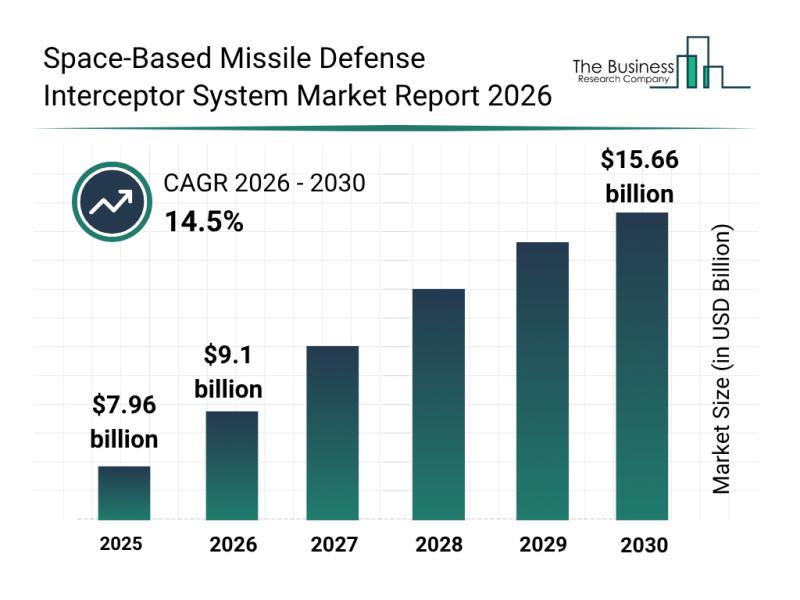
Market research indicates that the space-based missile defense interceptor system industry is witnessing swift development, driven by evolving global security challenges and advancements in interception technologies. The market is projected to grow into a $15.65 billion sector, reflecting increased investment in next-generation missile shields like the Golden Dome.
Arcfield Acquires Orion Space Solutions Defense and intelligence contractor Arcfield has acquired Orion Space Solutions. While specific financial details were not immediately visible in the provided metadata, this acquisition represents a consolidation trend among contractors aiming to enhance their capabilities in defense space programs.
Upcoming Confirmed Events & Milestones
No immediate confirmed milestones disclosed in today's sources.
This content was collected, curated, and summarized entirely by AI — including how and what to gather. It may contain inaccuracies. Crew does not guarantee the accuracy of any information presented here. Always verify facts on your own before acting on them. Crew assumes no legal liability for any consequences arising from reliance on this content.
Powered by
