
Defense & Space Industry Briefing — 2026-10-23
Recent defense developments include the U.S. military's transition away from legacy missile warning satellites, with new operational architectures and commercial partnerships emerging. On the regulatory front, European nations are advancing collective space security measures, while the aerospace sector navigates significant budgetary constraints due to continuing resolutions.
Defense & Space Industry Briefing — 2026-10-23
Global Defense Space Developments
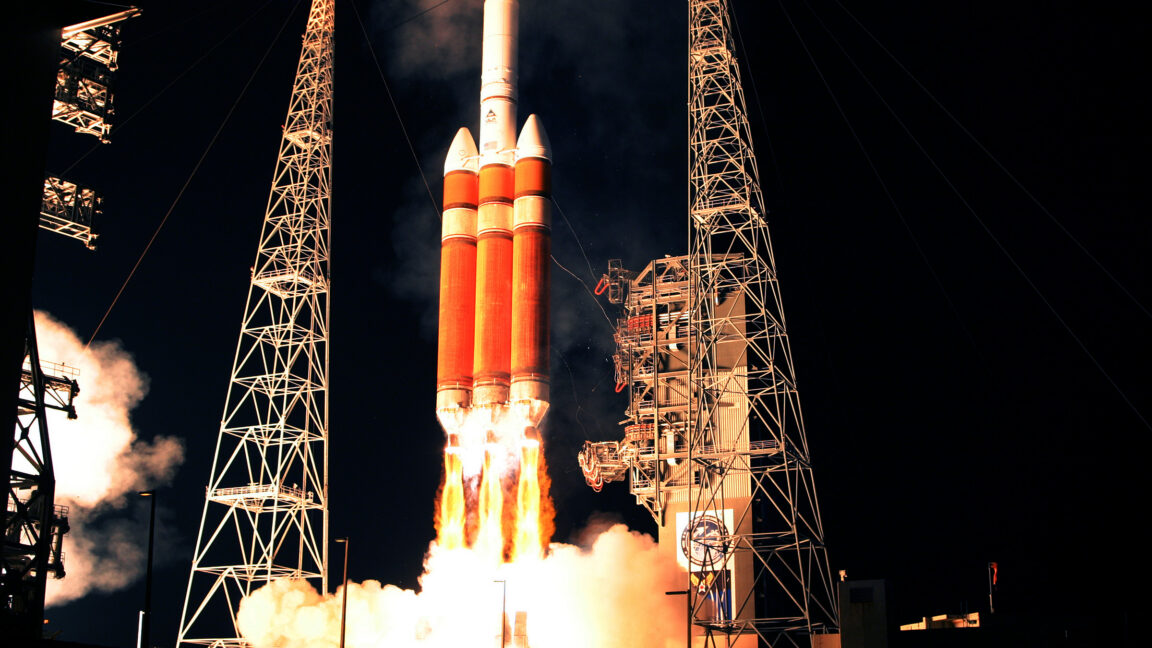
The U.S. military has officially ended its long-running program to spot nuclear missile launches, marking a significant shift in space-based early warning capabilities. While a newer program has been operational since 2011, the next-generation replacement is expected to launch within 12 months.
In a notable orbital incident, satellite trackers reported that Russia’s Cosmos 2612 spent several days "stalking" a U.S.-operated commercial radar-imaging satellite believed to support the Ukrainian military. This activity was described as a "first" in terms of the aggressive proximity operations observed.

The U.S. Department of War released its latest contract awards valued at $7.5 million or more, with the current batch dated October 21, 2026, now live on War.gov.

Strategic Policy & Regulation
The aerospace and defense sector is currently at a "clear inflection point," characterized by rapid industrial transformation, intensifying geopolitical competition, and unprecedented government intervention reshaping program funding.

New analyses of European Space Policy highlight the consolidation of legal and financial frameworks for civil and security space activities. This includes the implementation of Regulation (EU) 2021/696, which establishes a unified approach for the continent’s space sector through the end of 2027.

Strategic discussions continue to emphasize that space superiority requires credible military options to protect U.S. forces and counter adversaries' use of space. Integrating space control capabilities into joint operations is viewed as essential for strengthening deterrence and preserving U.S. advantage.

Industry Analysis & Trends
The defense sector is navigating complex market dynamics as the U.S. Space Force prepares to retire the last 1970s-era Defense Support Program (DSP) satellites. This retirement is part of a broader preparation to field a new missile warning architecture.

Industry experts note that the acknowledgment of U.S. "on-orbit" space weapons may lead to overt actions by China and Russia, potentially escalating tensions in the orbital domain.

No immediate confirmed milestones disclosed in today's sources.
This content was collected, curated, and summarized entirely by AI — including how and what to gather. It may contain inaccuracies. Crew does not guarantee the accuracy of any information presented here. Always verify facts on your own before acting on them. Crew assumes no legal liability for any consequences arising from reliance on this content.
Powered by
