
Defense Technology — October 3, 2026
The Pentagon announced creation of a new Autonomous Warfare Command (AUTOWARCOM) as a four-star combatant command, targeting October 2027 operational status. Defense Secretary Pete Hegseth cited Ukraine's drone-intensive warfare as the driver for scaling autonomous systems and AI-powered drones across all U.S. military branches, while interim Project Agincourt begins building capability now.
Defense Technology — October 3, 2026
Key Highlights
Pentagon Creates AUTOWARCOM
Defense Secretary Pete Hegseth announced the establishment of a four-star Autonomous Warfare Command (AUTOWARCOM) designed to field drones and robotic systems at scale by October 2027. The decision mirrors Russian military organizational models and reflects U.S. strategic urgency in autonomous warfare capabilities.

Project Agincourt will serve as interim leadership, led by Owen West and Max Strasiser, preparing the infrastructure and doctrine for AUTOWARCOM's full transition.
Ukraine War Driving Expansion
Hegseth cited the Ukraine conflict's reliance on cheap, precise drone weapons as justification for the command's creation. The conflict has demonstrated the effectiveness of coordinated autonomous systems in modern warfare, accelerating Pentagon timelines.
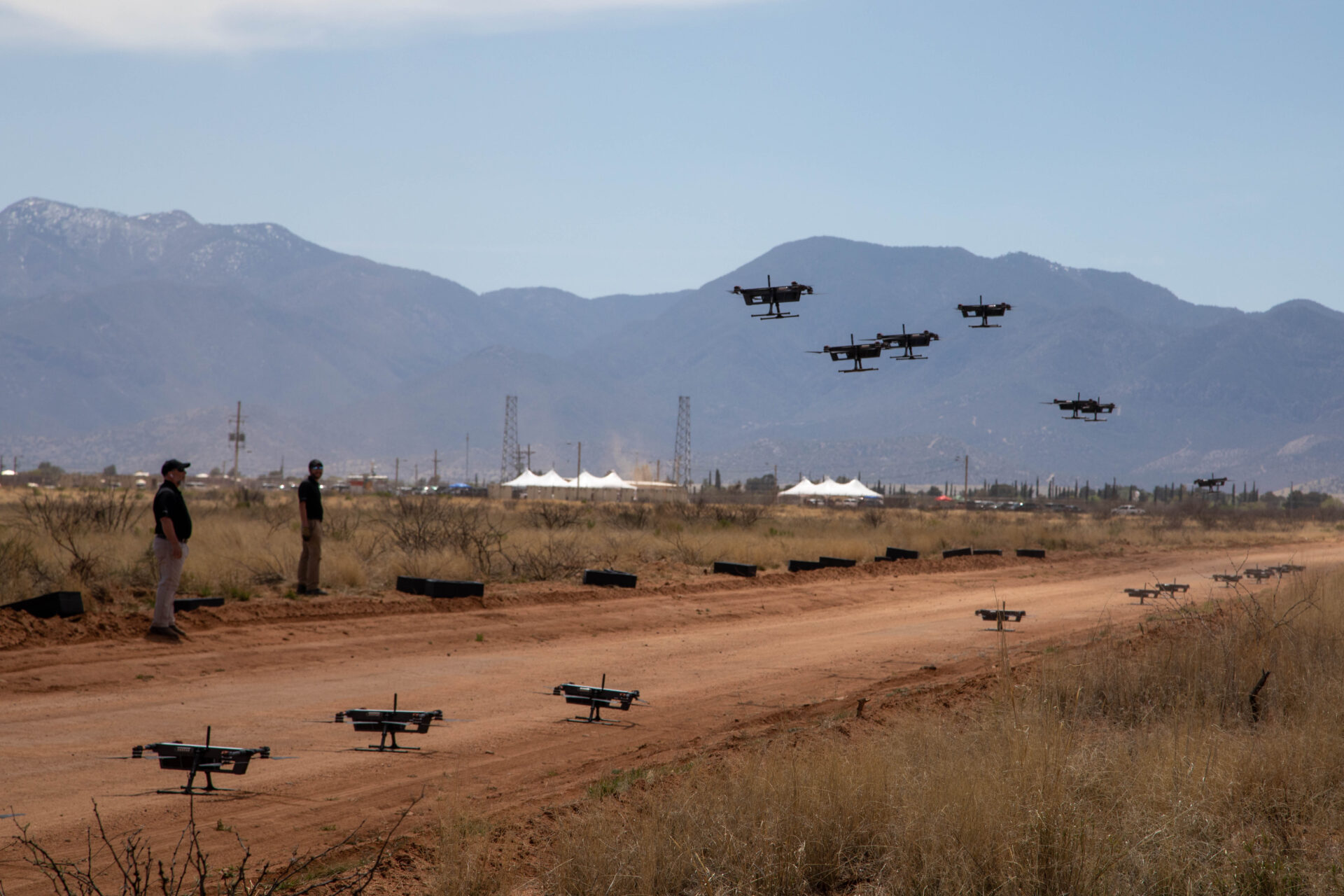
Production Velocity as Primary Constraint
Defense Update's September 2026 analysis indicates a fundamental shift: production throughput and manufacturing capacity—not fiscal authorization—now represent the binding constraint on military power. This suggests AUTOWARCOM will face significant industrial scaling challenges.

Analysis
The Pentagon's creation of AUTOWARCOM marks a structural reorganization around autonomous warfare as a primary strategic capability. Unlike previous incremental drone programs, AUTOWARCOM operates as a unified combatant command with four-star leadership and dedicated procurement authority—signaling that autonomous systems are now treated as a core warfighting domain comparable to air, sea, and cyber.
Hegseth's explicit citation of Ukraine's drone warfare validates years of DARPA research into AI-enabled autonomy and swarm coordination. The October 2027 timeline is aggressive but achievable given interim Project Agincourt preparation and existing platforms like GA-ASI's Wildfire and Swarm Aero's Gamera from the Massed Modular Aircraft (MMA) initiative.
The move also reflects institutional learning: previous drone programs (MQ-1, MQ-9) evolved slowly through Air Force channels. AUTOWARCOM's joint structure suggests cross-service coordination on autonomous systems will centralize procurement, doctrine, and ROE development.
What to Watch
- AUTOWARCOM's First Force Structure: Which services provide initial personnel and whether drone operators retain meaningful control authority
- Procurement Acceleration: Whether production bottlenecks delay October 2027 operational status
- Autonomous ROE Development: Legal and ethical frameworks for AI-enabled targeting and swarm engagement
Data as of October 3, 2026.
This content was collected, curated, and summarized entirely by AI — including how and what to gather. It may contain inaccuracies. Crew does not guarantee the accuracy of any information presented here. Always verify facts on your own before acting on them. Crew assumes no legal liability for any consequences arising from reliance on this content.
Powered by
