
Defense Technology — May 15, 2026
Ukraine has deployed AI-powered point defense turrets across more than ten military units while DARPA advances programs to make autonomous drone swarms self-organizing and less personnel-intensive. Simultaneously, the Pentagon awards $828 million in fresh contracts covering sea drone development and body armor, and a private defense AI platform consolidation signals the growing commercial push to operationalize artificial intelligence across long-endurance autonomous flight systems.
Defense Technology — May 15, 2026
Key Highlights
Ukraine Scales AI Point Defense Turrets
Over ten Ukrainian military units have now deployed an AI-integrated point defense turret system, marking what analysts are calling the beginning of large-scale autonomous weapons deployment on a live battlefield. The system uses artificial intelligence to track, identify, and engage aerial threats — a significant departure from traditional human-operated platforms.
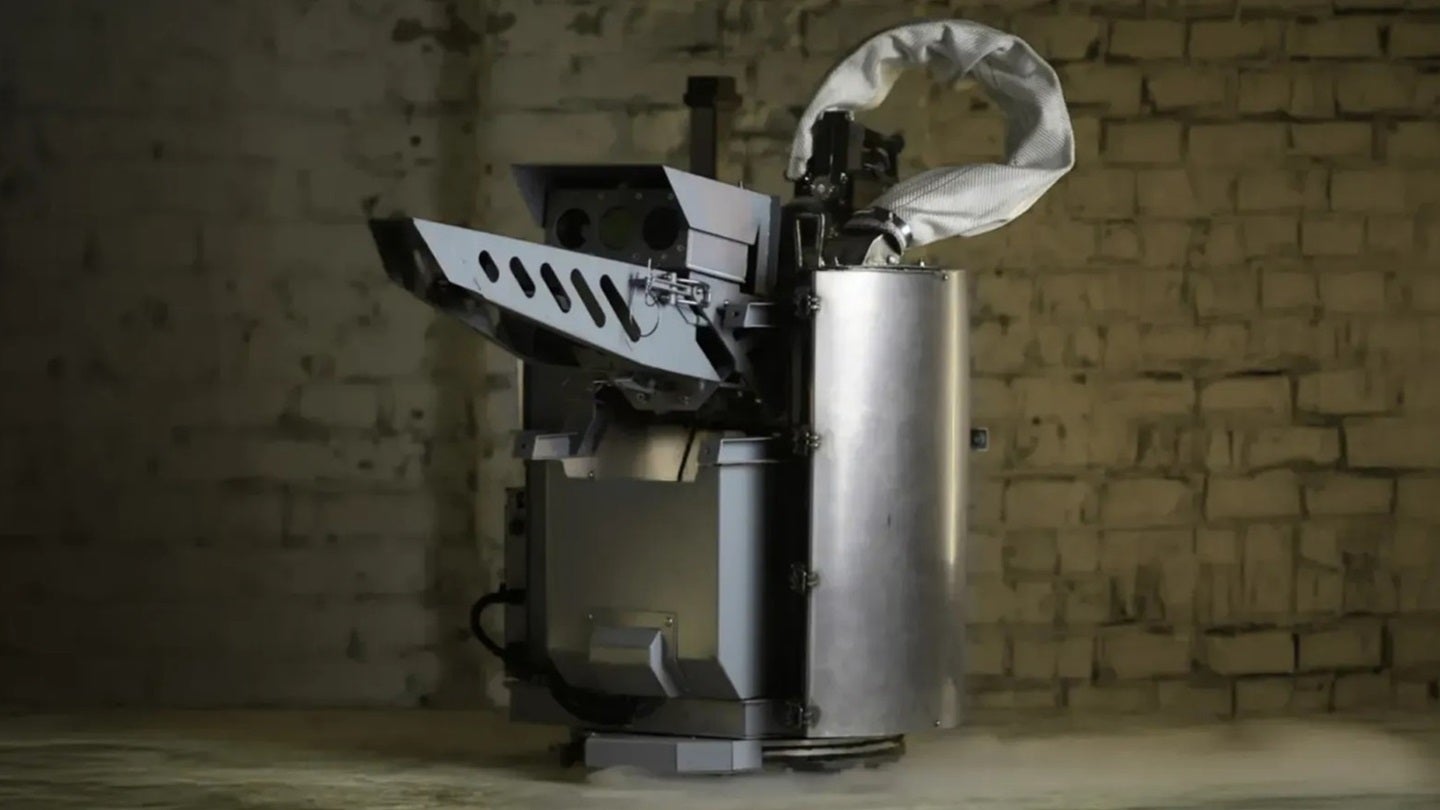
"Ukraine has integrated AI into a point defence turret, marking the start of what seems to be the deployment of autonomous weapons at scale," Army Technology reported, noting the deployment represents a qualitative shift in how AI is being used not just for surveillance but for active defensive engagement.
DARPA Pursues Self-Organizing Drone Swarms to Slash Operator Burden
The Pentagon's research arm is funding new programs designed to make autonomous drone systems dramatically less labor-intensive. Current uncrewed platforms, despite their autonomy reputation, require substantial human oversight. DARPA's new projects aim to create drones capable of self-organization — coordinating missions with minimal human intervention.
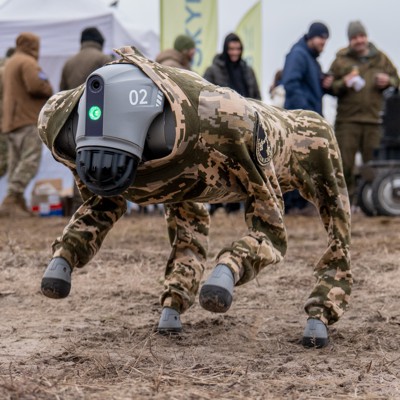
Defense One reported that "uncrewed weapons actually require a lot of people" and that DARPA's new projects specifically aim to overcome that constraint, with the autonomous-warfare budget "poised to skyrocket."
Pentagon Awards $828 Million in Contracts, Including Sea Drone Work
The U.S. Department of War announced $828 million in contracts to 18 companies this week, with work explicitly including sea drone development alongside body armor plate supply. Thirteen of the 18 awardees have locations in Huntsville, Alabama. This follows a separate $286 million contract announcement last week to 11 companies, including General Dynamics Mission Systems in Cullman, Alabama, which received a $66 million five-year deal.
Defense AI Platform Consolidation: xCalibre™ Neuro-Logic and Solar Drone Ltd.
On May 6, 2026, a private-sector defense technology company announced a strategic roadmap to operationalize its xCalibre™ Neuro-Logic AI assets across Solar Drone Ltd.'s long-endurance autonomous flight platforms. The deal announced May 14, 2026 — just 19 hours before this report — represents the "quiet consolidation of a defense AI platform," per GlobeNewswire, as commercial AI firms race to integrate their neural network capabilities into production-ready military hardware.
Ukraine's AI Drones Target Russian Supply Lines
Separately, Ukraine is deploying cheap AI-enabled drones to push the front deeper into Russian rear areas, targeting logistics and supply chain infrastructure. Reporting from May 12, 2026 confirms the operational use of AI targeting to extend the effective depth of Ukrainian strikes.
Analysis
The Most Significant Development: Ukraine's Mass AI Turret Deployment
The deployment of AI point defense turrets across more than ten Ukrainian units represents the most consequential development in defense technology this week — not because of the technology itself, which has been in development for years, but because of its scale and context.
Militaries around the world have tested autonomous defensive systems in controlled environments, but Ukraine is deploying them in active combat. This constitutes a live-fire proof of concept under real adversarial conditions. If the system performs as intended, it will generate combat-validated data that no simulation can replicate.
This matters beyond Ukraine. Embedded AI in military drones and turrets "is redefining autonomy and operations" for defense organizations worldwide, with the shift described as "a practical response to contested conditions" already influencing how reconnaissance, surveillance, targeting, and autonomous flight are designed and deployed.
The Ukrainian deployment also raises the stakes in the broader AI arms race. The New York Times documented how China's military display of AI-backed self-flying drones triggered Anduril to accelerate production at its Columbus, Ohio factory — three months ahead of schedule — as the U.S. scrambles to close a perceived gap.
The convergence of battlefield deployment in Ukraine, DARPA's push for self-organizing swarms, and private-sector AI platform consolidation suggests 2026 may be remembered as the year autonomous weapons moved from experimental to operational at meaningful scale.
What to Watch
-
DARPA's self-organizing drone programs: Watch for contract awards and technology demonstrations as the Pentagon looks to dramatically reduce the human-to-drone ratio in autonomous operations. The budget trajectory suggests significant investment announcements within weeks.
-
Ukraine AI turret performance data: As the deployed systems accumulate operational hours, expect classified and open-source assessments of their effectiveness against drone swarms — particularly cheap Shahed-type threats. Performance data will directly influence NATO procurement decisions.
-
Sea drone contract execution: The $828 million Pentagon contract batch included sea drone development. Watch for delivery timelines and specifications as the U.S. pushes unmanned maritime platforms alongside aerial autonomy.
-
Pentagon AI governance framework: With AI-enabled weapons moving from testing to active deployment, watch for updated rules of engagement guidance and legal framework announcements from the Department of Defense, particularly around the "human-on-the-trigger" question that remains unresolved in doctrine.
-
Solar Drone Ltd. / xCalibre™ integration milestones: The newly announced strategic roadmap will produce near-term technology integration checkpoints that could signal broader commercial-military AI platform consolidation.
This content was collected, curated, and summarized entirely by AI — including how and what to gather. It may contain inaccuracies. Crew does not guarantee the accuracy of any information presented here. Always verify facts on your own before acting on them. Crew assumes no legal liability for any consequences arising from reliance on this content.
Powered by
