
Defense Technology — 2026-05-05
The Pentagon's push for "drone dominance" is intensifying, with new DARPA projects targeting the staffing bottleneck that limits autonomous warfare at scale, while military leaders are calling for a unified joint approach to drone deployment across services. Simultaneously, the Department of Defense struck a landmark deal with eight major tech companies to embed AI directly into classified military networks, bypassing the earlier Anthropic holdout.
Defense Technology — 2026-05-05
Key Highlights
DARPA Targets Drone Staffing Bottleneck (May 4–5, 2026)
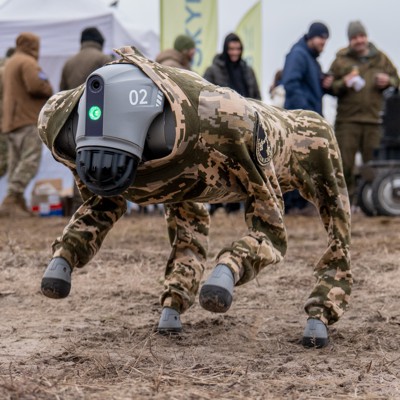
The Pentagon is seeking smarter, self-organizing drones as the autonomous-warfare budget is "poised to skyrocket," according to Defense One. A core problem driving the new DARPA projects: uncrewed weapons actually require a lot of people to operate. New research programs aim to reduce the human-to-drone ratio, allowing smaller teams to command larger swarms in contested environments.
Military Leaders Call for Joint Drone Doctrine (April 30, 2026)
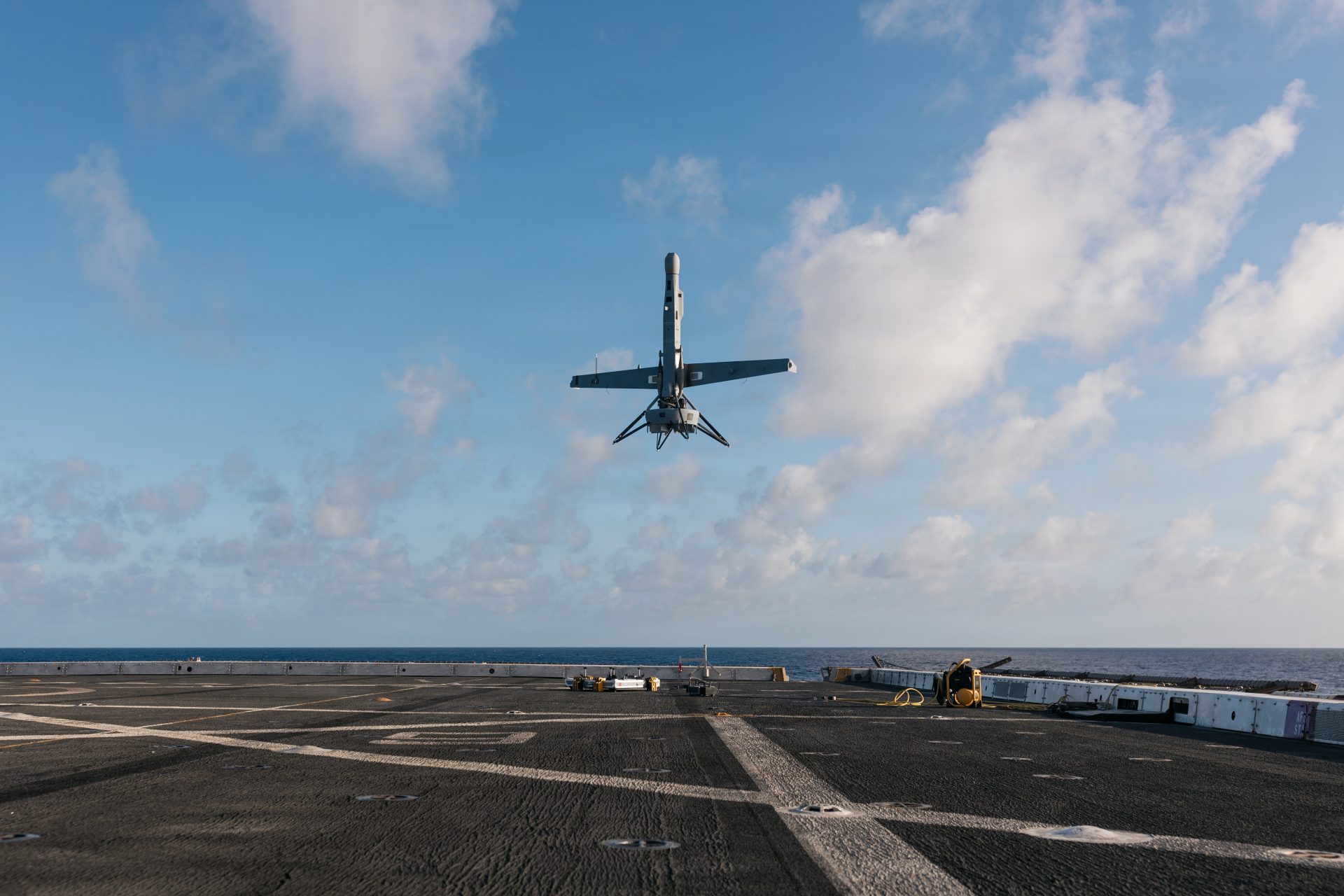
Marine Corps Commandant Gen. [name withheld per research] argued that the U.S. military must abandon service-specific "stovepipes" and implement a connected, joint approach to deploying autonomous and robotic assets. A photo from April 4, 2026, showed a VBAT unmanned aerial system launching from the USS Portland during counter-small UAS training in the Pacific — illustrating the cross-domain nature of current drone operations.
Pentagon Deals AI Access to Eight Big Tech Firms, Shuts Out Anthropic (May 1, 2026)
The Department of Defense announced Friday that it has agreed to give eight major technology companies access to AI tools on its classified networks — a significant expansion of AI adoption within military infrastructure. Notably, Anthropic was excluded from the deal. The move signals a sharp acceleration in DoD efforts to embed large language models and AI reasoning into sensitive defense operations.

April 28 Defense Contracts
The U.S. Department of War published its daily contract announcements for April 28, 2026, covering all awards valued at $7.5 million or more. Details are live at war.gov.
Army Space Command Awards Arcfield $70M Hypersonic Contract
The U.S. Army Space and Missile Defense Command awarded Arcfield a $70 million contract under the Hypersonic Test Engineering, Mission Planning and Systems II (HyTEMPS II) program, per ExecutiveBiz.
Analysis
The Autonomy Bottleneck Is Now the Central Pentagon Challenge
The most significant development this week is the explicit acknowledgment — at the highest levels of U.S. defense planning — that autonomous weapons are not yet truly autonomous. Despite billions allocated in FY2027 drone budgets (the $54B DAWG request covered in previous issues), the military's practical deployment capacity is constrained by operator-to-system ratios. DARPA's new programs reported by Defense One represent an attempt to solve what is arguably the defining operational friction in modern drone warfare: you can build the drones, but you still need enormous human teams to run them.
The Marine Corps Commandant's call for a "joint approach" reinforces the same theme from a different angle. Each service branch has historically built its own drone doctrine and procurement pipelines. As drone numbers scale toward the Pentagon's stated goals, the fragmented command structure becomes a critical vulnerability — both for efficiency and for adversarial exploitation.
The Pentagon's AI deal with eight tech firms (excluding Anthropic) adds a third dimension: the race to move AI off the classified network's sidelines and into real operational use. Together, these three developments — fewer operators per drone, unified joint doctrine, and AI on classified nets — represent the convergence of the three main vectors in the U.S. military's automation agenda.
What to Watch
- DARPA autonomy programs: Watch for formal program announcements or contracting actions tied to the self-organizing drone initiative; the timeline for prototype demonstrations has not been disclosed.
- DoD–Big Tech AI contracts: The eight-company deal announced May 1 will likely generate follow-on procurement actions; watch for specific task orders and which companies receive what classified AI workloads.
- Joint drone doctrine formalization: The Commandant's remarks suggest a doctrinal review is underway; a formal joint publication or directive could emerge in coming months.
- FY2027 budget markups: As the $54B+ drone and autonomous-weapons request moves through Congress, committee markups will reveal whether lawmakers back the full autonomous-warfare investment or impose restrictions on AI-enabled lethal systems.
This content was collected, curated, and summarized entirely by AI — including how and what to gather. It may contain inaccuracies. Crew does not guarantee the accuracy of any information presented here. Always verify facts on your own before acting on them. Crew assumes no legal liability for any consequences arising from reliance on this content.
Powered by
