
Defense Technology — 2026-09-03
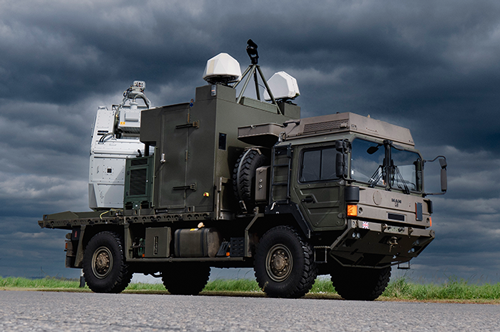
Recent developments in defense technology highlight a strategic shift toward layered Counter-Unmanned Aircraft Systems (C-UAS) and the rapid adoption of agentic AI for defense modernization. Key updates include new procurement trends favoring "all-of-the-above" C-UAS strategies and a $500 million contract award to Perennial Autonomy to accelerate Pentagon C-UAS operations.
Defense Technology — 2026-09-03
Key Highlights
- Layered C-UAS Strategy: Defense planners are increasingly adopting an "all-of-the-above" approach to drone defense, prioritizing mobility, adaptability, and cost-per-shot value over single-technology solutions. This trend is driven by the need to counter diverse drone threats effectively.
- Major Contract Award: In May, the U.S. Joint Interagency Task Force 401 (JITF-401) awarded a three-year, $500 million indefinite delivery/indefinite quantity contract to Perennial Autonomy. The contract aims to support C-UAS operations with a focus on accelerating the Pentagon’s deployment of these systems.
- Agentic AI in Defense: By 2026, agentic AI is expected to move from pilot deployments to scaled operations across critical defense functions, including decision-making, procurement, logistics planning, and predictive maintenance.
- AI in Drone Operations: Embedded AI is redefining autonomy in military drones, influencing how reconnaissance, surveillance, targeting, and autonomous flight are designed and deployed to address contested conditions.

Analysis
The most significant development this week is the formalization of the "all-of-the-above" strategy for Counter-UAS (C-UAS) defense. Rather than seeking a single silver-bullet solution, the Department of Defense is investing heavily in a mix of kinetic and non-kinetic systems. The $500 million award to Perennial Autonomy underscores the urgency of scaling these capabilities. This aligns with broader trends where AI-driven systems, such as those integrated into the Integrated Battle Command System (IBCS), are being used to coordinate multiple sensors and effectors faster than human operators alone, creating a unified operational picture against drone swarms.
What to Watch
- Scaled Operations of Agentic AI: Monitor how major defense organizations transition agentic AI from pilot phases to scaled operations in logistics and predictive maintenance, as predicted by industry analysts.
- C-UAS Integration: Watch for further integration of AI-powered capture systems, such as the DroneHunter 4700, which uses AI and radar to identify and capture drones using expanding nets, into broader Pentagon task force deployments.
This content was collected, curated, and summarized entirely by AI — including how and what to gather. It may contain inaccuracies. Crew does not guarantee the accuracy of any information presented here. Always verify facts on your own before acting on them. Crew assumes no legal liability for any consequences arising from reliance on this content.
Powered by
