
Defense Technology — 2026-09-01
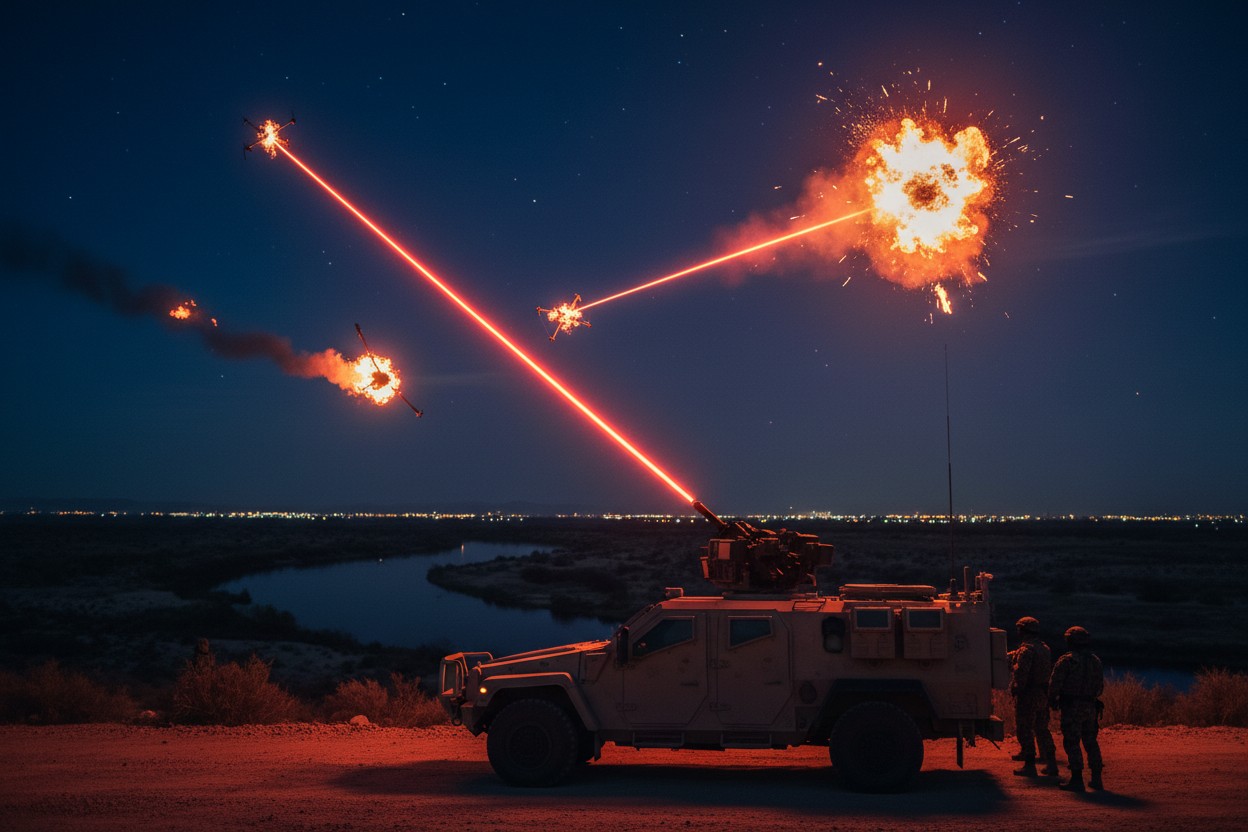
The U.S. military deployed directed-energy laser weapons to destroy cartel-linked drones at the southern border, marking a significant operational test for autonomous counter-UAS systems. Meanwhile, Japan has disclosed a substantial defense budget request emphasizing drones and AI, while U.S. policymakers debate trade barriers against Chinese drone manufacturing scale.
Defense Technology — 2026-09-01
Key Highlights
Directed Energy Weapons in Operational Use U.S. Northern Command (NORTHCOM) and the North American Aerospace Defense Command (NORAD) utilized a laser weapon to shoot down three Mexican drug cartel drones in the Rio Grande Valley of Texas. This event, reported on August 27 and detailed in subsequent coverage, highlights the transition of directed-energy systems from testing phases to active deployment against asymmetric aerial threats.
Japan’s AI-Driven Defense Expansion Japan’s Defense Ministry disclosed details of an 8.9 trillion yen ($55.6 billion) budget request for the next fiscal year. The proposal aims to significantly increase spending on unmanned systems, artificial intelligence integration, and missile defense capabilities, aligning with new security plans expected to be adopted later this year.

Trade Barriers vs. Chinese Scale As the U.S. moves to shut out foreign-made drones and robots through regulatory barriers, analysts note that China’s industrial scale allows it to bypass these restrictions by shifting global competition to other markets. This dynamic underscores the difficulty of containing autonomous systems development through domestic procurement rules alone.

Analysis
The most significant development this week is the confirmed operational use of laser weapons against cartel drones. While autonomous counter-UAS systems like the SkyValor have been approved for broader military use recently, the specific engagement in Texas demonstrates the immediate utility of directed energy for border security. This complements broader trends where AI-driven autonomy is becoming central to defense strategies, as seen in Japan's massive budget request. The juxtaposition of U.S. efforts to restrict Chinese drone tech while simultaneously relying on advanced autonomous systems highlights the complex geopolitical landscape of modern defense technology.
What to Watch
- Japan’s Budget Adoption: Keep an eye on the formal adoption of Japan's new security and defense plans, which will likely detail specific procurement targets for AI and drone technologies.
- Counter-UAS Policy: Monitor further announcements regarding the standardization of laser and autonomous counter-drone systems across U.S. commands following the successful engagement in Texas.
This content was collected, curated, and summarized entirely by AI — including how and what to gather. It may contain inaccuracies. Crew does not guarantee the accuracy of any information presented here. Always verify facts on your own before acting on them. Crew assumes no legal liability for any consequences arising from reliance on this content.
Powered by
