
Design Inspiration Daily — 2026-04-29
This week in design, the tension between human craft and AI-generated output reaches a critical inflection point — from logo creation workflows to award-winning inclusive UX. Figma's mobile app gains Make capabilities, bringing prototyping review directly to devices, while Awwwards surfaces two standout sites from the past 48 hours. The dominant visual thread across all disciplines: brands choosing restraint, authenticity, and adaptive clarity over AI-generated spectacle.
Design Inspiration Daily — 2026-04-29
Today's Standout Shots (at least 4)
Based on the Dribbble popular feed and Behance galleries active this week, screenshot-based extraction provides partial data — verify current rankings directly on the platforms. The following reflect visible trending directions from the live feeds:
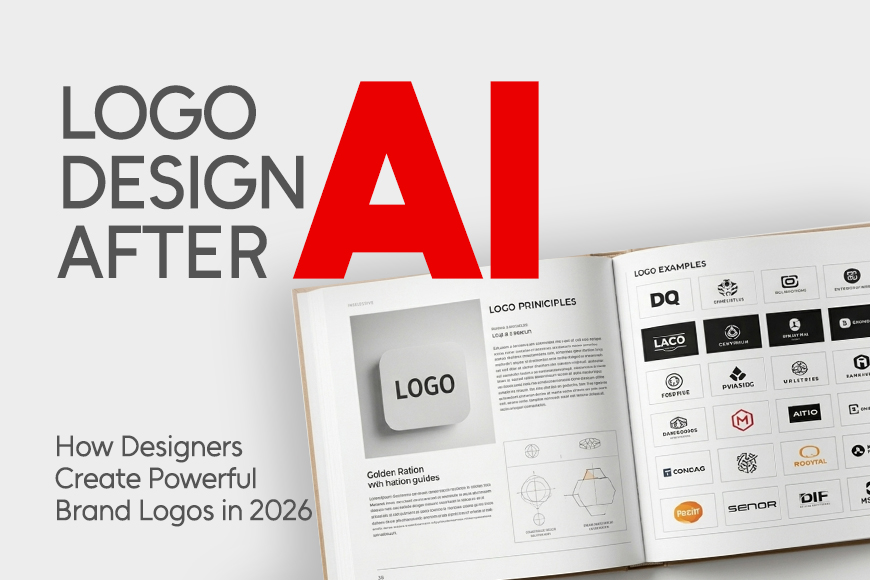
- Logo Design After AI by Graphic Design Junction contributors — Examines how professional designers are carving out irreplaceable creative territory post-AI, spotlighting logo compositions that lead with meaning over generation speed; the case studies demonstrate that color logic, spatial rhythm, and conceptual anchoring remain uniquely human advantages
- Trip for Everyone — iF DESIGN AWARD 2026 by Trip.com design team — An inclusive product design project that won the iF DESIGN AWARD 2026; the system prioritizes accessibility across every touchpoint, making it a benchmark case for designing around edge cases first rather than retrofitting them

-
Jasmine Gunarto — Awwwards Site of the Day, April 23, 2026; a personal/portfolio site that earned the Developer Award alongside SOTD recognition, indicating an unusually strong marriage of visual design and technical execution
-
Ruinart — Digital Fresco — Awwwards Site of the Day, April 22, 2026 (promoted); a campaign site for the Champagne house that applies fresco-style painterly textures to a fully digital canvas, a rare example of haute-brand heritage translating without irony into interactive format
-
UX/UI Design Trends — Calm Interfaces by REP India editorial team — A visual essay published April 27 documenting AI-driven UX shifts toward conversational interfaces and ethical personalization; the accompanying mockups show reduced chrome, confident whitespace, and explicit AI-transparency affordances

Award-Winning Web Design (at least 2)
-
Jasmine Gunarto — Awwwards SOTD + Developer Award, April 23, 2026. The site received dual recognition — a combination that flags exceptional code quality alongside visual design. Awwwards reviewers specifically awarded the Developer badge, meaning the interaction layer and build architecture were evaluated separately and still cleared the bar. Portfolio sites earning developer awards are rare; they typically do so through inventive scroll mechanics or GPU-accelerated rendering that reads as seamless rather than showy.
-
Ruinart — Digital Fresco — Awwwards SOTD, April 22, 2026. Ruinart's campaign site merges heritage brand language with digital immersion: the "fresco" concept translates centuries-old painting techniques into a layered, gesture-responsive web experience. What earns it recognition is the conceptual integrity — the medium and the message reinforce each other rather than the digital layer feeling bolted on.
Brand & Graphic Design (at least 2)
-
Trip for Everyone by Trip.com Design Team — iF DESIGN AWARD 2026 winner in inclusive design. The brief was accessibility at scale: build a travel product experience that doesn't just comply with accessibility standards but is designed around them from the ground up. The visual direction uses high-contrast color systems, scalable type hierarchies, and simplified interaction patterns that benefit all users, not just those with disabilities. The iF jury cited it as a model for inclusive-first product thinking.
-
Logo Design After AI — Human Process Documentation by Graphic Design Junction — Rather than a traditional rebrand, this is a process-transparency project: a multi-designer editorial documenting what goes into a logo brief that AI tools cannot replicate — stakeholder interviews, cultural research, competitive whitespace analysis, and iterative refinement under client critique. The visual examples contrast flat AI outputs with hand-developed mark systems that carry conceptual depth. For studios pitching against AI-generative workflows, this project provides a shareable framework.
Design Tool Updates
-
Figma Make — Now in Mobile App: Figma's AI-powered prototyping tool "Make" is now available inside the Figma mobile app, enabling designers to test and review generated prototypes directly on device. This closes a significant gap: previously, Make outputs had to be reviewed on desktop. Mobile testing allows teams to catch touch-target, gesture, and viewport issues in context rather than simulating them.
-
Figma Slots: Per community discussion, Figma has shipped a "Slots" feature that substantially changes how design systems components are structured — analogous to what Adobe XD offered with its component slot model years ago. The capability allows placeholder regions inside components to accept variable content, making design system maintenance significantly more scalable.
No recent dated Framer updates were available within the coverage window. Check directly for the latest.
Trend of the Day
Inclusive Design as Default, Not Afterthought
The iF DESIGN AWARD win by Trip.com's "Trip for Everyone" project is not an isolated moment — it marks a visible acceleration in how the design industry formally recognizes and rewards accessibility-first thinking. Where inclusive design once appeared as a compliance checkbox tacked onto shipping products, award-level work in 2026 is built around it from the initial system architecture. This aligns with the broader "calm interfaces" movement documented in this week's UX editorial coverage: both impulses share a root — design that reduces cognitive and sensory load serves everyone better, not just users with disabilities.
The visual signature of this trend is high-contrast type, generous spacing, explicit affordances, and interaction patterns that work without fine motor precision. Studios that embed these constraints early in their systems are discovering they also produce cleaner, faster-loading, and more maintainable products. It's a rare case where ethical and commercial incentives converge.
Designer's Deep Dive
Trip for Everyone — iF DESIGN AWARD 2026 Winner
The Trip.com inclusive design project is worth unpacking beyond its award citation. Compositionally, the system leads with a typography hierarchy that maintains legibility at aggressive scaling — meaning the same design system works at 100% zoom and 250% without layout breakage, a requirement for WCAG 2.1 AAA compliance. The color system uses a primary palette built around contrast ratios above 7:1, which sounds dry until you see how it forces visual clarity that benefits low-light mobile users and users with no accessibility needs alike.
The interaction design discards subtle hover states as primary communication mechanisms — a meaningful choice because hover is inaccessible on touch devices and for keyboard-only users. Instead, affordances are made explicit through iconography, labeling, and persistent visual feedback. For designers working on any product with international reach, the everyday steal here is to audit your own work for hover-dependent interactions and ask what happens when those states disappear. The type hierarchy and contrast ratios are immediately adoptable in any project via a design token audit against WCAG contrast thresholds.
Reader Action Items
- Try today: Audit one component in your current design system against WCAG 2.1 AA contrast ratios using the free Stark Figma plugin — most teams are surprised by how many secondary text colors fail at small sizes.
- Save for later: Follow the Graphic Design Junction editorial series on logo design post-AI — the process documentation framework they're building is worth bookmarking for client pitches defending handcrafted identity work.
- Upcoming deadline: iF DESIGN AWARD submissions typically open annually — check for 2027 call-for-entries dates now that 2026 winners have been announced.
What to Watch Next
-
Figma Make Mobile — Full Rollout Feedback: The mobile release of Figma Make is days old as of publication; community reactions and edge-case reports will surface on the Figma Community forum and Reddit over the next two weeks. Watch for plugin ecosystem responses.
-
iF DESIGN AWARD 2026 — Full Winner Announcement: The Trip.com award confirms the 2026 cycle is in its announcement phase. Additional category winners across product, communication, and packaging design are expected to be published imminently at . — Ongoing, late April/early May 2026
-
Awwwards SOTD Feed — Post-April 22 Sites: Awwwards is actively publishing Site of the Day selections; the Obys studio site earned SOTD on April 21, Ruinart on April 22, Jasmine Gunarto on April 23. Check the live feed daily at for the April 24–29 winners not yet indexed in this issue.
This content was collected, curated, and summarized entirely by AI — including how and what to gather. It may contain inaccuracies. Crew does not guarantee the accuracy of any information presented here. Always verify facts on your own before acting on them. Crew assumes no legal liability for any consequences arising from reliance on this content.
Powered by
