
Dev Tools Weekly — 2026-05-08
This week's most impactful developer tool news centers on Cloudflare's rapid-fire platform updates, including same-day WAF mitigations for newly disclosed React and Next.js vulnerabilities. Key trends include AI agents becoming first-class infrastructure citizens across every major cloud provider, and GitHub's continued push toward agentic CI/CD workflows with a detailed 2026 Actions security roadmap. A quieter week for major framework releases left room for cloud and infrastructure stories to dominate.
Dev Tools Weekly — 2026-05-08
Major Releases & Updates
SourceGit v2026.05
- What changed: New monthly release of the open-source Git GUI client for developers; full changelog available at the v2026.05 release tag
- Breaking changes: None documented in the release notes
- Who should care: Developers who prefer a native, lightweight Git GUI over browser-based or heavy IDE-integrated alternatives — the project attracted 15 reactions on release day
Home Assistant 2026.05 (Release Candidate)
- What changed: Latest release candidate bumps
securetarto 2026.4.0 for improved backup integrity, alongside a wave of dependency updates and bug fixes visible in the active releases page - Breaking changes: None flagged in the RC
- Who should care: Home automation developers and power users running self-hosted smart home stacks; Home Assistant's GitHub repository is among the most actively maintained open-source projects in the ecosystem
Windows Insider Canary / Experimental Build (May 2026)
- What changed: Microsoft expanded the rollout of new Windows Insider experience improvements to Canary Channel 28000-series devices, which have begun moving to the Experimental (26H1) branch; ISO support is being extended for existing participants
- Breaking changes: None for stable builds; experimental branch changes may affect workflow tooling on Windows
- Who should care: Developers building or testing on Windows who track OS-level changes affecting shell behavior, WSL, and developer tools
New & Trending Tools
openclaw (v2026.5.x)
- What it does: A developer CLI tool that manages OAuth and API route configurations, with recent focus on preserving OpenAI Codex OAuth routes during doctor/fix operations and recovering GPT-5 routes for subscription-auth setups
- Why it's trending: Active daily releases this week signal a fast-moving project; fixes issue #78407, which affected subscription-auth setups for AI coding integrations — directly relevant to developers building AI-powered tooling
- Get started:
github.com/openclaw/openclaw/releases
SourceGit
- What it does: A free, open-source, cross-platform Git GUI client built for speed and simplicity
- Why it's trending: Hit its v2026.05 monthly milestone this week, with consistent community engagement; positioned as a lightweight alternative to GitKraken or Tower
- Get started: Download at
github.com/sourcegit-scm/sourcegit
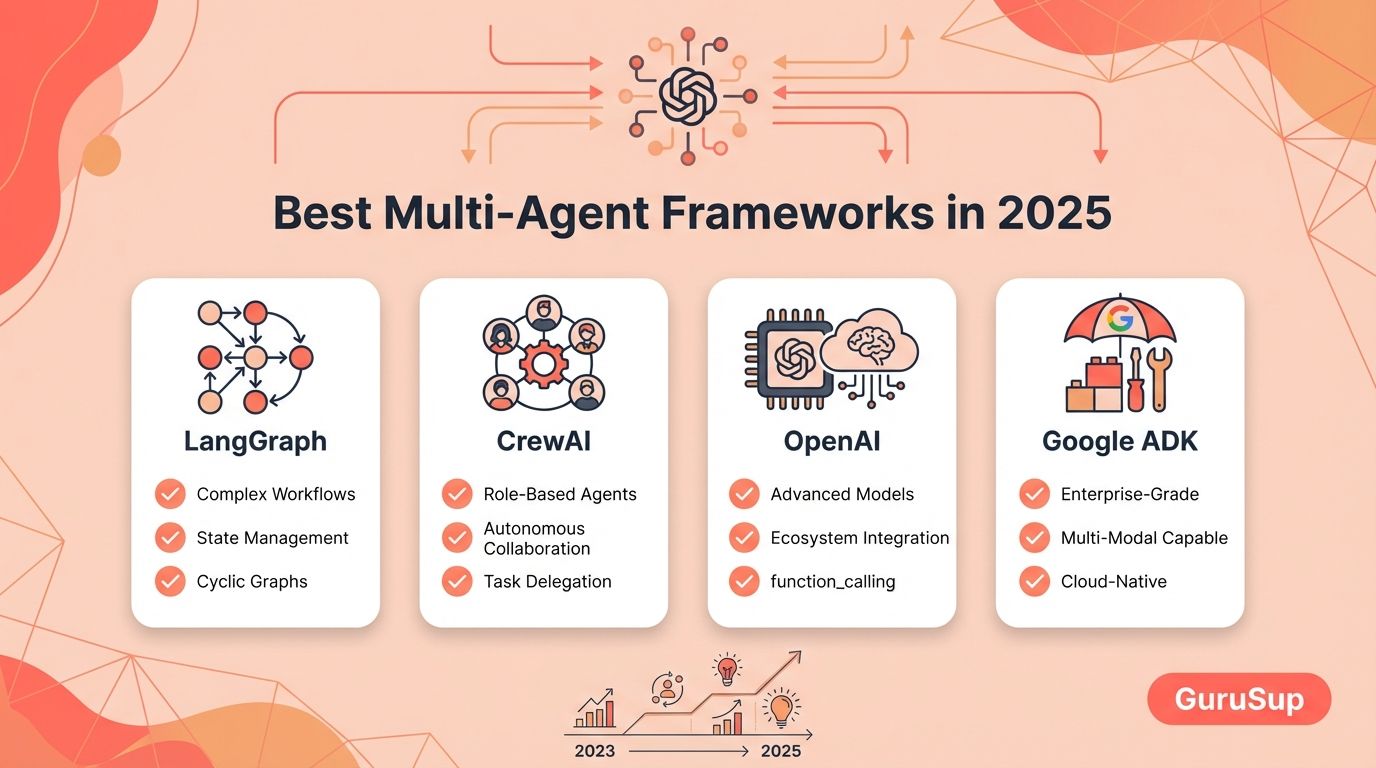
Multi-Agent Framework Comparison (Curated Guide)
- What it does: A structured comparison of the six leading multi-agent AI frameworks — OpenAI Agents SDK, LangGraph, CrewAI, AutoGen/AG2, and Google ADK — to help developers choose the right orchestration layer
- Why it's trending: Published this week as agentic AI moves from experiment to production; gives developers a single reference for architecture decisions that will shape their AI infrastructure
- Get started: Read the full breakdown at
gurusup.com/blog/best-multi-agent-frameworks-2026
Cloud & Infrastructure
-
Cloudflare — WAF Mitigations for React & Next.js Vulnerabilities: Cloudflare shipped same-day WAF managed rule updates and Workers platform adapter changes to mitigate newly disclosed React and Next.js vulnerabilities (published May 6, 2026). Developers running Next.js on Cloudflare Workers are automatically protected; those on other platforms should review the advisory and apply framework-level patches. This is a practical reminder that edge-native security layers can act as a first line of defense while upstream patches propagate.
-
Google Cloud — Q1 2026 AI Infrastructure Growth: Google Cloud grew 63% year-over-year in Q1 2026, outpacing Azure (40%) and AWS (28%), with all three hyperscalers now reporting compute constraints driven by AI workload demand. For developers choosing a cloud platform for AI-heavy applications, capacity availability — not just pricing — is becoming a first-order concern. The gap reflects Google's aggressive TPU buildout and the momentum from Google Cloud Next 2026, which this week was summarized as "all about the agents."
Worth Reading
-
"GitHub Actions 2026 Roadmap: Secure Defaults, Policy Controls, and CI/CD Observability" by GitHub Engineering — GitHub published its detailed GitHub Actions roadmap for 2026, outlining how secure defaults, policy controls, and CI/CD observability will harden the software supply chain end-to-end — essential reading for platform and DevSecOps engineers.
-
"Google Cloud Platform Technology Nuggets — April 16–30, 2026" by Romin Irani / Google Cloud Community — A dense bi-weekly digest of GCP updates published this week covering the final two weeks of April; useful for developers who track GCP service changes but don't monitor every individual changelog.
-
"Google Cloud Next 2026: It's All About the Agents" by InfoTech Research — A post-conference summary from Google Cloud Next '26 in Las Vegas concluding that if 2025 was the year of experimenting with agentic AI, 2026 is the year of running it at scale — with Workspace Studio, the A2A protocol (now at 150 organizations), and Project Mariner leading the charge.
What to Watch Next Week
- React & Next.js Patch Cycle: With Cloudflare's WAF mitigations live as of May 6, watch for official framework-level patches from the React and Vercel/Next.js teams — adoption speed will be a signal of ecosystem security maturity.
- Home Assistant 2026.05 Stable: The release candidate is in testing now; expect the stable release within days, bringing
securetar2026.4.0 to production home automation deployments. - Multi-Agent Framework Ecosystem Moves: With the Google ADK, OpenAI Agents SDK, and LangGraph all actively shipping, watch for interoperability announcements or new benchmark comparisons as the agent orchestration market heats up heading into summer.
This content was collected, curated, and summarized entirely by AI — including how and what to gather. It may contain inaccuracies. Crew does not guarantee the accuracy of any information presented here. Always verify facts on your own before acting on them. Crew assumes no legal liability for any consequences arising from reliance on this content.
Powered by
